 Skip to content


The secret to achieving a perfect result lies not only in the rolling technique, but also in the quality of the ingredients you choose. And this is where high-quality frozen fish comes in as your perfect partner.
This option offers unparalleled convenience and, most importantly, is a safe alternative to the risk of anisakis if official freezing recommendations are followed or if the product guarantees it. No worries, just enjoy! If you're ready to put on your apron and impress all your guests with impeccable hygiene, let's get started!
Why frozen fish is your best ally for homemade sushi
Consuming raw fish requires following certain basic food safety rules , but there's no need to panic. Preventing the dreaded anisakis parasite is very easy thanks to the action of refrigeration.
To avoid risks, it is essential to follow current official guidelines for consuming raw fish. If you decide to freeze it at home, it's advisable to check that your freezer reaches the required temperature before relying on home freezing to make sushi.
The most convenient and practical solution? Opt directly for industrial flash freezing . This controlled process can help meet anisakis requirements when the product and manufacturer guarantee the proper freezing process for raw consumption. Furthermore, it helps preserve the texture and freshness of sushi fish better than traditional slow freezing.
Basic ingredients and utensils to get started
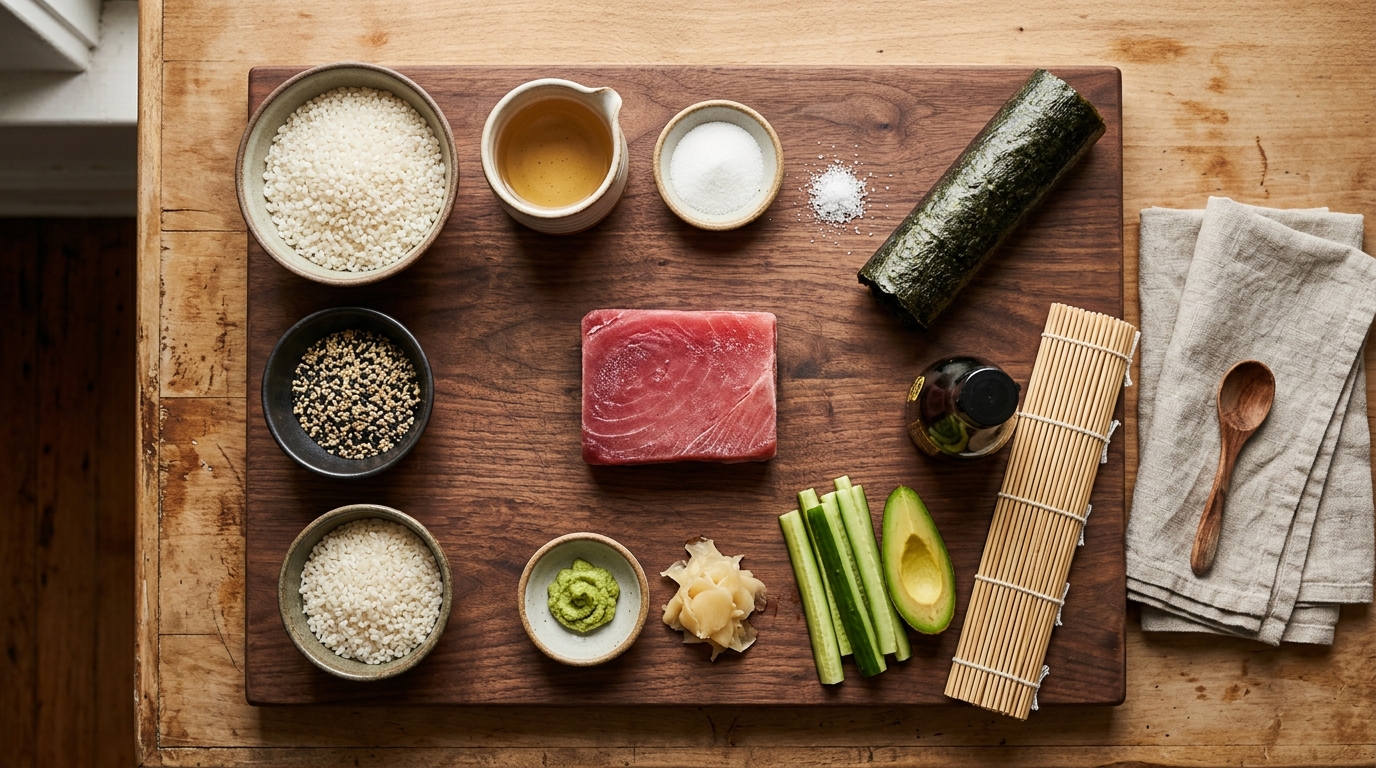
Before you get started, you need to prepare your work surface (the famous mise en place ). Don't worry, you don't need to empty your bank account in the kitchenware section of the store. Take note of the essentials:
Essential utensils:
- An bamboo mat (makisu) for rolling. If you don't have one, cling film will do.
- A very sharp knife. Ideally, a chef's knife or a yanagiba (the traditional sushi knife).
- A fan (or a clean piece of cardboard) and a large plate or flat tray.
Key ingredients and approximate quantities (per person):
- Sushi riceAllow approximately 100g uncooked. You should look for short-grain Japanese rice, known for its sticky texture.
- Sheets of nori seaweed (1 or 2 sheets) to wrap your creations.
- Basic seasoning (sushi-zu): rice vinegarsugar and salt.
- Soy sauce, wasabi and pickled ginger (gari) to accompany.
- The jewel in the crown: between 100 and 150 g of loins of salmon or frozen tuna suitable for raw consumption. If you opt for tuna, you can choose from different types of tuna High-quality cuts with a wide oceanic distribution, such as yellowfin or bigeye tuna, are available. Always ensure that these cuts are suitable for raw preparations, as indicated on the packaging or product information sheet.
How to prepare sushi rice (the secret to a good shari)
The rice accounts for 50% of the success of your dish. If you nail this part of the recipe, you're halfway to making spectacular sushi. Follow these steps:
- Wash and wash: Place the rice under running water and gently wash it until the water runs completely clear. This step removes excess starch.
- Cooking: A general guideline is 1 part rice to 1,2 parts water, but always follow the instructions on the rice package. Cook over medium-low heat with the pot covered for the time recommended by the manufacturer (usually around 15 minutes) and let it rest.
- The magic touch: While the rice rests, gently heat the rice vinegar with the sugar and salt until dissolved.
- Mix and cool: Transfer the rice to the tray. Pour over the seasoning and stir with a wooden spatula using cutting motions (never use metal or crush the grains!). At the same time, fan the rice to cool it and give it its characteristic shine.
How to defrost fish to preserve the ideal texture
This step is crucial. Improper defrosting can ruin even the best fish, leaving it mushy, watery, and unappealing. The golden rule is controlled defrosting : transfer the fish from the freezer to the refrigerator overnight, or according to the specific instructions on the packaging.
Always place the fish on a wire rack with a plate underneath. This way, the fish won't be in constant contact with its own juices. Before you start cutting it, pat it dry thoroughly with paper towels. You'll know it's ready when it feels firm to the touch, cold, completely dry, and without any excess surface water.
Quick safety checklist before riding:
- Check the packaging or information sheet: confirms that the manufacturer indicates that it is suitable for raw consumption.
- Defrost in the refrigerator: respect the cold chain.
- Keep the product refrigerated: Do not leave it at room temperature until the exact moment of cutting.
- Fast consumption: Eat the dish on the same day it is prepared.
How to make homemade sushi step by step: the moment of truth
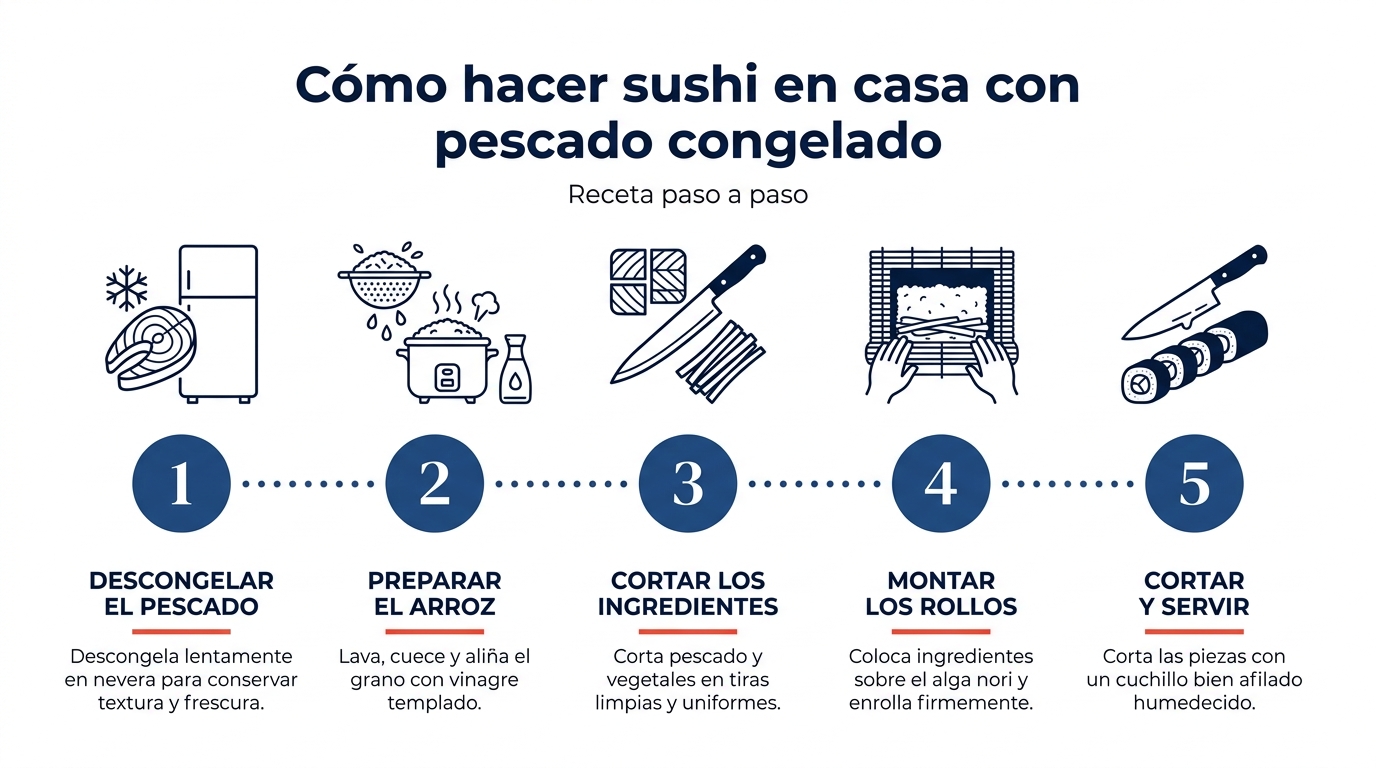
It's time to get your hands dirty and assemble the dish. With this step-by-step guide to homemade sushi , you'll see it's not magic, but a matter of a little practice and getting over your fear of the bamboo mat.
Preparing classic makis (rolls)
Maki rolls (whether thin like hosomaki or thick like futomaki) are the most popular and fun format to start with.
- Place the nori seaweed on the bamboo mat. Look closely: the shiny, smooth side always faces down.
- Wet your hands with water so the rice doesn't stick to your fingers like glue.
- Spread a thin layer of rice over the seaweed, leaving a couple of centimeters free at the top edge to close the roll.
- Place the fish, cut into strips, in the center of the rice.
- Using the mat, roll it up firmly. Apply firm but gentle pressure to prevent the roll from unraveling, and seal the edge with a few drops of water.
Preparing elegant nigiri
If you prefer the fish to be the star of every bite, nigiri is the most classic, visually appealing, and elegant option. And if you want to skip the rice, try preparing sashimi.
- Take a small portion of rice and shape it with one hand until it forms a kind of elongated croquette.
- Cut the fish into thin slices, tilting the blade of your knife at about 45 degrees to get a wider cut.
- Put a very light touch of wasabi on the inside of the fish (if you like it spicy) and gently place it on the rice, hugging the grain with your fingers.
Chef tricks to make your homemade sushi perfect
Want to take things to the next level and have your guests cheering you on? Here are some quick tips to fix common mistakes during live broadcasts:
- Clean cuts: Lightly dampen the blade of your knife with water and a splash of vinegar before each cut. This will prevent the rice from sticking to the blade when you cut your rolls.
- Treat the rice with care: Never press the rice down onto the nori seaweed. You should spread it gently using only your fingertips.
- Ice cold fish: Keep the fish in the refrigerator until the exact moment you're going to cut and assemble it. The temperature contrast and firmness are key for an ideal texture when you bite into it.
FAQ
Can I use any frozen fish from the supermarket to make sushi?
Not all fish have the same quality when frozen or cut. If you're going to prepare it raw, it's recommended to choose trusted brands and, above all, check the packaging or product information to ensure it's suitable for your intended preparation.
How long does homemade sushi last in the refrigerator?
Since it's raw fish, the safest and most prudent recommendation is to consume sushi on the same day it's prepared. Leftovers should be avoided, especially if continuous refrigeration cannot be guaranteed.
Is it mandatory to use rice vinegar to season sushi rice?
It's ideal for achieving authentic Japanese flavor. If you don't have it in your pantry, you can use diluted apple cider vinegar with a touch of sugar, although the aromatic result will vary slightly.