 Skip to content
Types of anchovy
Anchovies belong to the order Clupeiformes and the family Engraulidae . This family comprises around 17 genera and more than 140 species. The best-known genus is Engraulis , which includes some of the most commercially important species, such as the European anchovy (Engraulis encrasicolus) and the Peruvian anchovy (Engraulis ringens).
Some of the most relevant species of this species are:
- Engraulis encrasicolus (European anchovy)
- Engraulis ringens (Peruvian anchovy)
- Engraulis anchoita (Argentine anchovy)
- Engraulis japonicus (Japanese anchovy)
- Anchoa mitchilli (Gulf anchovy)

What fish is an anchovy? Physical characteristics
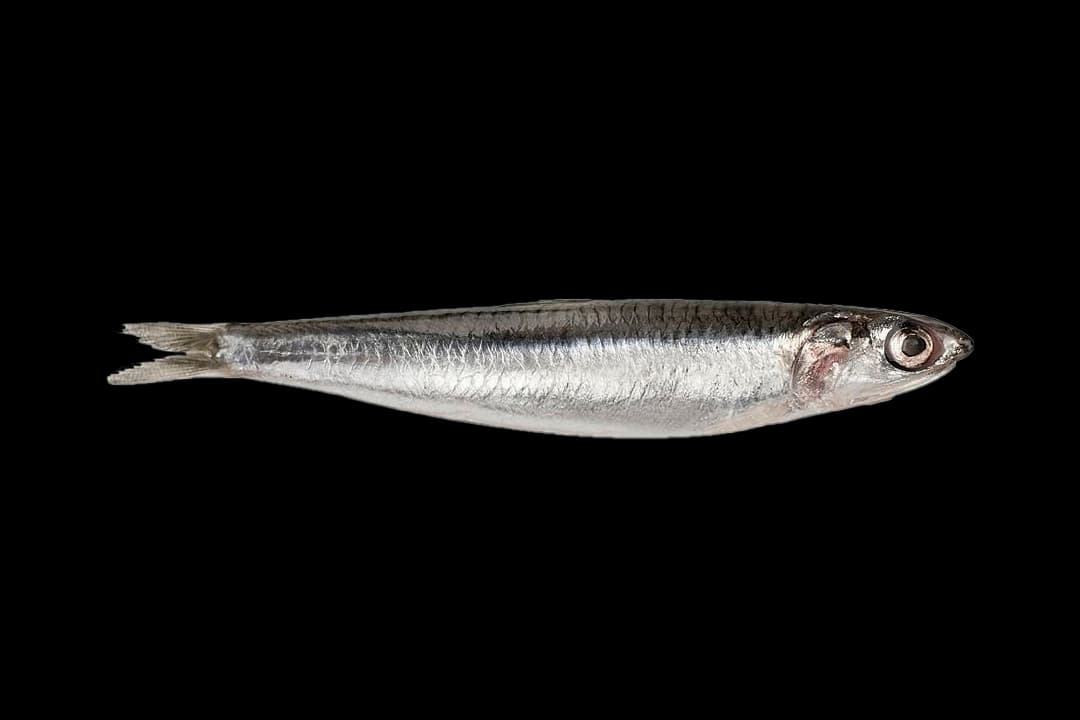
Anchovies are small , blue fish, generally 10 to 20 centimeters long, with a long, slender body. Their head is elongated with a pointed snout and a large mouth located on the underside, adapted for capturing plankton.
They have large eyes, a single dorsal fin, small pectoral fins, and a forked caudal fin. Their color is silvery on the sides and belly, with bluish or greenish tones on the back. Their scales are small and easily removable, giving them a characteristically smooth texture.
Habitat and distribution
Anchovies are pelagic fish that primarily inhabit coastal waters and estuaries of temperate and tropical seas worldwide. They can be found in the Atlantic Ocean, the Mediterranean Sea, the Pacific Ocean, and the Indian Ocean. Some species have also adapted to living in freshwater and can venture into rivers.
Behavior and ecology
Food
Anchovies are primarily zooplankton feeders , meaning they feed on small organisms that float in the water. Their diet includes:
- copepods
- Crustacean larvae
- Fish eggs
- Phytoplankton (to a lesser extent)
Their large mouth and numerous gill rakers allow them to efficiently filter water to capture these small prey.
Reproduction
Most anchovy species reach sexual maturity between their first and second year of life. They release their eggs in coastal waters, which can extend over several months, depending on the species and environmental conditions.
Role in the ecosystem
Anchovies are an important link in the food chain, serving as food for numerous predators, including:
- Larger fish (tuna, cod, hake)
- Seabirds (gulls, pelicans, cormorants)
- Marine mammals (dolphins, sea lions)
Their abundance and their position in the food chain make them key species for maintaining ecological balance in marine ecosystems.
Nutritional values
Anchovies are a highly nutritious fish, rich in several components essential for health. They contain omega-3 fatty acids, beneficial for the heart and brain; vitamins, especially D and B12; and minerals such as calcium, iron, and selenium.
nourisher | Per 100 g of edible portion |
Energy (Kcal) | 195 |
Proteins (g) | 27,4 |
Total lipids (g) | 9,3 |
Saturated FA (g) | 1,22 |
Monounsaturated fatty acids (g) | 5,04 |
Polyunsaturated fatty acids (g) | 3,04 |
Omega-3 (g) | 0,704 |
Carbohydrates (g) | 0,4 |
Fiber (g) | 0 |
Water (g) | 62,9 |
Calcium (mg) | 273 |
Iron (mg) | 4,2 |
Iodine (µg) | 18 |
Magnesium (mg) | 54,8 |
Zinc (mg) | 3,4 |
Sodium (mg) | 3.930 |
Potassium (mg) | 230 |
Phosphorus (mg) | 300 |
Selenium (µg) | 36,5 |
Thiamine (mg) | Tr |
Riboflavin (mg) | 0,21 |
Niacin equivalents (mg) | 3,8 |
Vitamin B6 (mg) | 0,19 |
Folates (µg) | 18,5 |
Vitamin B12 (µg) | 3,4 |
Vitamin C (mg) | Tr |
Vitamin A: Eq. Retinol (µg) | 67,4 |
Vitamin D (µg) | 11,8 |
Vitamin E (mg) | 0,98 |
Source: Spanish Ministry of Agriculture, Fisheries and Food
To learn more about this blue fish:
Is it safe to eat anchovies during pregnancy?
In general, anchovies are safe and beneficial during pregnancy if consumed in moderation. They are a good source of protein, omega-3 fatty acids, and other nutrients important for fetal development.
However, due to their mercury content, it is recommended to limit consumption to 2-3 servings per week. Additionally, it is important to ensure they are thoroughly cooked or properly processed to avoid the risk of listeriosis. It is always advisable to consult a healthcare professional for personalized recommendations.
What is the difference between anchovies and sardines?
Although both are small, pelagic fish, they belong to different families. Anchovies are from the Engraulidae family, while sardines belong to the Clupeidae family. Anchovies are generally smaller and have a more intense flavor.
Are anchovies healthy?
Yes, anchovies are very nutritious. They're rich in protein, omega-3 fatty acids, vitamins (especially D and B12), and minerals like calcium, iron, and selenium.
How are anchovies consumed?
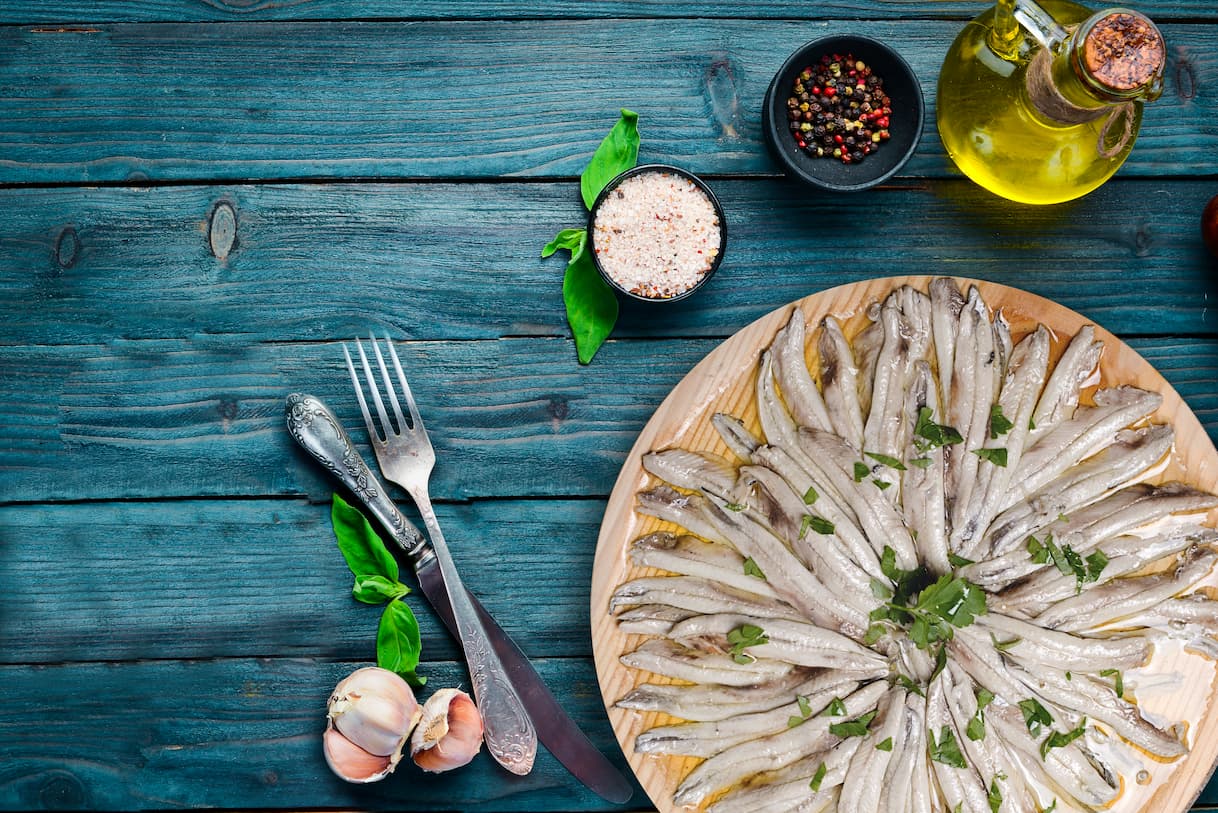
Anchovies are consumed in a variety of ways, including salted, marinated in vinegar (boquerones), preserved with oil, as a spread, or as an ingredient in sauces and dressings.
Where are anchovies mainly caught?
The main anchovy fisheries are found in the southeast Pacific (Peruvian anchovy), the Mediterranean and northeast Atlantic (European anchovy), and the northwest Pacific (Japanese anchovy).
How long do anchovies live?
Most anchovy species have a relatively short lifespan, usually between 3 and 7 years, depending on the species and environmental conditions.
Is anchovy the same as boquerón?
It's a fairly common question, and the answer is yes, anchovies and whitebait are the same fish ; they're called different names because of how they're prepared as food. Anchovies are preserved in salt for months and then preserved in oil. Whitebait, on the other hand, are preserved in vinegar as soon as they're caught.