 Skip to content
What is an anchovy?
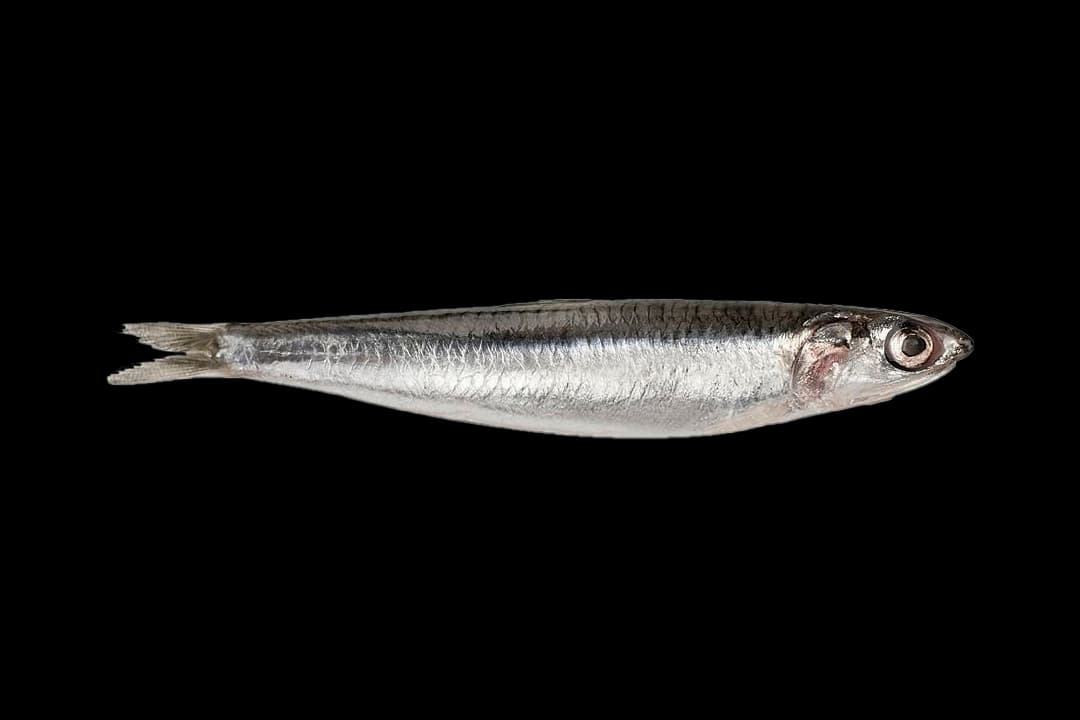
The anchovy is a small, blue fish belonging to the Engraulidae family . It is found primarily in temperate, saltwater environments, such as the Mediterranean Sea, the Atlantic Ocean, and other coastal areas. With a silvery body and a length of between 12 and 15 cm , anchovies are known for their juicy flesh and distinctive flavor, which varies depending on whether they are consumed fresh or cured.
Characteristics of the Anchovy
The anchovy is unique among blue fish due to a series of characteristics:
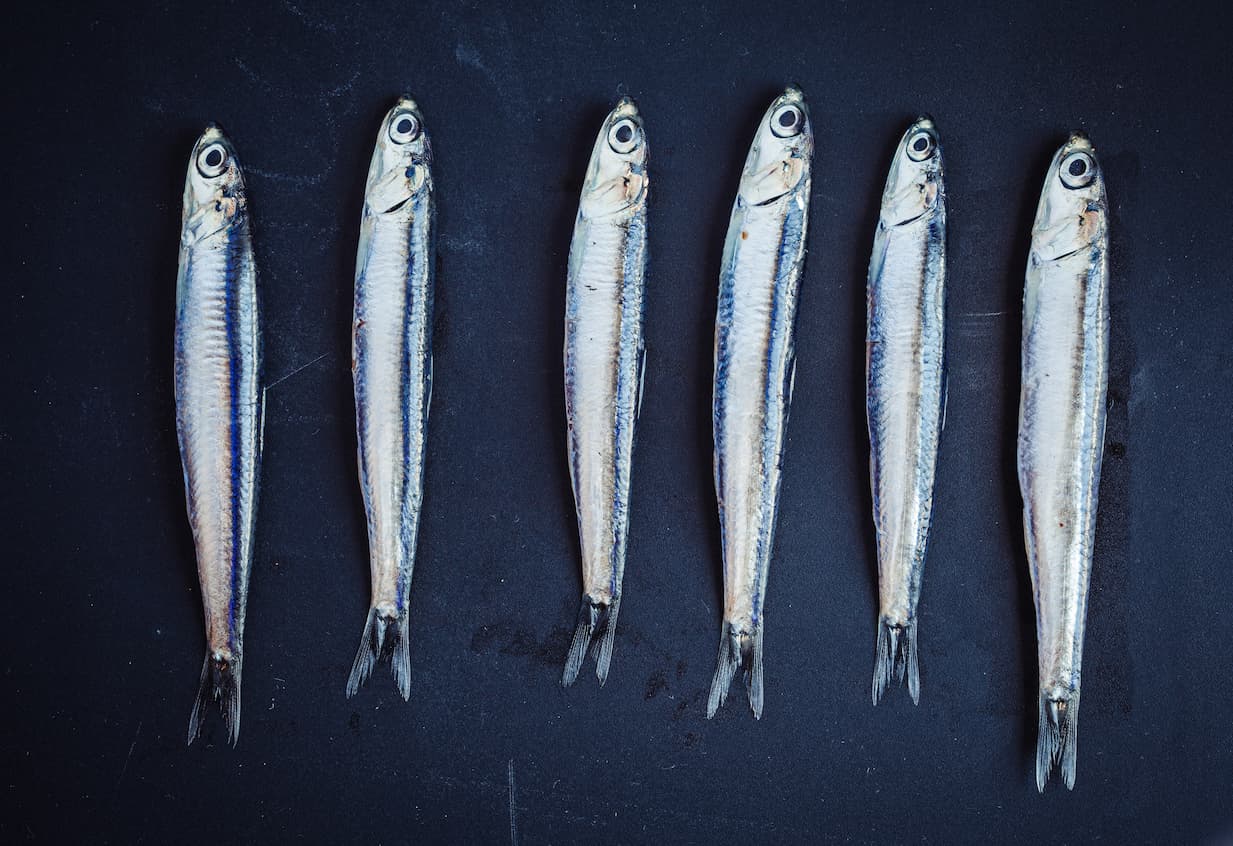
- Physical appearanceAnchovies have a long, slender body with shiny silver scales. They have a dorsal fin located midway along their body and a forked caudal fin. Their eyes are large in proportion to their size, which helps them detect prey in shallow water.
- SizeAnchovies usually measure between 12 and 15 cm in length in their adult phase, although this can vary depending on the habitat and environmental conditions.
- Coloration: The color of this fish is silver, with slight changes on the upper part that can turn into dark shades of green and blue.
- LongevityAnchovies have a relatively short lifespan, between 2 and 4 years.
Behavior and Feeding
Anchovies are gregarious fish that form large schools. They move in groups to protect themselves from predators and to facilitate their search for food. This behavior makes them especially vulnerable to fishing with purse seine nets.
As for the diet of this small blue fish , it consists mainly of plankton and small crustaceans , classifying them as filter feeders. At night, they rise to the surface to feed, and during the day they remain in deeper waters.
Types of Anchovy
Although the anchovy is commonly referred to as a single species , there are several subspecies and varieties found in different parts of the world.
- European Anchovy (Engraulis encrasicolus): It is the best known and most consumed type in Europe, especially in the Mediterranean and Atlantic.
- Japanese Anchovy (Engraulis japonicus)Found primarily in the Pacific Ocean, especially around Japan and Korea, this variety is similar to the European anchovy but with slight differences in flavor and texture.
- Argentine Anchovy (Engraulis anchoita): It lives in the South Atlantic, especially off the coasts of Argentina and Uruguay. This anchovy is larger than the European one and has a stronger flavor.
- Californian Anchovy (Engraulis mordax)This species is found on the Pacific coast of North America, from Canada to Baja California. It's a similar-sized anchovy to the European anchovy but with a slightly more intense flavor.
Nutritional Values of Anchovy
nourisher | Value per 100g |
Energy (Kcal) | 127 |
Proteins (g) | 17,6 |
Total lipids (g) | 6,3 |
Saturated FA (g) | 1,65 |
Monounsaturated fatty acids (g) | 1,33 |
Polyunsaturated fatty acids (g) | 2,18 |
Omega-3 (g) | 2,04 |
C18:2 Linoleic (Omega-6) (g) | 0,126 |
Cholesterol (mg) | 69 |
Carbohydrates (g) | 0 |
Fiber (g) | 0 |
Water (g) | 76,1 |
Calcium (mg) | 30 |
Iron (mg) | 1 |
Magnesium (mg) | 29 |
Zinc (mg) | 0,5 |
Sodium (mg) | 116 |
Potassium (mg) | 331 |
Phosphorus (mg) | 182 |
Selenium (µg) | 36,5 |
Thiamine (mg) | 0,06 |
Riboflavin (mg) | 0,3 |
Niacin equivalents (mg) | 8,3 |
Vitamin B6 (mg) | 1,1 |
Folates (µg) | 8,7 |
Vitamin B12 (µg) | 1,9 |
Vitamin C (mg) | Traces |
Vitamin A: Eq. Retinol (µg) | 47 |
Vitamin D (µg) | 8 |
Vitamin E (mg) | 0,02 |
Source: https://www.mapa.gob.es/es/ministerio/servicios/informacion/boqueron_tcm30-102834.pdf
Habitat and Fishing Season of the Anchovy
Habitat
The anchovy primarily inhabits temperate saltwater, with a wide distribution in the Atlantic Ocean, the Mediterranean Sea, and the Black Sea . These fish prefer to live in coastal areas and are usually found at depths of up to 100 meters, although in spring and summer they rise to shallower waters to feed and reproduce.
Anchovies are especially abundant in areas with a high concentration of plankton, their main food source.
Fishing Season
The anchovy fishing season is mainly concentrated in the spring and summer months , when schools of anchovies rise to the surface to feed and reproduce. This period is known as the "anchovy season".
In winter , anchovies stay in deeper waters, making them harder to catch. However, thanks to imports from countries like France, Italy, and Morocco, they can be found in the market year-round.