 Skip to content

What is a cod?
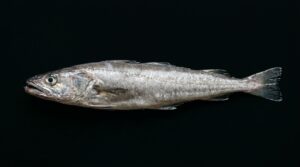
Cod ( Gadus morhua ) is a fish belonging to the Gadidae family , also known as the cod family. This species is native to the North Atlantic and primarily inhabits cold waters. Cod is a white fish with an elongated body, its coloration ranging from olive green to brown, with irregular darker spots along its sides.

Characteristics of cod
The body of the cod It is elongated, with a relatively large head and a wide mouth containing a row of sharp teeth. As for its coloration, it generally has greenish or brown tones with darker spots on its sides, which helps it camouflage itself in its marine environment. The belly is usually a much lighter color, almost white. It is recognizable by its characteristic "chin" or barbel under the lower jaw, which it uses as a sensor to search for food on the seabed.
As to average weight and size of this white fish, The most common thing is that the Codfish measure between 50 cm and 1 meter. Its weight also varies considerably, but an average cod usually weighs between 2 and 15 kilograms.
Cod can live up to 25 years, although in commercial fisheries, they are usually caught before reaching this age.
Behavior and Feeding
Cod are fish that inhabit cold waters and generally form large schools . This gregarious behavior is especially evident during their seasonal migrations , which they undertake in search of better feeding conditions. Depending on water temperature and food availability, cod travel long distances between their feeding and spawning grounds.
As for its diet , cod is a very skilled and opportunistic predator. Its diet includes small fish such as herring and capelin, as well as cephalopods , crustaceans , and other marine invertebrates. Thanks to this varied diet, its flesh is firm and has a very mild flavor, making it a highly valued food in cooking. Furthermore, its wide range of food options allows it to survive in diverse habitats.

Types of Cod
- Atlantic cod (Gadus Morhua)It is the most well-known and consumed type of cod worldwide. It is found in the North Atlantic, near Norway, Iceland, and Canada. Its flesh is firm and tender, making it very versatile in the kitchen. It is the main type used in the salted or cured cod industry.
- Pacific cod (Gadus macrocephalus)Similar to the Atlantic squid, but found on the Pacific coast, near Alaska, Japan, and Russia. It is smaller and has a milder flavor. It is primarily used in frozen and processed products.
- Greenland cod (Gadus ogac)It lives in the cold waters of Greenland and the Arctic region. Its flesh is softer and its size is smaller compared to Atlantic cod. It is less popular internationally, but is common in the cuisine of Nordic countries.
- Black cod or coalfish (Anoplopoma fimbria)Although not a true "cod," its meat closely resembles cod and is highly prized. It belongs to a different family (Anoplopomatidae) and not to the gadoid family. It lives in the North Pacific and is famous for its buttery texture and delicate flavor, making it a gourmet product.

Nutritional values
Here are the nutritional values of cod per 100 grams of edible product, in table format:
nourisher | Value per 100 g |
Energy (Kcal) | 74 |
Proteins (g) | 17.7 |
Total lipids (g) | 0.4 |
Saturated fatty acids (g) | 0.09 |
Monounsaturated fatty acids (g) | 0.05 |
Polyunsaturated fatty acids (g) | 0.2 |
Omega-3 fatty acids (g) | 0.179 |
Cholesterol (mg/1000 kcal) | 50 |
Carbohydrates (g) | 0 |
Fiber (g) | 0 |
Water (g) | 81.9 |
Calcium (mg) | 24 |
Iron (mg) | 0.44 |
Magnesium (mg) | 20 |
Zinc (mg) | 0.4 |
Sodium (mg) | 89 |
Potassium (mg) | 274 |
Phosphorus (mg) | 180 |
Selenium (µg) | 28 |
Thiamine (mg) | 0.08 |
Riboflavin (mg) | 0.1 |
Niacin equivalents (mg) | 2 |
Vitamin B6 (mg) | 0.33 |
Folates (µg) | 13 |
Vitamin B12 (µg) | 0.53 |
Vitamin C (mg) | 2 |
Vitamin A: Eq. Retinol (µg) | 10 |
Vitamin D (µg) | 1.3 |
Vitamin E (mg) | 0.26 |
Source: Ministry of Agriculture, Fisheries and Food
Habitat and Fishing Season of Common Cod
Habitat
The cod (Gadus morhua) inhabits the cold waters of the North Atlantic , especially off the coasts of Norway, Iceland, Greenland, and North America . It lives near the seabed at depths of up to 600 meters , preferring sandbanks and rocky bottoms in Arctic and subarctic waters.
Fishing Season
Cod fishing is highly regulated due to its economic importance and the need to preserve the species. The fishing season for these fish varies depending on the region.
- North AtlanticThe best fishing season is during the winter months, from October to March, when the cod come closer to the coast to breed.
- Norway and DenmarkThese regions have a high season that usually runs from January to April, coinciding with the migration of cod to spawning grounds.

Recipes with Cod
If you want to cook cod, try these recipes: Cod in marinara sauce , Cod Vizcaya style , Baked Cod , Cod en papillote , Cod pil pil , Cod brandade , Fish and chips , Cod cheeks in green sauce , Cod with garlic sauce and Cod and orange salad.

Cod en Papillote

Cod Biscayne