 Skip to content
What are Angulas?
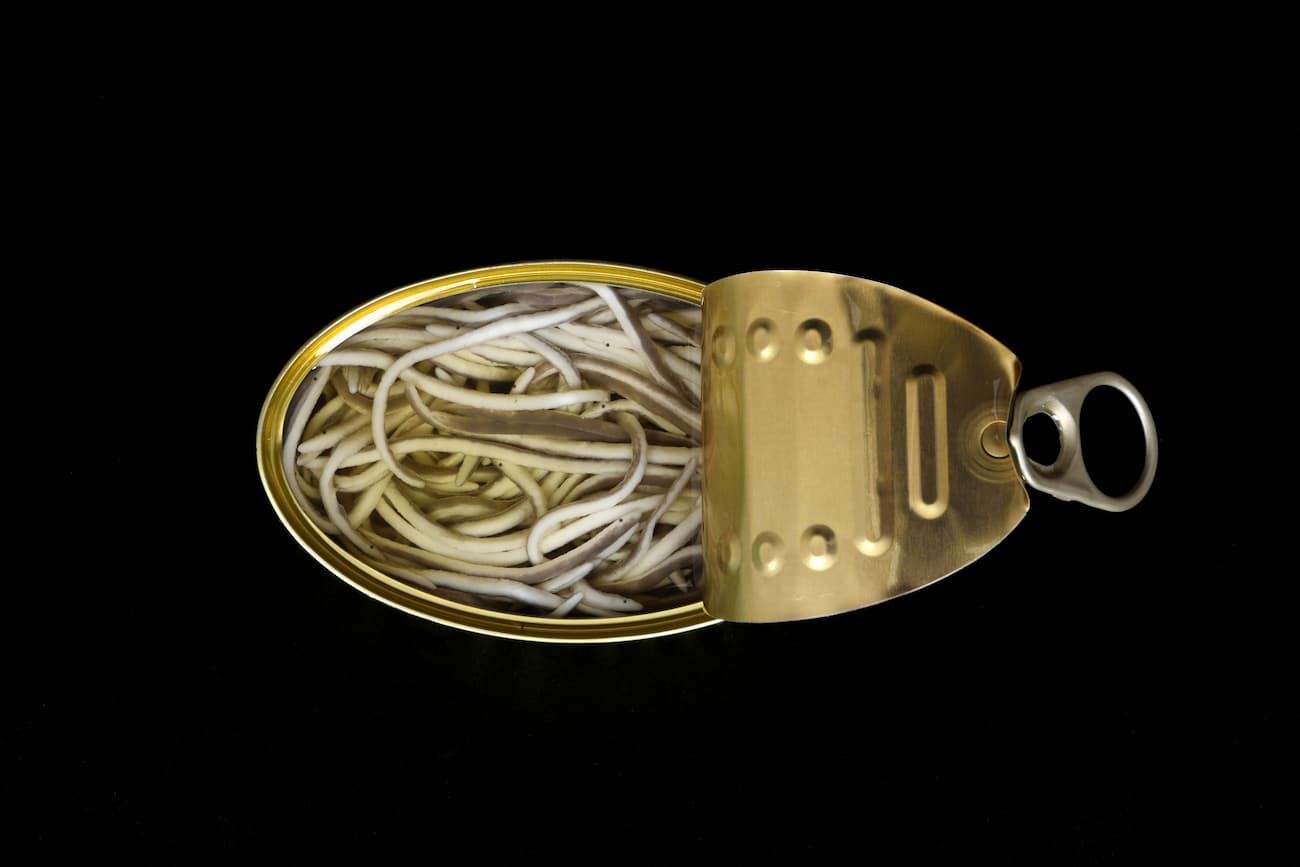
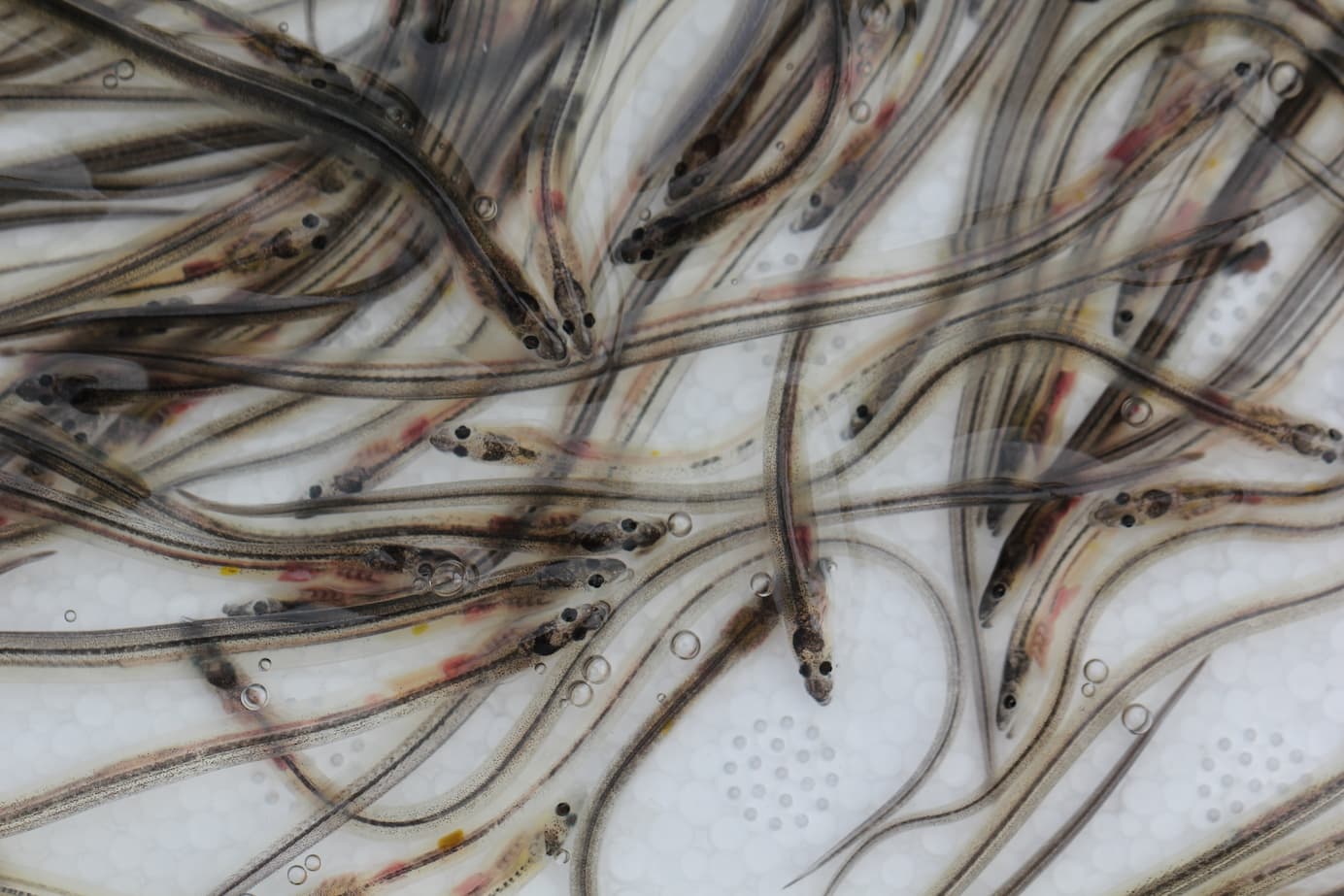
Eels are the fry of the European eel ( Anguilla anguilla ), recognized as the only fry permitted for fishing under current laws. During the early stages of their lives, all eels are female, and some change sex over time. Colorless and almost transparent, eels acquire color depending on the time they spend in the river, with black-backed eels generally less valued than their white-backed counterparts.
Characteristics of these eel fry
Eels , with their almost ethereal appearance and mysterious beginning of life, fascinate all who encounter them. Despite their tiny size of less than 8 centimeters and a weight of barely 1 gram, they are remarkable for their resilience and ability to survive , which contrasts sharply with their delicate appearance. Their transparent bodies allow them to camouflage themselves in the water, protecting them from predators while they are young and vulnerable.
The migratory capacity of elvers is also remarkable. They are born in the remote Sargasso Sea in the Atlantic and travel thousands of kilometers to the rivers of Europe and North Africa. This migratory instinct leads them to overcome natural obstacles and evade numerous predators, a journey that demonstrates their strength and tenacity. This migration is not only physical but also a transformation , from marine larvae, known as leptocephali , to the coveted gastronomic elvers.
Eels are distinguished not only by their juvenile stage, but also by their exclusivity . Strictly regulated and subject to defined fishing seasons, catching them is an art that requires knowledge, skill, and respect for the delicate ecological balance of their habitats.
Behaviors and Feeding
Behavior
As mentioned before, elvers undertake an epic journey from the Sargasso Sea, the breeding ground for eels, to European rivers. This migratory instinct leads them to travel thousands of kilometers, facing predators and ocean currents on their way to their new home.
Food
During their elver stage , these fry feed mainly on a varied set of microorganisms , such as zooplankton, small algae and larvae of other fish, which they find in their river and estuarine habitats.
The diet of elvers also plays a crucial role in the aquatic food chain. By feeding on microorganisms, they help regulate the populations of these species, maintaining the ecological balance of their ecosystems . In turn, elvers serve as food for a variety of predators , including larger fish, birds, and aquatic mammals, underscoring their importance in aquatic biodiversity.
Types of Angulas
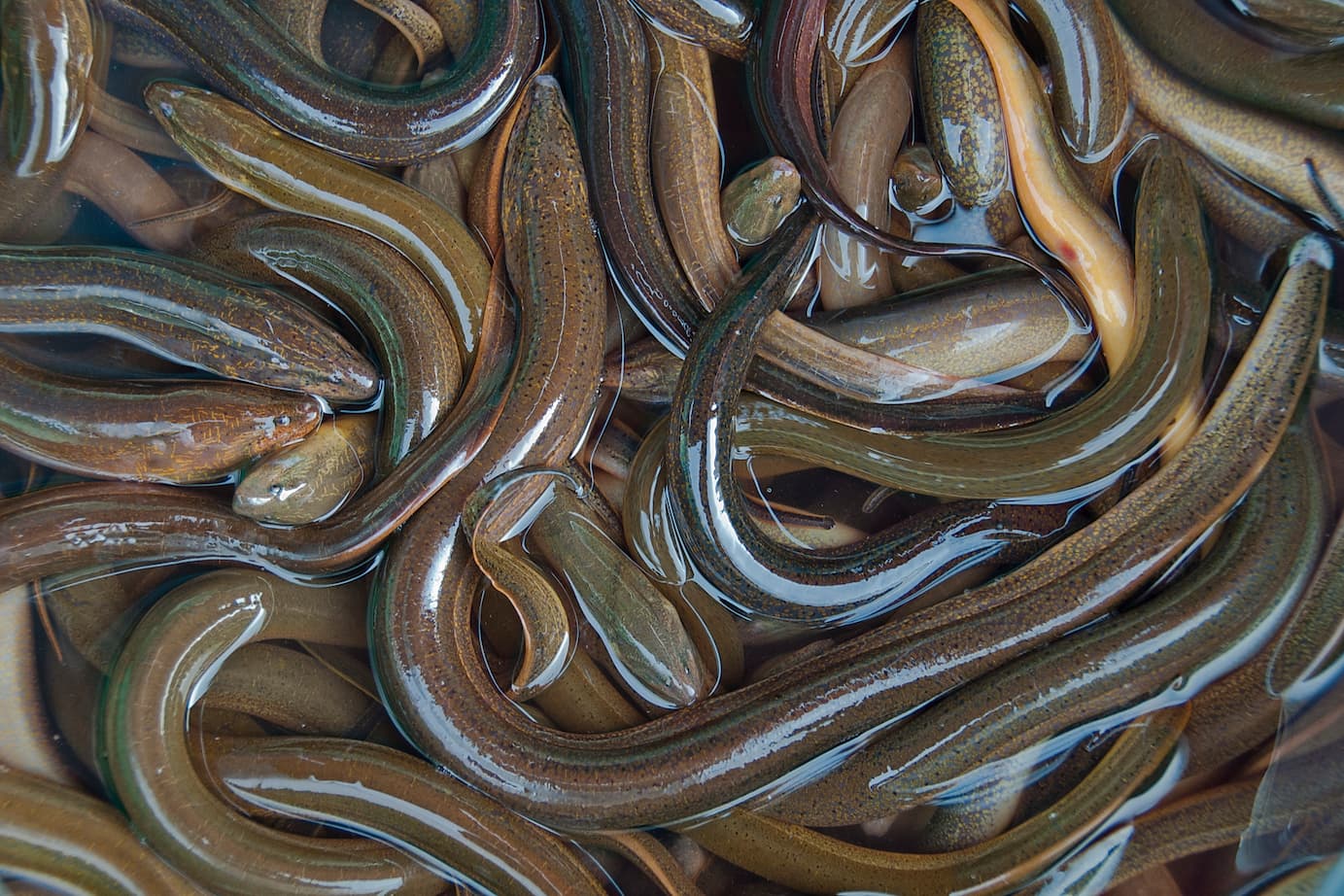
There are two types of elvers: white-backed and black-backed. Both are the same animal; the difference lies in the place of origin and the maturation time. Both can be found in rivers, estuaries, and coastal areas, but they prefer different habitats that influence their development.
White loin eel
This type of glass eel is particularly prized for its rarity and the difficulty of catching it, which elevates its status among gourmets and haute cuisine chefs. The white-back glass eel is distinguished by its lighter-colored back.
They are usually caught near river mouths, where the water is saltier due to the sea. This gives them their light color and delicate texture. The salinity and nutrients in these areas promote rapid growth. They are also younger, caught shortly after reaching the river.
Black-backed eel
In contrast, the “blackback” distinction refers to its dark coloration, which is an indicator of its longer lifespan within river systems before capture.
These elvers prefer to live in areas further from the sea, with less salinity, and they also mature longer in freshwater environments.
Nutritional values
nourisher | Value per 100 g of edible portion |
Energy (Kcal) | 205 |
Proteins (g) | 24.3 |
Total lipids (g) | 15.5 |
Saturated FA (g) | 3.15 |
Monounsaturated fatty acids (g) | 9.94 |
Polyunsaturated fatty acids (g) | 1.48 |
Omega-3 (g) | 0.868 |
C18:2 Linoleic (Omega-6) (g) | 0.139 |
Cholesterol (mg/1000 kcal) | 50 |
Carbohydrates (g) | 0 |
Fiber (g) | 0 |
Water (g) | 68.2 |
Calcium (mg) | 30 |
Iron (mg) | 1 |
Iodine (µg) | 10 |
Magnesium (mg) | 19 |
Zinc (mg) | 1.8 |
Sodium (mg) | 89 |
Potassium (mg) | 270 |
Phosphorus (mg) | 170 |
Selenium (μg) | 30 |
Thiamine (mg) | 0.17 |
Riboflavin (mg) | 0.32 |
Niacin equivalents (mg) | 5.5 |
Vitamin B6 (mg) | 0.3 |
Folates (μg) | 13 |
Vitamin B12 (mcg) | 1 |
Vitamin C (mg) | Traces |
Vitamin A: Eq. Retinol (mcg) | 1000 |
Vitamin D (μg) | 11.0 |
Vitamin E (mg) | 5.6 |
Source: Ministry of Agriculture, Fisheries and Food
Habitat and fishing season
Natural habitat
Elvers prefer freshwater to live and are mainly caught at the mouth of the Miño River in Spain.
Fishing Season
The eel fishing season is strictly regulated to protect these juvenile populations during their most vulnerable phase. Generally, the season runs from late autumn to early spring , coinciding with the period when eels arrive in European rivers.
Advanced Fishing Techniques
To capture elvers without damaging river ecosystems, in addition to using dense nets, other techniques are used:
- Night Fishing: The nocturnal activity of elvers and their tendency to move on the surface is used to effectively capture them at night.
- Angulas Pot: A trap designed to allow elvers to enter but not exit. It is strategically placed in known passage areas for elvers in rivers and estuaries.