 Skip to content

What is a Halibut?
The halibut, also known as the butterfish , is a flatfish of the Pleuronectidae family that lives in the cold waters of the North Atlantic and North Pacific. It can grow up to 1,5 meters long and weigh over 200 kilograms—a true marine beast! This fish grows slowly over many years, making it vulnerable to overfishing, and therefore its fishing is subject to strict regulations.

Characteristics of Halibut
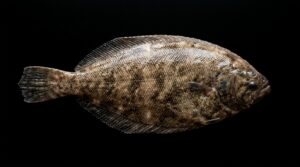
Its body is flattened and asymmetrical, with two eyes located on the right side, like the sole, allowing it to camouflage itself on the seabed. Its upper body is dark while its underbody is white. This fish is an opportunistic predator, feeding on a wide variety of prey, including smaller fish, crustaceans, and mollusks.
- Physical appearance: Flat body, with a dark upper part and a white under part.
- Size and Growth: It can grow up to 4 meters and weigh more than 300 kg, making it one of the largest flatfish in the world.
- Longevity: It can live more than 50 years, which contributes to its large size.
- Behavior and Feeding: It is a voracious hunter, feeding on fish, molluscs y crustaceans.
Types of Halibut
There are two main types of halibut: the Atlantic halibut ( Hippoglossus hippoglossus ) and the Pacific halibut ( Hippoglossus stenolepis ). Both species are very similar to each other; the only differences are their habitat—one lives in the North Atlantic and the other in the North Pacific (and the Atlantic halibut is usually larger).

Nutritional values
Halibut is an excellent source of protein and omega-3 fatty acids, essential for heart and brain health. It's also low in saturated fat and calories. You can see its full nutritional information here:
nourisher | Quantity per 100 g |
Energy (Calories) | 103 Kcal |
Proteins | 21,5 gr |
Total Fats | 1,9 gr |
Cholesterol | 35 mg |
Carbohydrates | 0 gr |
Fiber | 0 gr |
Water | 76,6 gr |
Football | 29 mg |
Iron | 0,5 mg |
Iodine | 40 g |
Magnesium | 25 mg |
Zinc | 0,4 mg |
Sodium | 60 mg |
Potassium | 410 mg |
Phosphorus | 200 mg |
Selenium | 28 g |
Thiamine | 0,07 mg |
Riboflavin | 0,07 mg |
Niacin (B3) | 9,8 mg |
Vitamin B6 | 0,38 mg |
Folates | 9 g |
Vitamin B12 | 1 g |
Vitamin A (Eq. Retinol) | 30 g |
Vitamin E | 0,85 mg |
Halibut is particularly notable for its mineral content, such as selenium, iodine, and phosphorus, and for being a good source of B vitamins, which are key to metabolism and the nervous system.

Habitat and Fishing Season
Habitat
It inhabits the North Atlantic and North Pacific. It is found primarily on sandy and gravel bottoms, preferring depths ranging from 100 to 2,000 meters. As it ages, halibut tends to move to deeper areas, seeking a safe environment with greater availability of prey.
Fishing Season
The fishing season varies by region and local regulations, but generally takes place during the colder months of the year, when halibut move to shallower waters to feed and breed, making them easier to catch.
In North Atlantic waters, halibut fishing is typically most active from late autumn to early spring, coinciding with the best weather conditions for deep-sea fishing. Fishing methods include line fishing and trawling.