 Skip to content

What is the Roosterfish?
The Roosterfish , scientifically named Lepidorhombus whiffiagonis , is a species belonging to the Scophthalmidae family , which is found in the cold and temperate waters of the North Atlantic and in some areas of the Mediterranean Sea.
This fish gets its common name from the peculiar shape of its body and dorsal fin , which vaguely resemble a rooster's comb . Its distinctive appearance, along with its behavior and diet, makes it an interesting species for both the scientific community and fishing and culinary enthusiasts.
Features
The common grouse, Lepidorhombus whiffiagonis , is distinguished by a number of physical and biological characteristics that make it unique in the marine world. Below are some of the most notable features of this species:
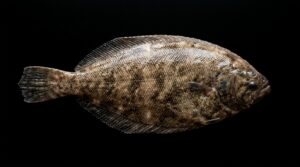
- Body Shape: It has a flat, oval, and asymmetrical body, typical of flatfish. This shape allows it to rest comfortably on the seabed and is an evolutionary adaptation for its benthic lifestyle.
- Coloration: Its skin ranges in color from light brown to darker shades of gray, with scattered dark spots that serve as camouflage against the seafloor and predators. The underside is generally lighter, helping the creature blend in with the light penetrating the water from above.
- Size: The average adult size ranges from 20 to 40 centimeters in length, although specimens measuring up to 70 centimeters have been reported in exceptional cases.
- Eyes: Like many flatfish, the Roosterfish's eyes are located on the side of its head, allowing it to have a wide view of its surroundings while remaining almost motionless on the bottom.
- Mouth and Teeth: It has a small mouth with fine teeth, adapted to capture small prey that constitute its diet.
- Fins: The dorsal and anal fins are long and extend almost the entire length of the body, facilitating smooth and efficient movement through the water.
These characteristics not only make the John Dory a fascinating subject of study for marine biologists and ecologists, but also influence its value as a fishery resource and its role within marine ecosystems. The adaptability and survival strategies of Lepidorhombus whiffiagonis have made it a successful species, capable of sustaining healthy populations in its natural habitat.
Behaviors and Feeding
The behavior and feeding of this species are crucial aspects to understanding both its individual survival and its role in the marine ecosystem.
Behavior
- Camouflage: One of the most notable survival strategies of the Roosterfish is its ability to camouflage itself with its surroundings. Its brown or grayish coloration, along with dark spots, allows it to blend into the seabed, evading predators and surprising its prey.
- Sedentary Lifestyle: This fish spends most of its time resting on the ocean floor, moving only when necessary. This sedentary behavior is typical of flatfish, which patiently wait for prey to come within reach.
- Seasonal Reproduction: The Megrim has a clearly defined reproductive period, which varies by geographic region but generally occurs once a year. This seasonal behavior ensures the synchronized release of eggs and sperm, maximizing fertilization rates.
Food
- Diet: Their diet consists mainly of small marine invertebrates, such as various types of crustaceans (shrimp and crabs), molluscs and polychaetes. Occasionally, they may also consume small fish and larvae of other marine species.
- Feeding Technique: The Roosterfish uses an ambush technique to capture its prey, remaining motionless and camouflaged until a potential prey is close enough. It then attacks quickly, using its small but effective mouth to trap the animal.
- Ecological Importance: Its role as a predator of benthic invertebrates places it in an important place within the food chain, helping to control the populations of these species and maintaining the ecological balance of the seabed habitat.
Types of Roosterfish
Although the term “Roosterfish” is commonly used to refer to Lepidorhombus whiffiagonis , it is important to note that there is a variety of species within the Scophthalmidae family and other close groups that share similar characteristics and are popularly known as roosterfish.
Lepidorhombus boscii (Four-spotted Rooster)
This fish is found in the waters of the eastern Atlantic and the Mediterranean. Lepidorhombus boscii , commonly known as the Four-Spotted John Dory, is a species of flatfish belonging to the family Scophthalmidae. This species is easily distinguished by the characteristic dark spots on its body, from which its common name is derived.
Nutritional values
nourisher | Amount per 100 g of edible portion |
Energy (Kcal) | 80 |
Proteins (g) | 15.8 |
Total lipids (g) | 1.9 |
Saturated FA (g) | 0.33 |
Monounsaturated fatty acids (g) | 0.39 |
Polyunsaturated fatty acids (g) | 0.61 |
ω-3 (g) | 0.031 |
C18:2 Linoleic (ω-6) (g) |
|
Cholesterol (mg/1000 kcal) | 62.2 |
Carbohydrates (g) | 0 |
Fiber (g) | 0 |
Water (g) | 82.3 |
Calcium (mg) | 33.6 |
Iron (mg) | 0.9 |
Iodine (µg) | 16 |
Magnesium (mg) | 42.1 |
Zinc (mg) | 0.4 |
Sodium (mg) | 150 |
Potassium (mg) | 250 |
Phosphorus (mg) | 260 |
Selenium (µg) | 24 |
Thiamine (mg) | 0.08 |
Riboflavin (mg) | 0.1 |
Niacin equivalents (mg) | 3.7 |
Vitamin B6 (mg) | 0.38 |
Folates (µg) | 11.2 |
Vitamin B12 (µg) | 1.1 |
Vitamin C (mg) | Tr |
Vitamin A: Eq. Retinol (µg) | Tr |
Vitamin D (µg) | Tr |
Vitamin E (mg) | Tr |
This fish is highly valued in cooking for its soft, white meat and excellent flavor, making it a popular ingredient in a wide range of dishes. Furthermore, the roosterfish is prized for its nutritional value, rich in protein and low in fat, making it a healthy choice for human consumption.
Habitat and Fishing Season
The megrim primarily inhabits the seabed of temperate and cold waters in the North Atlantic , including the North Sea, the Irish Sea, the Celtic Sea, and some areas of the Mediterranean Sea. It prefers sandy or muddy seabeds , where it can effectively camouflage itself and access its food source. It is commonly found at depths ranging from 100 to 200 meters , although it can inhabit depths of up to 400 meters.
The fishing season for John Dory varies depending on the geographic region, but it is generally more abundant and accessible during the spring and summer months. During this period, the main commercial and artisanal catches take place , always within the limits of sustainable fishing regulations to protect the populations of these species and ensure their long-term viability.
Fishing Techniques
Trawling
It is one of the most widely used techniques for capturing roosterfish. This method involves using a trawl net that is dragged along the seabed, capturing fish and other bottom-dwelling organisms.
Longline Fishing
Longline fishing is another effective technique, especially for capturing specific species with less impact on the seafloor habitat. This method uses a long fishing line (longline) with multiple hooks spaced along its length.
Sport or Recreational Fishing
The Roosterfish can also be caught using sport or recreational fishing techniques, using rods and reels.