 Skip to content


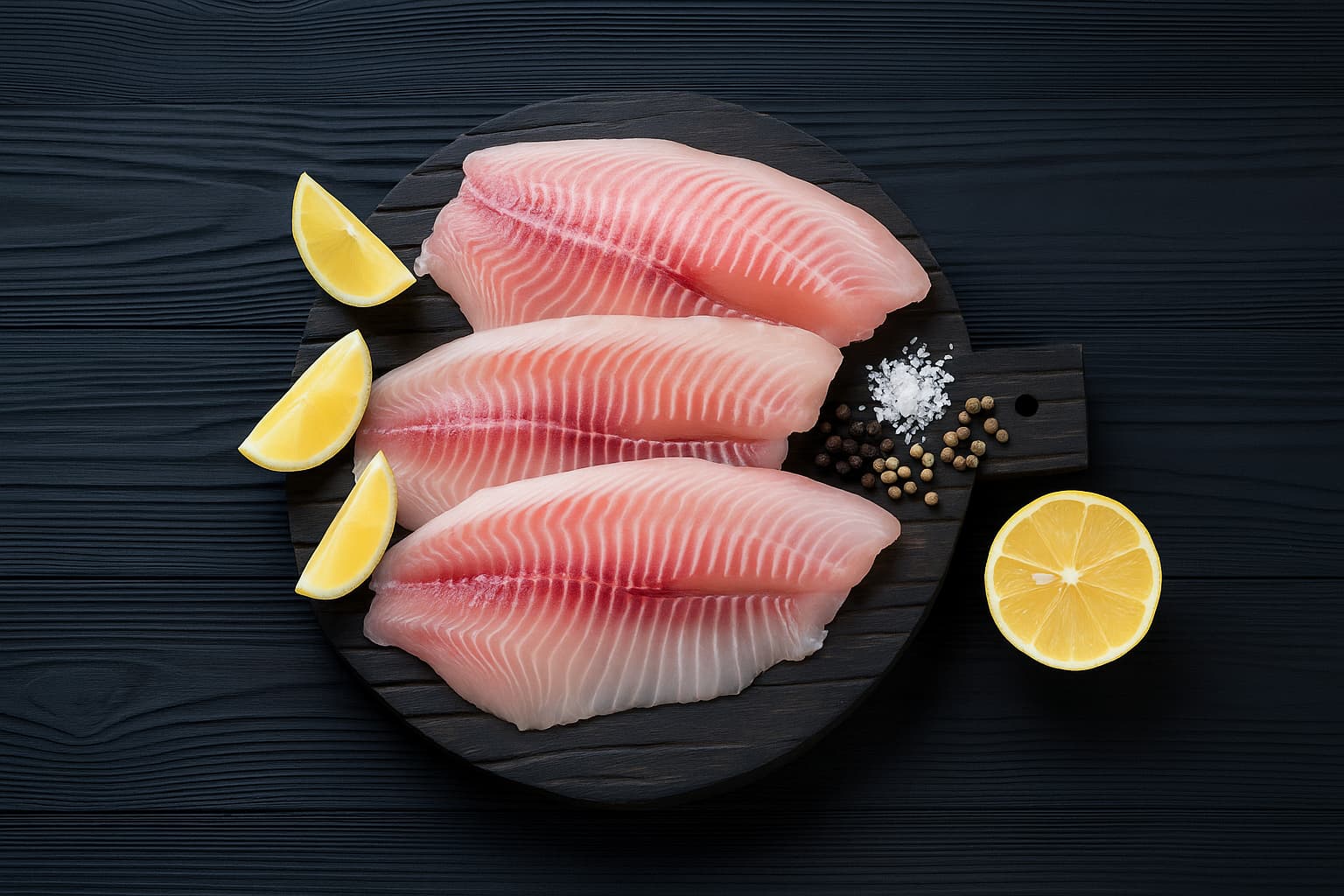
What is a tilapia?
Tilapia is a freshwater fish belonging to the Cichlidae family . Although the name is used to group several species, the most widely farmed and commercially available is Nile tilapia ( Oreochromis niloticus ). It originated in the rivers and lakes of Africa, but today it is farmed in more than 130 countries thanks to its adaptability, rapid growth, and resistance to diverse environmental conditions.
Characteristics of tilapia
- SizeIt can reach between 20 and 40 cm, with a weight of up to 2 kg under controlled conditions.
- Color: Variable depending on the species, from grayish to bluish or reddish tones.
- Her first book of poems, Cuerpo,Laterally compressed, with long dorsal fins and prominent lips.
- Reproductive behaviorMouth incubation, especially in females.
- Method of production: Mainly aquaculture.
Behavior and Feeding
Tilapia is an omnivorous fish, with a herbivorous tendency. It feeds on:
- Algae
- Phytoplankton
- Small invertebrates
- Organic debris
- Plant-based feeds in aquaculture
In its natural habitat, it prefers warm, calm waters with vegetation, where it forms schools and displays territorial behaviors.
Types of tilapia
At a commercial level, three main types stand out:
- Nile tilapia (Oreochromis niloticus)The most widespread. Fast growth and highly prized meat.
- Blue tilapia (Oreochromis aureus): Cold resistant and tasty.
- Tilapia from Mozambique (Oreochromis mossambicus): Resistant but slower growing.
There are also numerous hybrids, such as the red tilapia , the result of crossing several species, prized for its flavor and size.
Nutritional values
Tilapia is an excellent source of lean protein. Per 100 grams of edible product:
nourisher | Quantity |
Energy | 402 kJ / 96 kcal |
Protein | 20,08 gr |
Carbohydrates | 0 gr |
Fiber | 0 gr |
Sugar | 0 gr |
Total fat | 1,7 gr |
Saturated fat | 0,571 gr |
Polyunsaturated fat | 0,387 gr |
Monounsaturated fat | 0,486 gr |
Cholesterol | 50 mg |
Sodium | 52 mg |
Potassium | 302 mg |
Source: https://www.fatsecret.com.mx/calor%C3%ADas-nutrici%C3%B3n/gen%C3%A9rico/tilapia-(pez)
Habitat and Fishing Season
Habitat
Tilapia are found in fresh or slightly brackish water in tropical and subtropical regions. They are primarily farmed in:
- Rivers
- Lagos
- reservoirs
- Aquaculture ponds and tanks
Distributed in Asia, America, Europe, Africa and Oceania.
Fishing Season
Tilapia is available year-round thanks to aquaculture production. This guarantees a stable, high-quality supply, independent of natural seasons.
Is tilapia a healthy fish or does it have risks?
In some media outlets, controversy has arisen regarding tilapia due to:
- Intensive production in certain regions (excessive use of antibiotics or overcrowded conditions).
- Low omega-3 content compared to oily fish.
Recommendations for consumption:
- Opt for tilapia from certified farms (as ASC).
- Prefer products from countries with good practices such as Ecuador, Peru, Colombia or Taiwan.
- Verify the origin and traceability of the product.
Tilapia as an invasive species
The introduction of tilapia into ecosystems outside their natural habitat has caused ecological imbalances in some regions, displacing native species and altering the environment. Therefore, their farming must be regulated and controlled, especially in sensitive areas.