 Skip to content
Characteristics of Red Shrimp
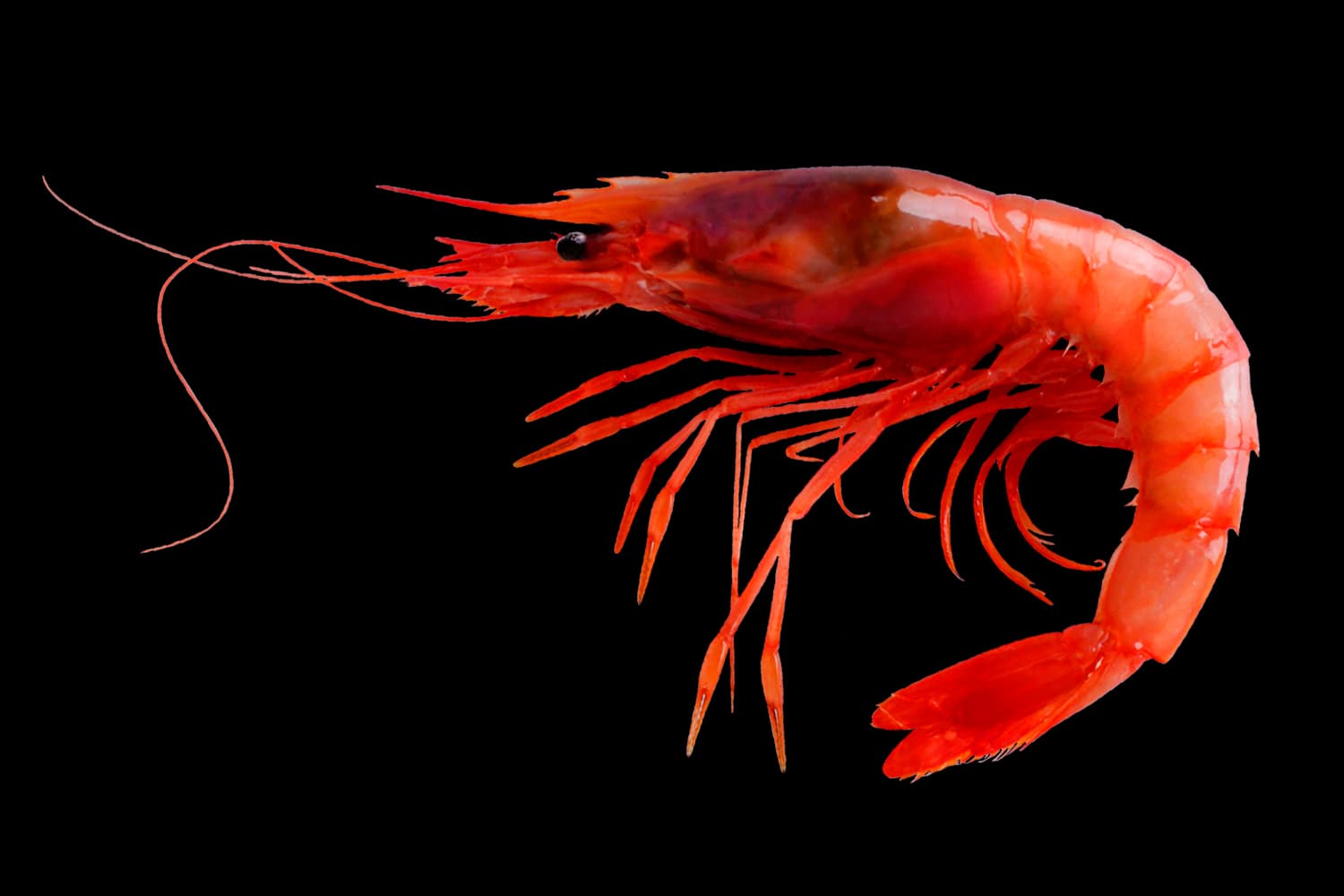
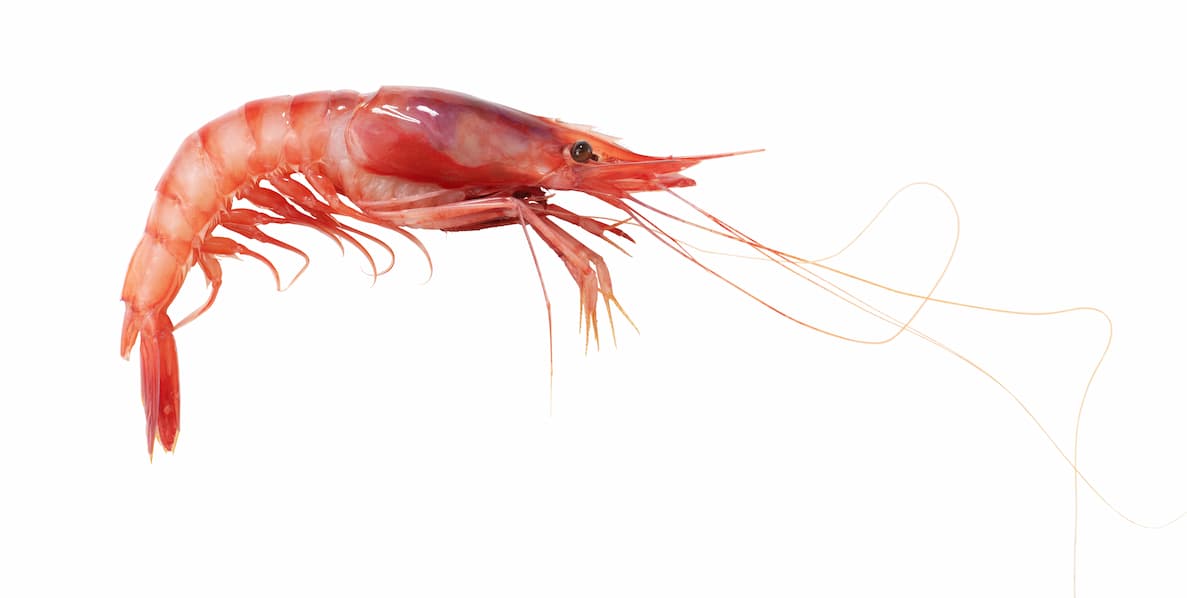
Red shrimp are easily recognized by their:
- Bright red color even before cooking them.
- Variable size, which can reach up to 20-22 cm in the largest specimens.
- Big head, which contains most of the concentrated flavor.
- Thin shell and somewhat translucent, covering a segmented body and thin legs.
In addition, they have two long antennas (hence their scientific name) antennatus) and their front legs are adapted for walking and handling food.
Behavior and Feeding
The red shrimp is an animal nocturnal and scavenger, which lives on the seabed among the 200 and 1000 meters deepDuring the day it remains in deeper areas and at night it may ascend slightly in search of food.
Their diet consists mainly of:
- Organic remains
- Small fish and crustaceans
- Molluscs benthic
This nutrient-rich diet gives it its characteristic intense flavor and high culinary value.
Nutritional values
Red shrimp are a nutritious seafood, low in calories and fat, ideal for a balanced diet. They provide a high amount of quality protein and a good dose of minerals.
nourisher | Quantity |
Energy (Kcal) | 93 Kcal |
Proteins | 20,1 gr |
Total fat | 1,4 gr |
Saturated fats | 0,22 gr |
Monounsaturated fats | 0,3 gr |
Polyunsaturated fats | 0,45 gr |
Omega-3 | 0,388 gr |
Linoleic acid (Omega-6) | 0,014 gr |
Cholesterol | 200 mg/1000 kcal |
Carbohydrates | 0 gr |
Fiber | 0 gr |
Water | 78,5 gr |
Football | 220 mg |
Iron | 1,9 mg |
Iodine | 90 g |
Magnesium | 76 mg |
Zinc | 3,6 mg |
Sodium | 146 mg |
Potassium | 266 mg |
Phosphorus | 259 mg |
Selenium | 24,3 g |
Thiamin (Vitamin B1) | 0,05 mg |
Riboflavin (Vitamin B2) | 0,04 mg |
Niacin (Vitamin B3) | 7,4 mg |
Vitamin B6 | 0,1 mg |
Folates | 5 g |
Vitamin B12 | 1 g |
Vitamin C: | Traces |
Vitamin A (Eq. Retinol) | 9 g |
Vitamin D | Traces |
Vitamin E | 1,5 mg |
Source: Government of Spain
Habitat and Fishing Season
Habitat
The red shrimp lives in muddy and sandy bottoms of the Mediterranean Sea and the eastern Atlantic, at depths varying between 200 and 1000 meters, although the most frequent captures occur among the 400 and 800 meters.
Its distribution includes:
- Western Mediterranean (mainly the coasts of Spain and Italy)
- Areas of the Alboran Sea
- Part of the Atlantic, near the Gulf of Cadiz
It prefers stable temperatures and areas with moderate currents, which limits its habitat to very specific and valuable regions.
Fishing Season
The red shrimp You can fish all year round, although there are peaks of abundance between the months of may and september, coinciding with their reproductive cycles.
The most common fishing methods are:
- Bottom trawling (highly regulated by closed seasons and minimum sizes)
- artisanal fishing, increasingly promoted for its lower impact
In many areas, such as Palamós and Denia, there are annual fishing bans to ensure the sustainability of the resource.
Source: https://www.mapa.gob.es/eu/ministerio/servicios/informacion/0005gamba-roja_tcm35-102788.pdf
Frequently Asked Questions about Red Shrimp
What is the difference between red shrimp and white shrimp?
Red shrimp live in deep waters and have a much more intense and concentrated flavor. Their natural color is red, even when raw. White shrimp are lighter in color, milder in flavor, and live in shallower waters.
Why is red shrimp so expensive?
Its capture is difficult due to the depths at which it lives. Furthermore, it is a highly sought-after product due to its quality, and in areas like Palamós, Denia, and Garrucha, it has a gourmet reputation that increases its price.
Which part is the tastiest?
Undoubtedly, the cabeza, where most of the flavor is concentrated. Many chefs use it to make stocks, broths, or even to eat it straight.
Where are red shrimp found in Spain?
Red shrimp are mainly caught in the western mediterranean, in areas such as Palamós (Girona), Denia (Alicante), Garrucha (Almería) and also in some parts of Murcia y the Alboran SeaThese regions are known for the exceptional quality of their catches.