 Skip to content
Curiosities about cockles or Tellinas
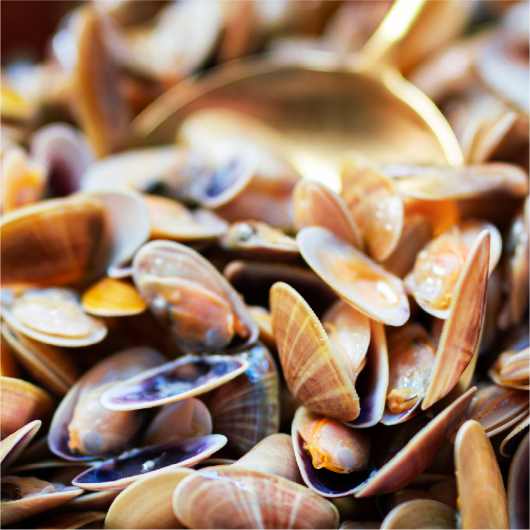
Coquinas can vary in color. They can be brown, with spots or with purple areasDespite their appearance, they have 3 lateral teeth that they use to feed on plankton in the water.
Cockles reproduce unisexually.They release their eggs into the water, where the larvae live and grow until they develop their shells and settle on the seabed.
It is said that coquinas are the little sisters of clams. Its flavor is less intense than that of clams and for this reason, the flavor of the cockles has a touch of the sea but without being so invasive to the palate.
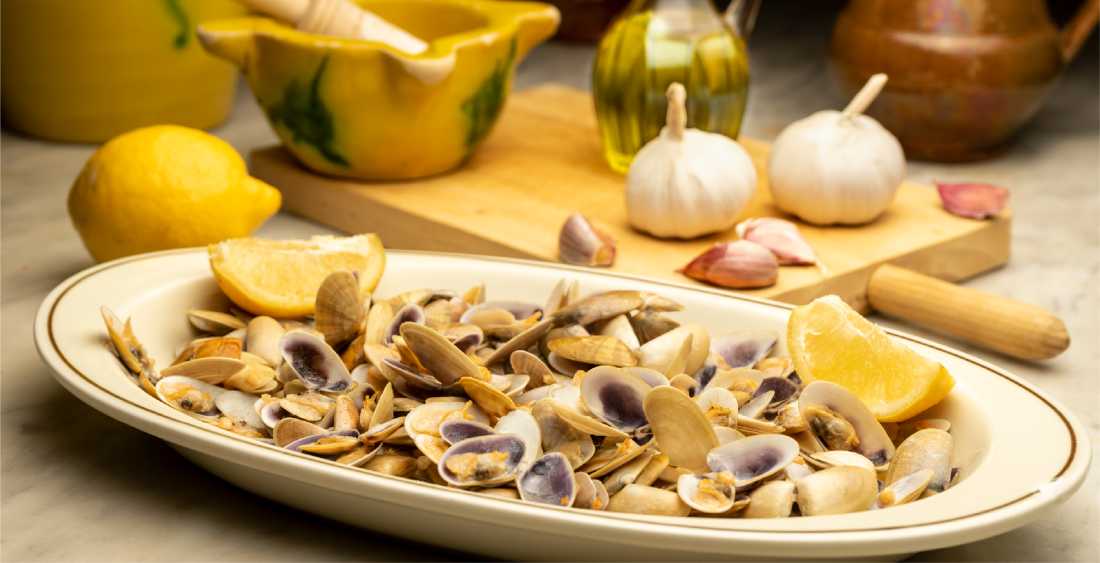
Cockles are generally one of the favorite dishes to eat in summer. They bring freshness and flavor to any dish Whether as a side dish or a starter, they're so easy to eat that it's hard to share!
Nutritional values
| nourisher | Value per 100 g |
|---|---|
| Energy (Kcal) | 74 |
| Proteins (g) | 13 |
| Total lipids (g) | 1 |
| Saturated FA (g) | 0.09 |
| Monounsaturated fatty acids (g) | 0.08 |
| Polyunsaturated fatty acids (g) | 0.28 |
| v-3 (g) | 0.146 |
| C18:2 Linoleic (v-6) (g) | 0.109 |
| Cholesterol (mg/1000 kcal) | 34 |
| Carbohydrates (g) | 0 |
| Fiber (g) | 0 |
| Water (g) | 81.8 |
| Calcium (mg) | 46 |
| Iron (mg) | 14 |
| Iodine (µg) | |
| Magnesium (mg) | |
| Zinc (mg) | |
| Sodium (mg) | 56 |
| Potassium (mg) | 314 |
| Phosphorus (mg) | 169 |
| Selenium (μg) | |
| Thiamine (mg) | |
| Riboflavin (mg) | 0.21 |
| Niacin equivalents (mg) | 1.8 |
| Vitamin B6 (mg) | |
| Folates (μg) | |
| Vitamin B12 (mcg) | |
| Vitamin C (mg) | |
| Vitamin A: Eq. Retinol (mcg) | 90 |
| Vitamin D (μg) | 4 |
| Vitamin E (mg) | 0.31 |
How to properly clean raw clams?
When eating cockles, many people make the mistake of not cleaning them. If not cleaned properly, sand residue may appear.To prevent this from happening to you, all you need is cold water, a container, and salt. We'll tell you how!
- Examine the clams carefully and remove any with cracked or open shells. This indicates they're not in good condition.
- Fill the container with cold water and add coarse salt to clean them. For every liter of water, we recommend adding about 50 grams of salt. We recommend letting them soak for an hour.
- You'll need to change the water more than once to make sure they're clean.
- Remove the clams very carefully from the water container so that the sand does not move.
- To finish washing them, we place them under the tap with cold water.
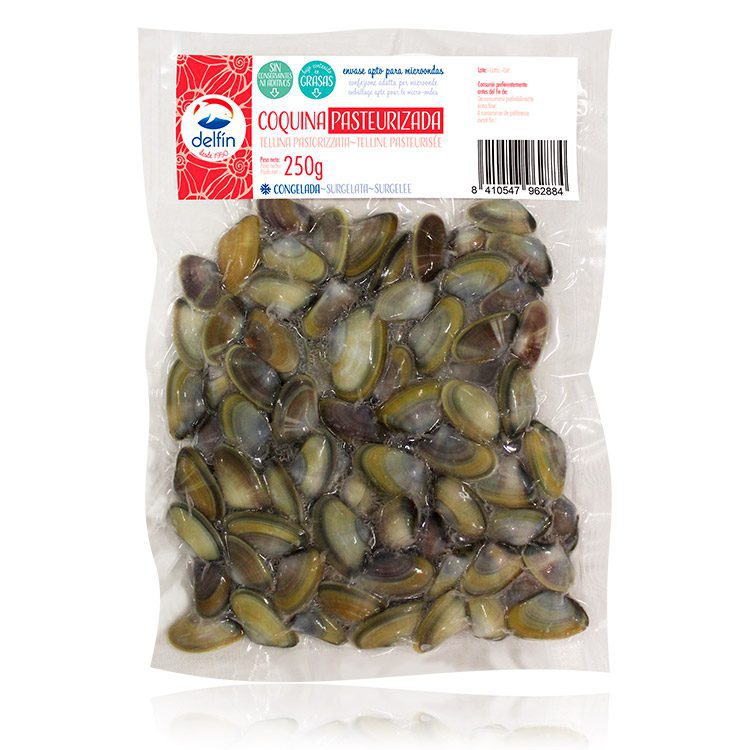
If you don't have much time and don't want to do this process, our pasteurized clams They come already clean and ready To put them in the microwave or frying pan, you just need to defrost them first. Serve them with lemon, salt, or your favorite sauce, but above all, enjoy them with good people.
Habitat and Fishing Season
The habitat of the coquina, or Donax trunculusIt covers areas of the Atlantic and Mediterranean, specifically in fine, clean sandy bottoms of the coastal zone in shallow waters up to about 15 meters deep. It feeds on suspended organic matter through its long siphons. The clams are collected with hoes and rakes.
Regarding the fishing season, clams are marketed year-round, but there are higher peaks toward the end of the year and during Christmas. This means that, although they are available year-round, their demand and possibly their abundance in the market increase in the final months, which could be related to culinary traditions or the biology of the species, which favors harvesting at that time.