 Skip to content
Characteristics of monkfish
The monkfish is an unmistakable fish due to its physiognomy:
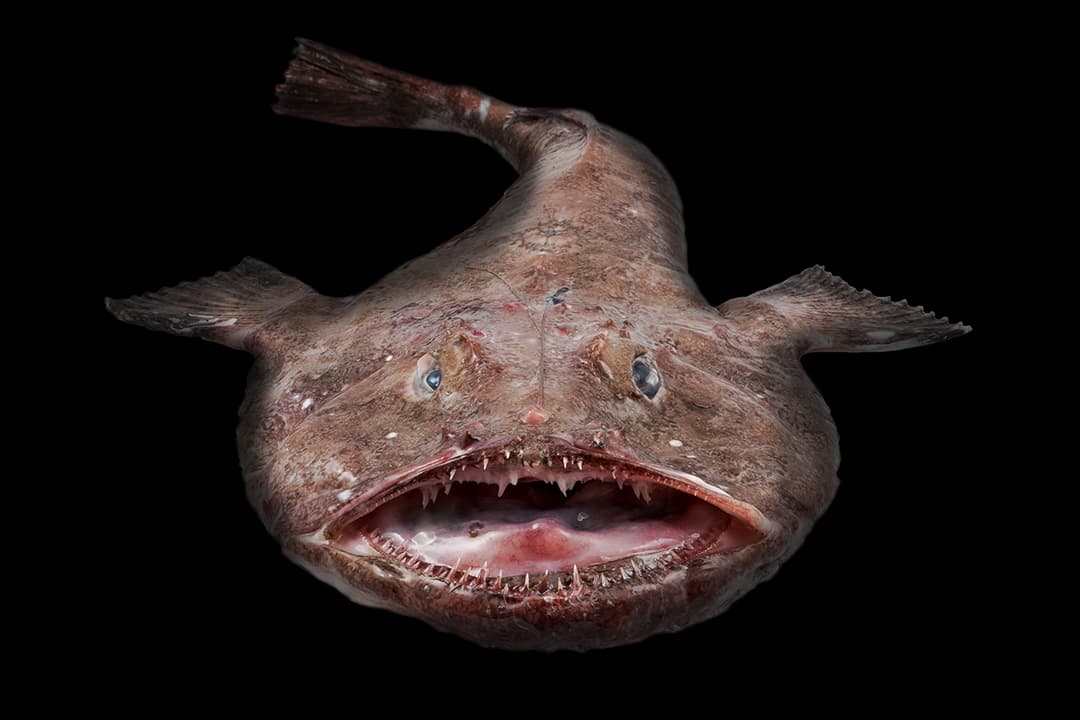
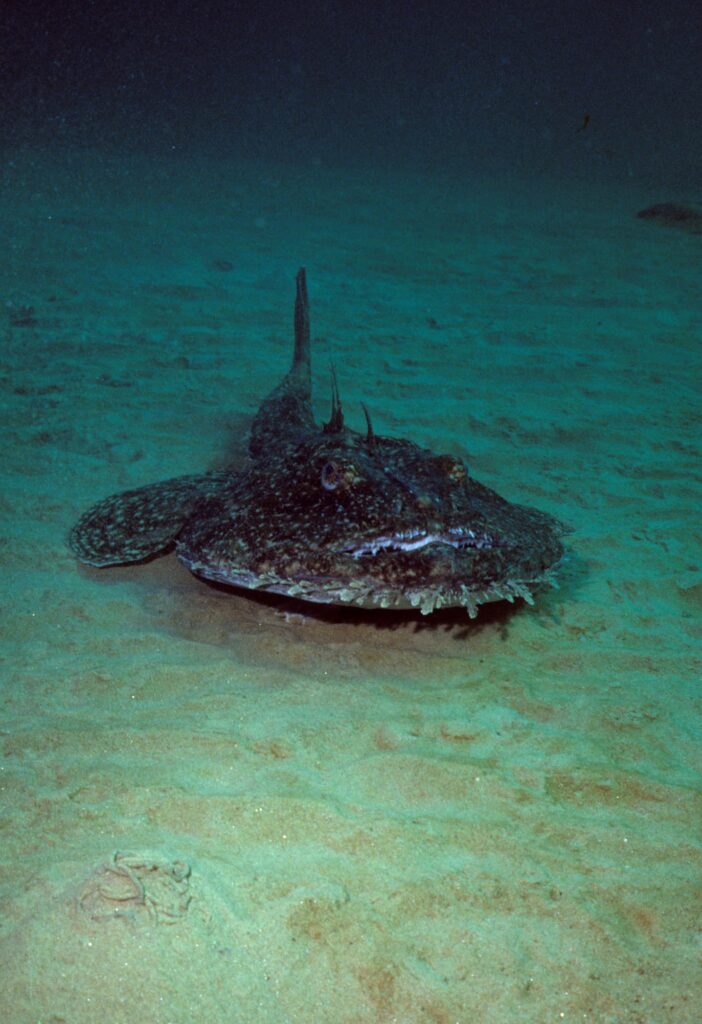
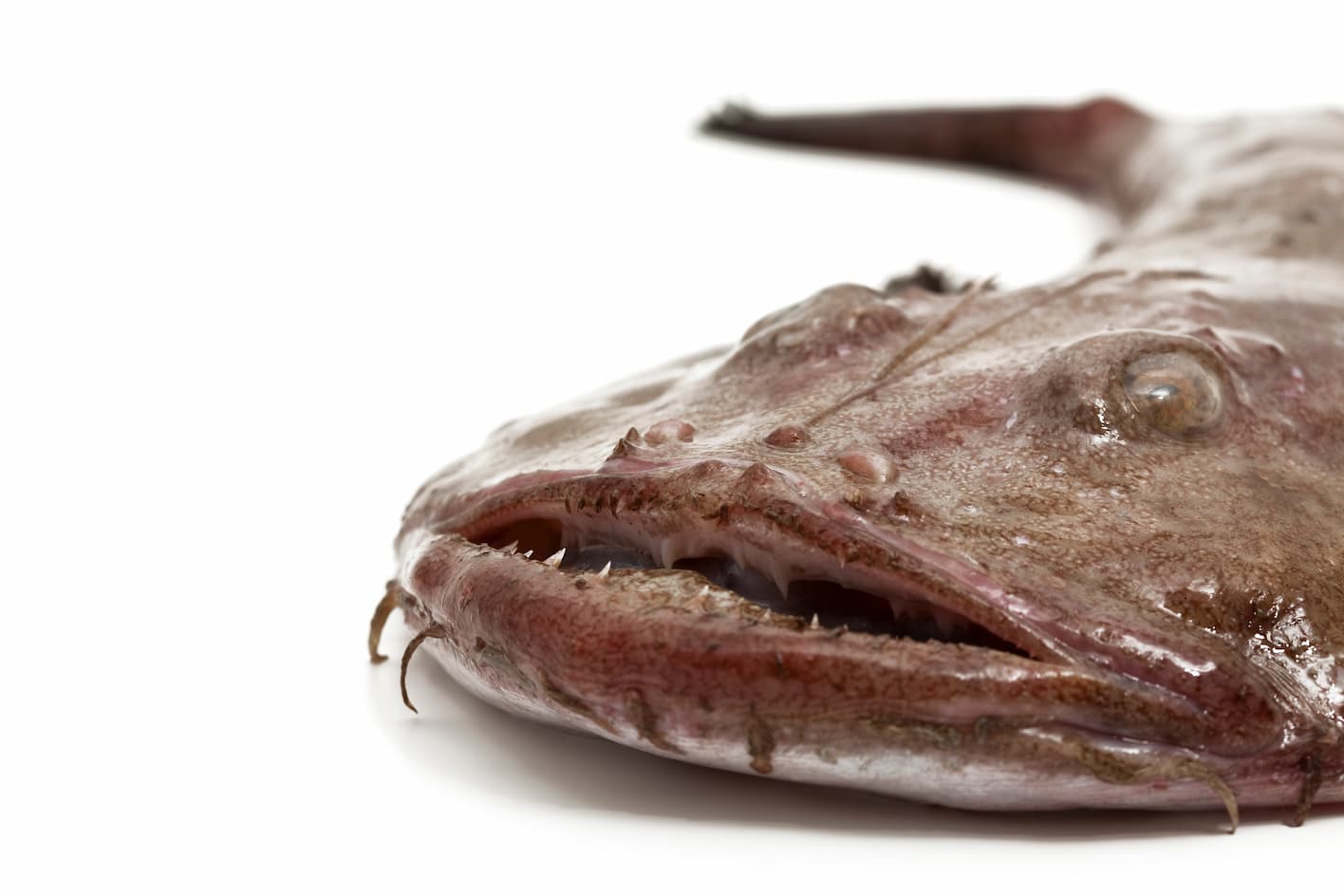
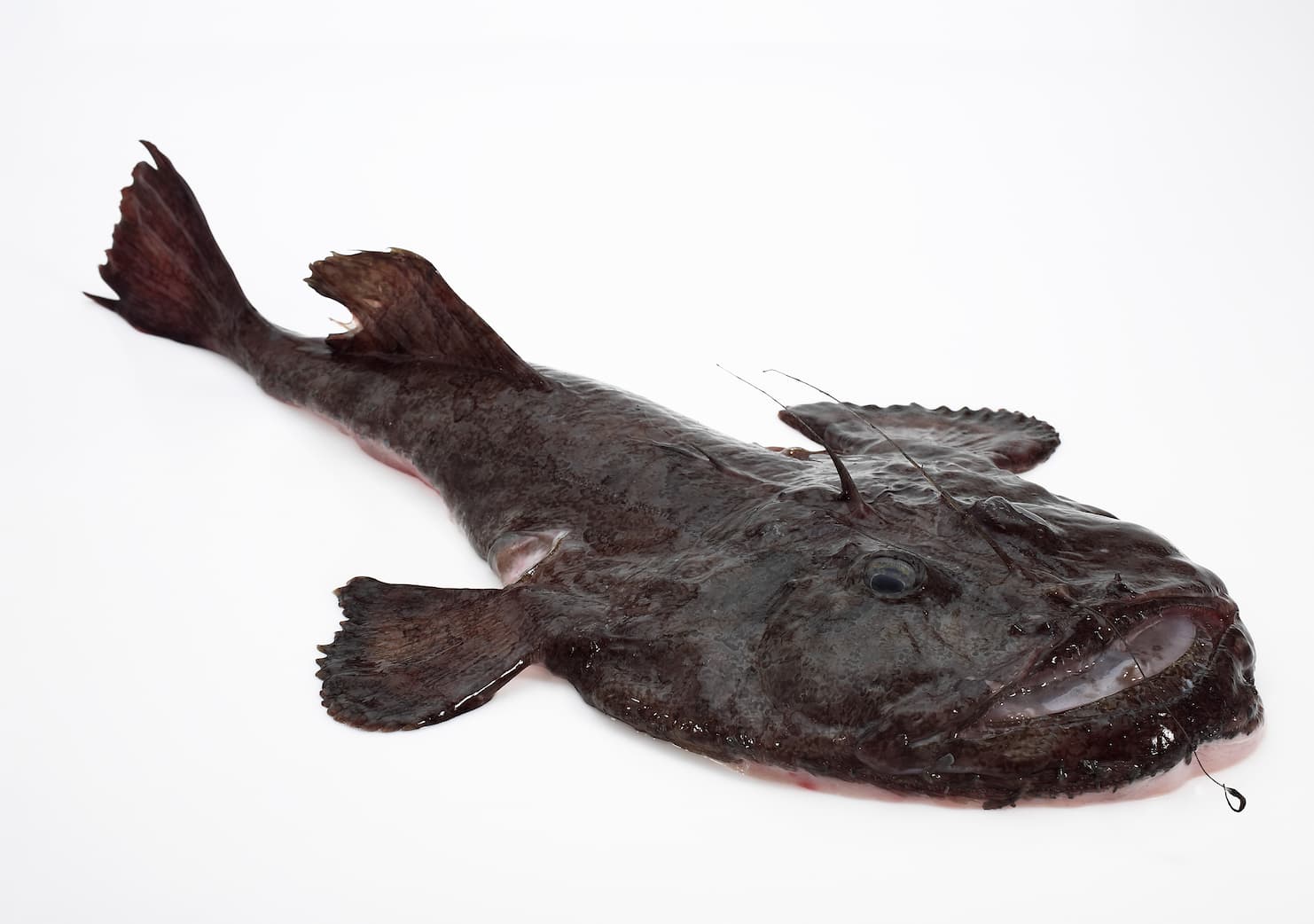
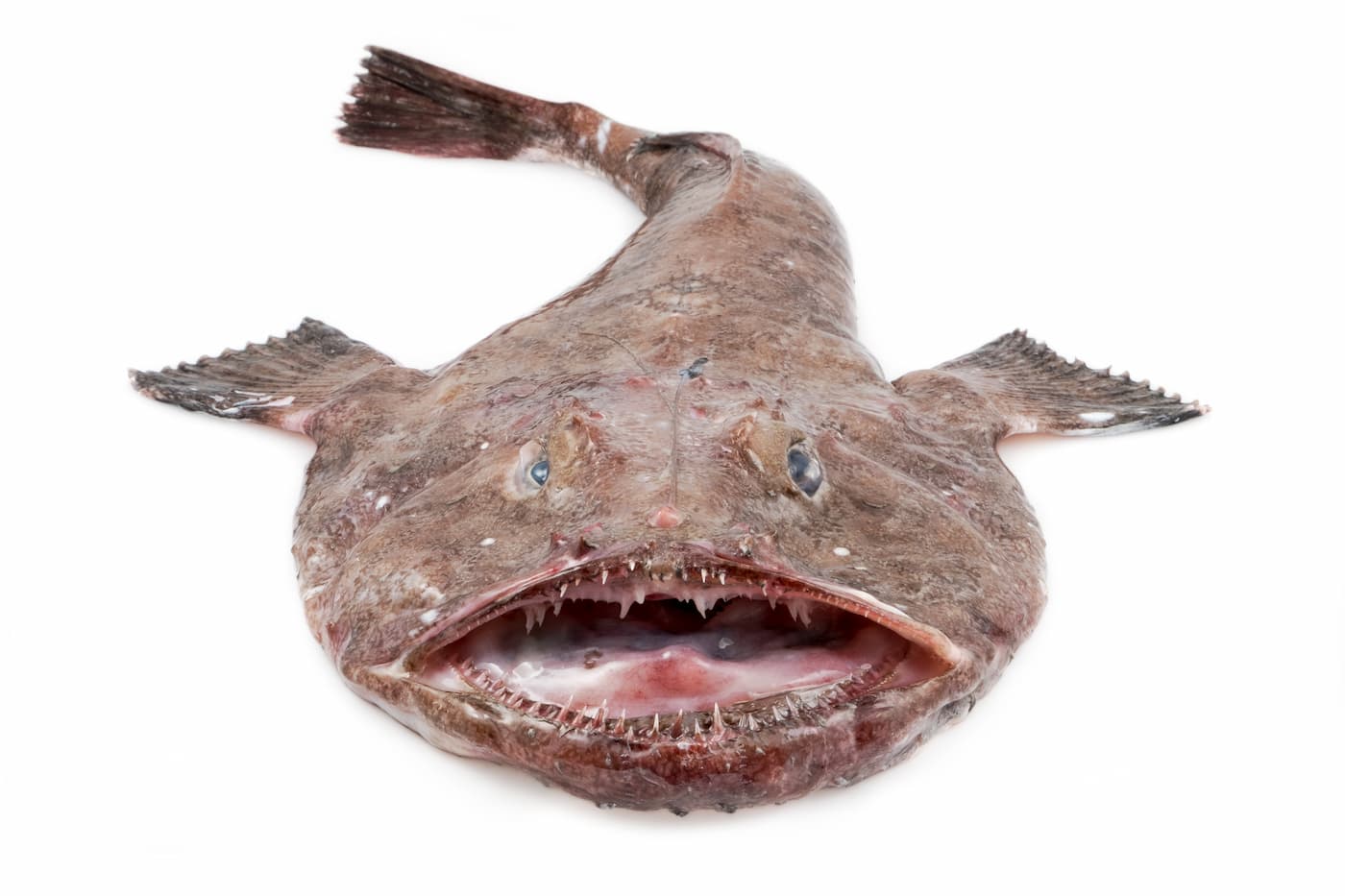
- Physical appearance: Its body is wide and flat, with a disproportionately large head and a wide mouth filled with sharp, curved teeth. Its mottled brown skin with reddish or violet tones allows it to camouflage itself on muddy bottoms. It is a truly unsightly fish.
- Size: It can reach 2 meters in length and weigh up to 40 kilograms, although the most common specimens on the market are much smaller.
- Lure: The protuberance on its head, similar to a fishing rod, attracts its prey towards its mouth.
- Main species: In addition to white and black monkfish, other varieties are marketed such as Cape monkfish (Lophius vomerinus) And the American anglerfish (Lophius americanus), the latter with a more elongated body and a smaller head.
Behavior and feeding
The anglerfish is a patient and solitary hunter. Its diet includes small fish, cephalopods and crustaceans, which it catches using its camouflage and the lure on its head. It is a very sedentary fish that spends most of its time semi-buried on the seabed, remaining motionless and waiting for its prey. This is why it doesn't require frequent feeding.
Types of monkfish
Among the most common varieties of monkfish are:
- White monkfish (Lophius piscatorius): It is the best-known and most consumed species in Europe, with a delicate flavor and firm flesh.
- Black monkfish (Lophius budegassa): Similar to white, but with a darker color and smaller size.
- Cape Monkfish (Lophius vomerinus): Originating from warmer waters, it is mainly marketed frozen.
- American monkfish (Lophius americanus): Sometimes characterized by its bluish hue and elongated body, the normal color is reddish brown.
- Chinese monkfish (Lophius litulon): Rounded body with a wider, sunken head, with a yellow-brown color.
Nutritional values
Monkfish is a low-calorie, low-fat fish, ideal for healthy diets. Its meat provides:
nourisher | Per 100 g of edible product |
Energy (Kcal) | 78 |
Proteins (g) | 18.7 |
Total lipids (g) | 0.3 |
Saturated FA (g) | 0.08 |
Monounsaturated fatty acids (g) | 0.05 |
Polyunsaturated fatty acids (g) | 0.14 |
v-3 (g) | 0.001 |
C18:2 Linoleic (v-6) (g) | 0.005 |
Cholesterol (mg/1000 kcal) | 25 |
Carbohydrates (g) | 0 |
Fiber (g) | 0 |
Water (g) | 81 |
Calcium (mg) | 30 |
Iron (mg) | 1 |
Magnesium (mg) | 23 |
Zinc (mg) | 0.5 |
Sodium (mg) | 109 |
Potassium (mg) | 235 |
Phosphorus (mg) | 330 |
Selenium (µg) | 36.5 |
Thiamine (mg) | 0.08 |
Riboflavin (mg) | 0.1 |
Niacin equivalents (mg) | 6.9 |
Vitamin B6 (mg) | 0.01 |
Folates (µg) | 11 |
Vitamin B12 (µg) | 2 |
Vitamin E (mg) | 0.85 |
Source: Ministry of Agriculture, Fisheries and Food
Habitat and fishing season
Habitat
The monkfish is a demersal fish (that lives in deep waters) that lives in muddy or rocky territory between the 20 and 500 meters, although they have also been seen 1.000 depth metersIts main distribution areas are:
- Atlantic: From the Gulf of Guinea to the Barents Sea.
- Mediterranean: Deep waters near the coasts.
Fishing season
Monkfish are caught year-round, although spring is their breeding season. Common fishing techniques include drag, longline and the trammelThese practices allow it to be caught in different sizes, respecting the minimum legal sizes (30 cm in the Mediterranean).
To learn more about monkfish
What is the difference between white and black monkfish?
The main difference lies in the color of the peritoneum, which is white in the common anglerfish and dark in the black anglerfish. Furthermore, the white anglerfish is usually larger.
What parts of the monkfish are consumed?
Mainly the tail, which is fleshy and boneless. The head is highly valued for making broths and soups. Although the tail is the most consumed part, monkfish liver is highly valued in haute cuisine, especially in countries like Japan.
How can you cook monkfish?
It is a very versatile fish. It can be prepared Baked monkfish, grilled, in stews or as part of broths and rice dishes.
What kind of fish is monkfish? Is it white or blue fish?
Monkfish is a White fish deep-sea fish belonging to the family LophiidaeIt is characterized by its firm, boneless flesh, making it highly prized in cooking. It is also a demersal fish, meaning it lives on the seabed, camouflaged in the sediment.
Other curiosities
- The monkfish, initially despised by fishermen, was key to obtaining insulin from its pancreas.
- Males are ten times smaller than females and lack the characteristic lure.
- In the Cryptopsaras couesii species, the male physically fuses with the female, losing his eyes and organs, and is practically reduced to a source of male gametes. This unique behavior confused scientists, who thought the males were parasites.
- Its elastic stomach allows it to swallow prey of its own size.