 Skip to content

- February 9, 2026
- POSTS FRESH FROM THE OVEN!
Fish with less mercury: the 15 safest
Fish is a cornerstone of the Mediterranean diet. It's our main source of Omega-3 fatty acids, high-quality protein, and essential vitamins. However, in recent years, a question has been on the minds of many consumers at the fish market: Is this fish safe or does it have too much mercury?
It's normal to worry, especially if there are children at home or you're pregnant. But there's no need to eliminate fish from your diet; the secret is knowing how to choose. Organizations like the Spanish Agency for Food Safety and Nutrition (AESAN) agree that the benefits of eating fish far outweigh the risks, as long as we avoid certain specific species.
Here's the list of the fish with less mercuryBased on food safety criteria, so you can enjoy your favorite dishes again with complete peace of mind. Let's take a look!
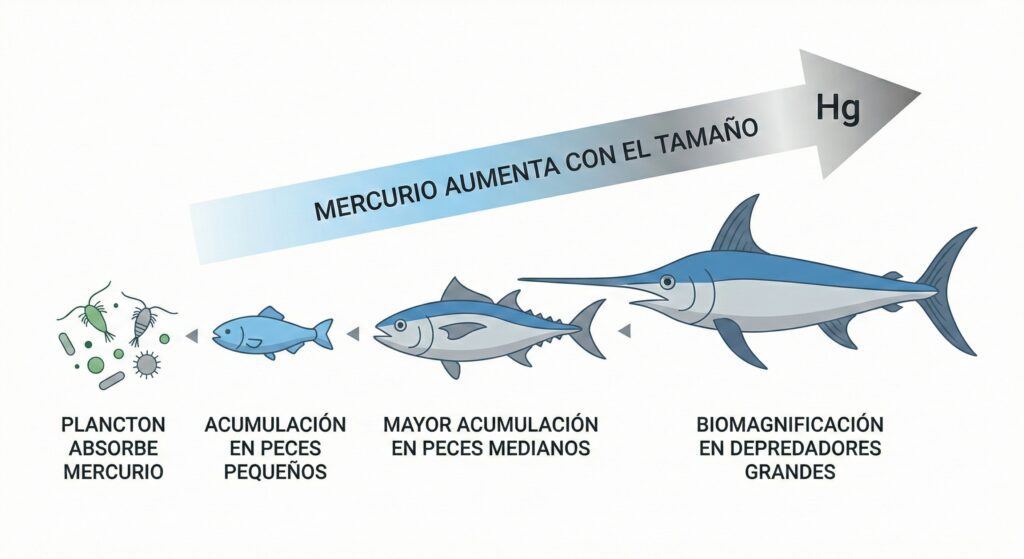
Why does mercury end up on our plates?
To understand what to buy, we first need to understand why this happens. Mercury is a heavy metal that reaches the sea through both natural causes (volcanoes) and human pollution. Once in the water, it transforms into methylmercury.
This is where the food chain and bioaccumulationSmall fish absorb a little mercury. Medium-sized fish eat many small fish, accumulating the metal from all of them. And finally, large predators (like sharks or giant bluefin tuna) eat the medium-sized fish, accumulating much higher amounts.
Therefore, the golden rule is simple: The smaller the fish and the shorter its lifespan, the safer it is..
The 15 fish with the least mercury that you can eat with peace of mind
If you're looking for fish with less mercuryThese are the 15 safest species you'll commonly find in Spanish markets. They are low-mercury or moderately safe options for the general population.
- Sardines: The queens of Omega-3. Being small and short-lived, Sardines contain mercury at very low levels. They are an economical and safe option.
- Anchovies: Another essential small oily fish. Whether pickled or fried, they are perfectly safe due to their small size.
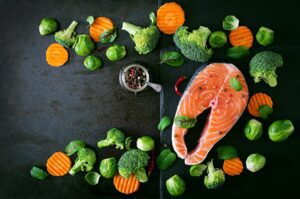
- Salmon: One of the most frequent doubts is whether salmon It contains mercury.The answer is that it has low levels, especially in aquaculture, since its feed is controlled.
- Hake / Whiting: El White fish most consumed in Spain. Whiting (young hake) has even lower levels than large adult specimens.
- Cod: A classic of our gastronomy. Cod. It contains mercury. at levels considered safe, being an excellent source of lean protein.
- Mackerel (from the north): Pay attention here. The Atlantic mackerel (Scomber Discombrus) is small and safe. Mackerel contains mercury. low if you choose these portion-sized specimens, differentiating them from giant species from other seas.
- Squid / Baby Squid: Short-life cycle cephalopods accumulate very few heavy metals.
- Octopus: Like squid, octopus is a nutritious option with low risk levels.
- Golden: Very popular in Spain, especially the aged variety. golden mercury It exhibits very low levels due to the control of its feeding and its rapid marketing cycle.
- Sea bass: An inseparable companion of the gilthead seabream, it shares its food safety characteristics.
- Sole: A flat white fish, ideal for children due to its mild flavor and low risk of contaminants.
- Pout: Similar to cod but often cheaper. cod mercury It is minimal, which makes it perfect for frequent consumption.
- Trout: Since it is generally farmed fish in the market, it is one of the cleanest options available.
- Medallions: Bivalve mollusks are filter feeders, but because they have a short lifespan and are harvested young, they are safe and rich in iron.
- Melva: It's a great alternative to tuna. The ratio Melva Mercury It is favorable, being an excellent choice of medium-small sized oily fish.
Oily fish without mercury (or almost): Is it possible?
Many people mistakenly believe that “healthy fat” equals “more toxins.” They wonder if the oily fish without mercury It exists. Although “zero risk” is difficult in the natural environment, species such as the sardine, anchovy and southern mackerel (small mackerel) come very close to that ideal.
These fish provide us with all the Omega-3 fatty acids necessary for the heart and brain, but without the toxic load of large predators. If you're concerned about southern mackerel mercuryYou can rest assured: since these species do not reach gigantic sizes, they do not have enough time to bioaccumulate large amounts of metal.
Answering questions: What about bonito and tuna?
This is where the most confusion often arises. Not all tuna are the same. Let's differentiate between the species so you know what you're buying, based on data from the FAO.
- Bonito contains mercury, but with nuances: The Northern Bluefin Tuna (Thunnus alalungaThe mullet is a medium-sized fish. It has more mercury than a sardine, but much less than a giant bluefin tuna. Its consumption is considered safe as part of a varied diet.
- Tuna mercury (the big difference): The real risk lies in the Red tuna (thunnus thynnus), a species that can exceed 3 meters and 600 kg, according to the species classification of the European UnionDue to its size and longevity, it accumulates much more mercury. In contrast, light tuna (like the yellowfin or the list) are generally smaller species with less bioaccumulation.
There are around 15 species of tuna according to the FAOTherefore, it is vital not to lump everyone together:
- Species with high mercury content (The Big 4): Bluefin Tuna (large), Swordfish (Emperor), Pike and Shark (Snipe, Blue Shark, Mako Shark).
- Moderate/safe consumption (General population): Northern Bluefin Tuna, Light Tuna, Skipjack.
Table of fish with mercury: Summary of recommendations
To make it easier for you, here is a summary based on standard food safety criteria for the general population:
- LOW level (Frequent consumption): Sardine, Anchovy, Sole, Hake, Salmon, Sea Bream, Sea Bass, Pollock, Squid.
- MEDIUM level (Regular consumption with variety): Bonito del Norte, Light Tuna, Melva.
- HIGH level (Limit or avoid according to risk group): Bluefin Tuna (thunnus thynnus), Swordfish / Emperor, Shark (Dogfish, Blue Shark), Pike.

Recommendations by age group and condition
The health authorities (AESAN) are very specific in their recommendations for protecting neurocognitive development. A healthy adult is not the same as a developing organism.
- Pregnant women, planning pregnancy or breastfeeding: They should completely AVOID consuming species with high mercury content (swordfish, shark, bluefin tuna, and pike). Other fish (white and small oily fish) are very beneficial and necessary.
- Children up to 10 years old: Same as the previous group. It is recommended to avoid the 4 large species with high content.
- Kids from 10 to 14 years old: It is advisable to consume species with high mercury content more restrictively, limiting their intake to an occasional frequency (e.g., a small portion per month).
- General population: Eat fish! Ideally, alternate between oily and white fish, and vary the species. The cardiovascular health benefits outweigh the theoretical risks in healthy adults.
Tips for buying safe fish in Spain
Shopping safely is easier than it seems if you follow these tips when you go to the supermarket or fishmonger:
- Size Matters: When in doubt, always choose the smaller specimens. A whiting is better than a giant hake; mackerel is better than bluefin tuna.
- Vary your basket: Don't always eat the same thing. If you alternate between fish with lower mercury levels (sardines, sea bream, hake), you reduce your exposure to any contaminant.
- Read the label: When buying canned tuna, check if the species is specified. "Light tuna" is usually a safer option for regular consumption than bluefin tuna.
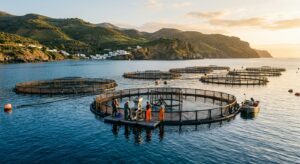
- Bet on national aquaculture: Fish such as sea bream, sea bass or turbot farmed in Spain have feeding controls that guarantee safe levels.
Quick checklist for your purchase:
- Is it a giant predatory fish (shark, emperor)? -> Avoid if there are children/pregnant women.
- Is it a small fish (sardine, anchovy)? -> Green light for frequent consumption.
- Is it canned? -> Prioritize light tuna, bonito or mackerel over bluefin tuna.
- Origin? -> Look for fish from nearby fish markets or certified aquaculture.
- Variety? -> Try to buy at least two different species each week.
FAQ
Which fish has the least mercury of all?
Generally, the smallest fish with very short lifespans (such as sardines and anchovies) and non-predatory mollusks (such as mussels) have the lowest levels.
Is it safe to eat canned tuna every week?
Yes, it's safe for the general adult population. Canned tuna is usually skipjack or yellowfin tuna, which are smaller species than bluefin tuna and are considered safe as part of a varied diet.
Does farmed salmon contain mercury?
Farmed salmon typically have low mercury levels. By controlling their feed and environment, the bioaccumulation that a long-lived wild salmon might experience is minimized.
Table of Contents