 Skip to content

What is tuna tartare?
Tartare is a dish made with raw meat or fish, finely chopped and seasoned with various ingredients. Originating in French cuisine with beef, the version with tuna—especially bluefin tuna —has gained enormous popularity in Spain thanks to the influence of Japanese and Mediterranean cuisine.
It's important not to confuse it with other similar preparations. Tuna tataki is briefly seared on a griddle on the outside while remaining raw inside, whereas tartare is served completely raw, without any heat. Sashimi , on the other hand, is simply sliced raw fish without any seasoning.
Ingredients of classic tuna tartare
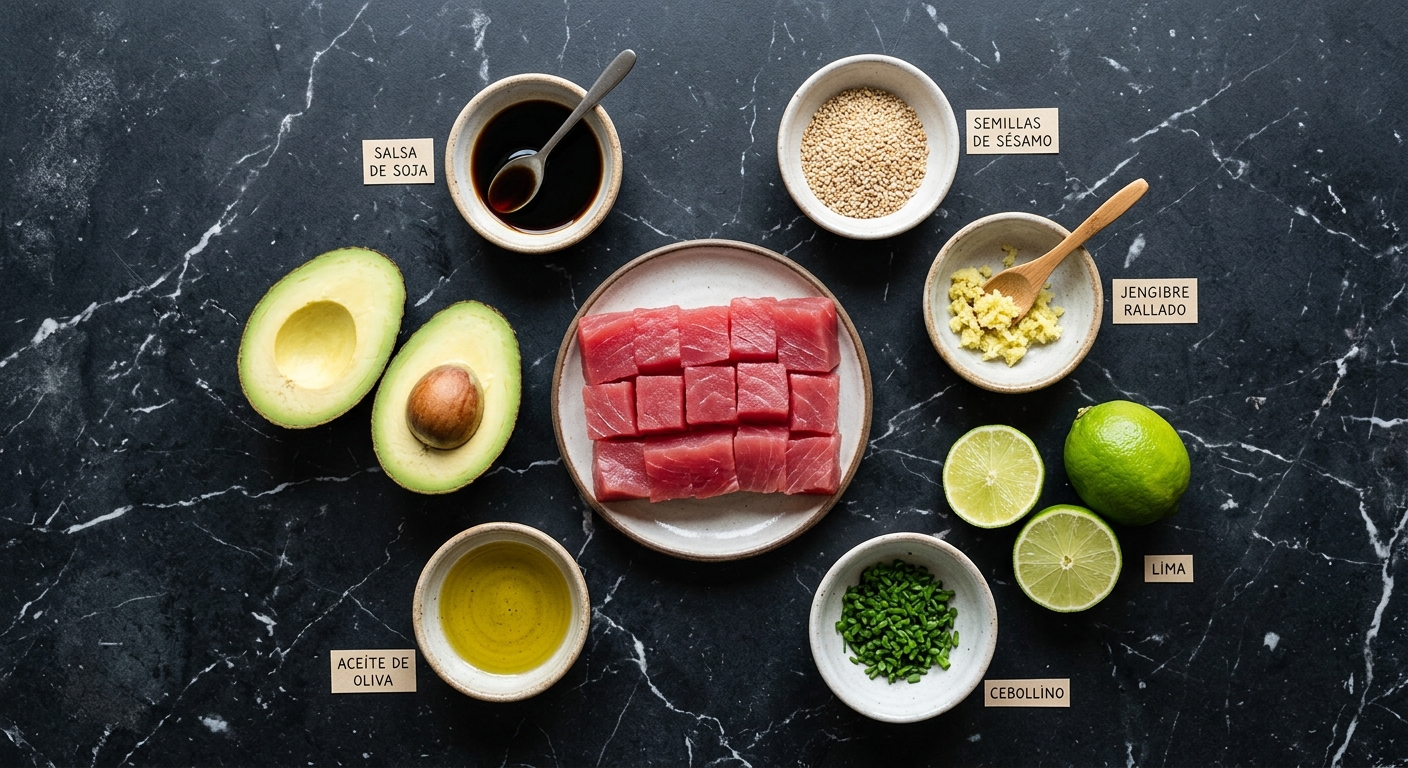
For the tartar:
- 300 g of fresh or deep-frozen quality bluefin tuna (clean loin, without skin or bones)
- 1 ripe (but firm) avocado
- 1 small fresh spring onion (or ½ shallot)
- 2 tablespoons soy sauce
- 1 teaspoon sesame oil
- 1 teaspoon grated fresh ginger
- 1 teaspoon Dijon mustard
- A few drops of Sriracha or Tabasco sauce (to taste)
- Juice of ½ lime or lemon
- Maldon salt and black pepper to taste
- Toasted sesame seeds for decoration
- Chopped fresh chives for garnish
To accompany:
- Thin bread toast or crackers
- Wonton chips or nachos (for a more casual version)
Step-by-step tuna tartare recipe
Step 1: Prepare the tuna
The first—and most important—step is to ensure the tuna is safe for raw consumption . If you're using fresh tuna, it must have been previously frozen at -20°C for at least 24 hours to eliminate the risk of anisakis. If you're using guaranteed deep-frozen tuna, this process has already been done. We'll explain this in more detail later.
Using a sharp knife, cut the tuna loin into uniform cubes of about 5-7 mm. Avoid chopping it too finely: the tartare should have some texture, not be a paste. Set aside in the refrigerator.
Step 2: Prepare the avocado
Peel and pit the avocado. Dice it into pieces the same size as the tuna. Immediately drizzle with a few drops of lime juice to prevent it from oxidizing.
Step 3: Prepare the dressing
In a small bowl, thoroughly mix the soy sauce, sesame oil, grated ginger, Dijon mustard, lime juice, and hot sauce. Taste and adjust as needed.
Step 4: Mix
In a bowl, mix the diced tuna with the finely chopped spring onion. Add the dressing gradually—not all at once—and stir gently so as not to break the tuna pieces. Adjust the salt if necessary.
If you have time, let it rest for 5-10 minutes in the refrigerator to allow the flavors to meld. No longer: the acid in the dressing will start to "cook" the tuna if left too long.
Step 5: Plating
Place a plating ring on the plate. First, add a base of diced avocado and press down lightly. Add the tuna tartare on top and compact it. Carefully remove the ring.
Garnish with toasted sesame seeds, chopped chives, and a drizzle of extra virgin olive oil. Serve immediately.
Tips and tricks to make it perfect

- Always use a knife, never a food processor.The meat grinder crushes the tuna fibers and ruins the texture. Hand-cutting produces the precise cubes needed for tartare.
- Always work in a cold environmentThe tuna must be very cold when you cut and mix it. If it gets warm, the texture changes.
- The dressing, at the endMix the dressing just before serving. If you leave it marinating for too long, the acid will start to "cook" the tuna.
- Frozen tuna is a great optionNot only is it safer (it has already undergone the freezing process that eliminates anisakis), but it often has better consistent quality than "fresh" products of dubious traceability.
- Choose the right cutThe loin or belly are the most prized cuts. Avoid parts with a lot of sinew or dark fat.
Tuna tartare variations to suit all tastes

1. Japanese tuna tartare
The most refined version, closest to sashimi . It omits avocado and emphasizes umami flavors. Dress with soy sauce, sesame oil, ginger, a few drops of yuzu (or lime) juice, and a quail egg yolk on top. Garnish with thin strips of nori seaweed and wasabi. Serve on a bed of sushi rice or on its own with sesame toast.
2. Cadiz-style tuna tartare
Southern Spain boasts its own version, with the legendary almadraba bluefin tuna as the star. The recipe from Cádiz is simpler and more respectful of the product: it only requires good bluefin tuna, finely diced tomatoes, spring onion, parsley, extra virgin olive oil, salt, and a dash of sherry vinegar. No soy, no avocado. The tuna takes center stage, undisturbed.
3. Tuna tartare with mango
The most tropical and colorful version. Ripe mango adds sweetness that perfectly complements the umami of the tuna. Dice the mango into pieces the same size as the tuna, add avocado, finely diced red onion, a soy and lime dressing, and finely chopped jalapeño pepper for a spicy kick. The contrast of red, green, and orange makes it the most visually stunning.
4. Gourmet tuna tartare (MasterChef style)
For when you really want to impress. Add to the basic tartare: chopped capers, diced gherkins, egg yolk emulsified with Dijon mustard, truffle shavings (or truffle oil if you don't have truffle), and microgreens for garnish. The result is a Michelin-star-level dish that you can make at home with the right ingredients.
5. Tuna tartare without avocado
For those who aren't fans of avocado or simply want to highlight the tuna, substitute the avocado with confit cherry tomatoes or finely diced cucumber. Add capers, spring onion, a touch of horseradish, and dress with ponzu (soy sauce with citrus). Fresh, light, and different.
Is tuna tartare safe to eat? Anisakis and freezing
This is the most important question you should ask yourself before preparing a tartare. Tuna, like most saltwater fish, can harbor anisakis, a parasite that is only destroyed by heat or proper freezing.
Spanish regulations require restaurants and bars to freeze fish intended for raw consumption at -20°C for at least 24 hours. For home use, the Spanish Agency for Food Safety and Nutrition (AESAN) recommends freezing fish at -20°C for at least 5 days before consuming it raw.
Guaranteed flash-frozen tuna has already undergone this process before reaching your kitchen, making it the safest and most convenient option for making tartare at home . If you're using fresh tuna from the fishmonger, be sure to ask if it has already been frozen. If not, freeze it yourself for the required number of days.
Avocado, for its part, provides heart-healthy monounsaturated fats, fiber, potassium, and vitamins E and K. Together, they form a dish that is a true ally of health.
How to plate tuna tartare: perfect presentation
Presentation makes all the difference between homemade tartare and restaurant tartare. These are the key elements:
- Use a plating ringIt's the secret to the perfect presentation. It gives the tartar a cylindrical shape, making it visually stunning. Very affordable stainless steel versions are available.
- Avocado base firstPlace a layer of avocado at the bottom of the ring mold, press it down lightly, and then add the tuna on top. This provides stability and height.
- Color contrastThe red of the tuna, the green of the avocado, and the black and white of the sesame seeds are visually striking. Add a few microgreens or chives for a touch of green.
- The end pointA drizzle of extra virgin olive oil around the plated tartare and a few flakes of Maldon salt on top elevate any presentation.
For a more complete experience, tuna tartare pairs perfectly with a chilled Albariño white wine or Japanese sake. If you're looking for other ideas to accompany raw fish, you'll find more inspiration in our article on raw food .