 Skip to content

What is Sashimi?
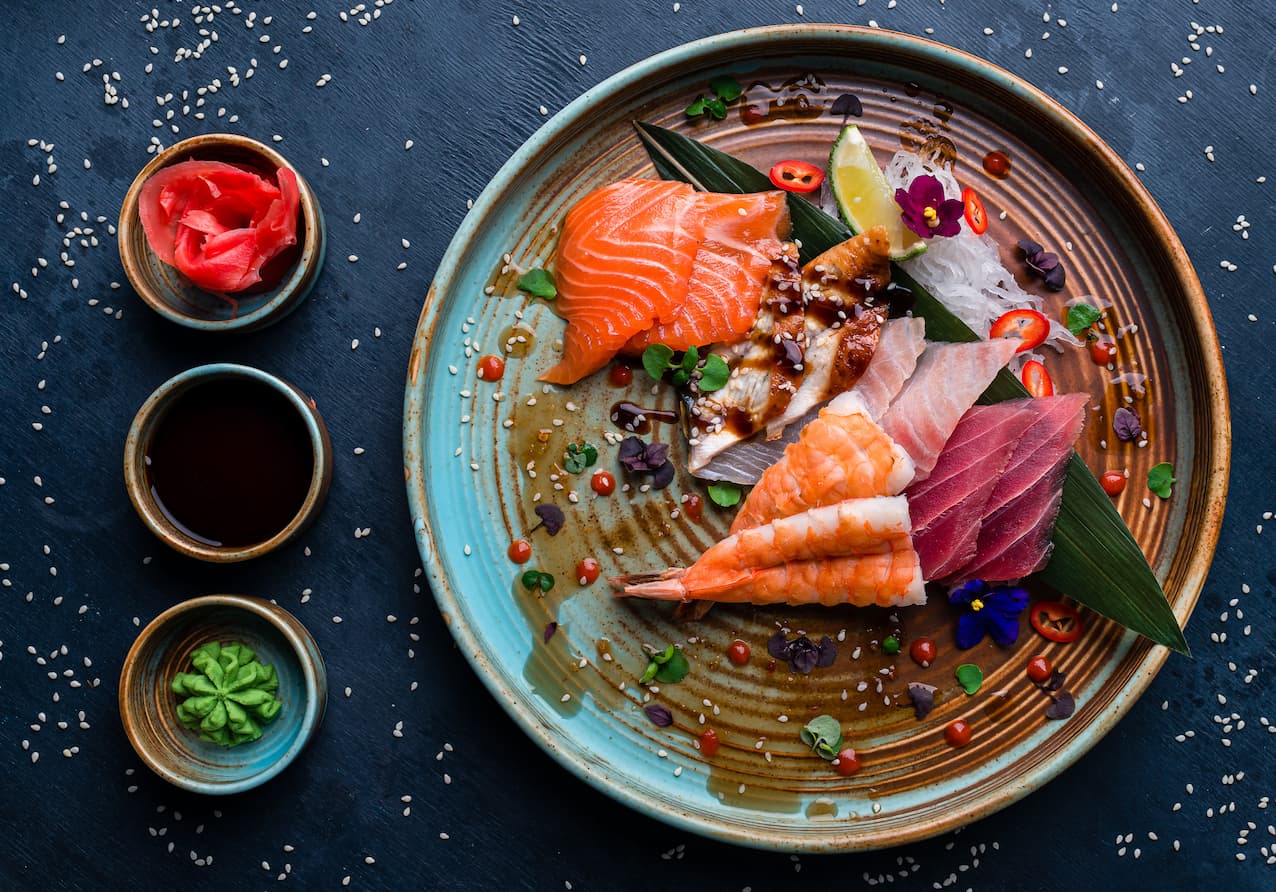
Sashimi is a traditional Japanese dish consisting of very thin slices of raw fish or seafood served without rice. It is usually served with grated daikon radish, pickled ginger, and soy sauce. Sashimi is notable for its simplicity and purity of flavor.
Key features of sashimi:
Ingredients: Sashimi quality fish or seafood (grades A or B), deep-frozen for food safety.
Precise cut: 5–10 mm slices to balance texture and flavor.
Side dishes: daikon radish, pickled ginger, and soy sauce.
Serving: consume immediately to preserve freshness and texture.
Origin and history
The term “sashimi” is composed of two Japanese words: “sashi” (to skewer) and “mi” (meat). Its origins date back to the Muromachi period (1336–1573), when it was developed as a way to preserve fish using vinegar and salt. Over time, it evolved into a refined dish, prized for its flavor and artistic presentation.

Types of sashimi
Although sashimi is raw fish, there is a huge variety of meats we can use, from fish, both oily and white fish, to all kinds of seafood.
The key to sashimi is the quality of the product. Specialized chefs, known as itamae, carefully select the ingredients and cut them using specific techniques to enhance their texture and flavor.
Presentation and typical accompaniments
Sashimi is typically served on a bed of shredded daikon (Japanese white radish) and garnished with shiso leaves (an aromatic herb). Traditional accompaniments include:
- Soy sauce (shoyu)
- Wasabi (Japanese horseradish)
- Pickled ginger (gari)
These complements enhance the flavor of the fish without masking it.
Cutting techniques
There are several cutting techniques for sashimi, each designed to highlight the unique characteristics of each ingredient:
- Hira-zukuri: rectangular cut, common for tuna and salmon.
- Usu-zukuri: extremely fine cut, ideal for white fish.
- Ito-zukuri: cut into thin strips, used for squid.
- Kaku-zukuri: cut into cubes, frequently used in tuna.
Difference between sashimi and sushi
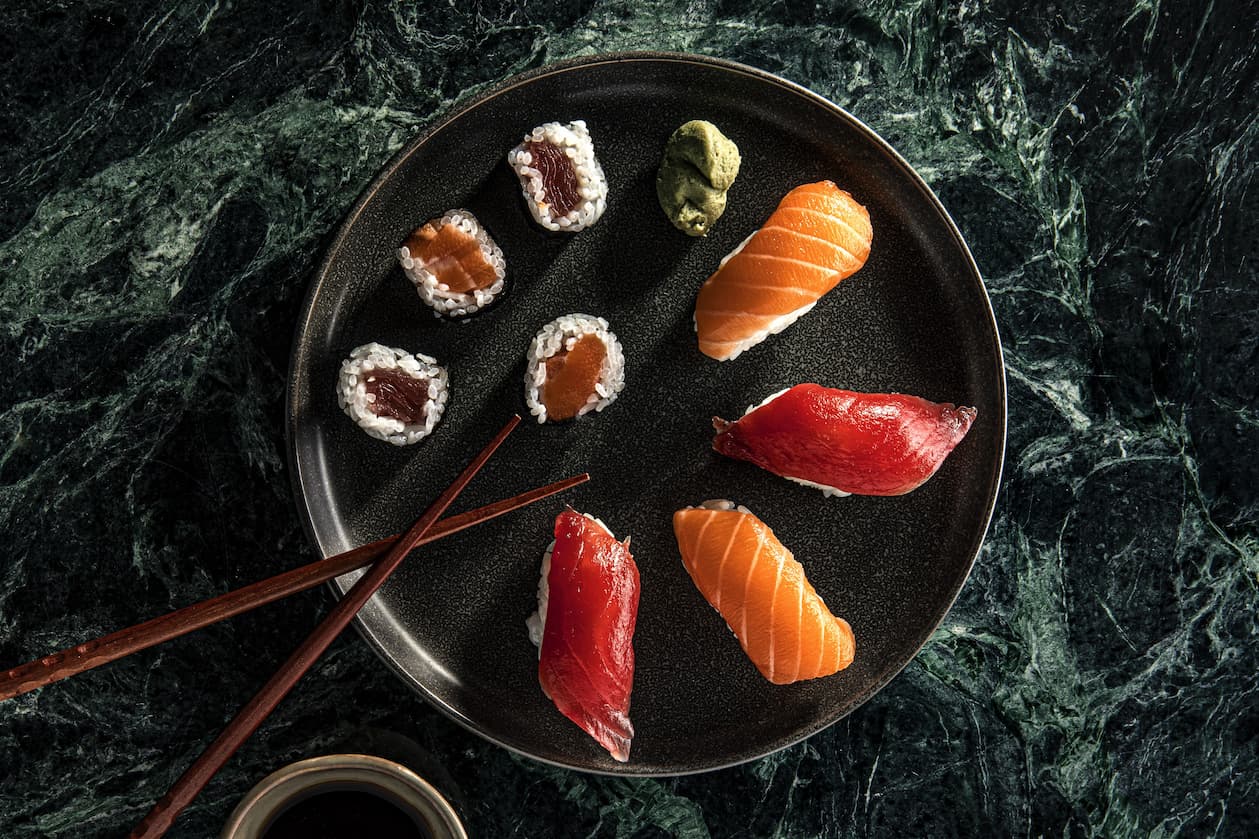
Although often confused, sashimi and sushi are two distinct preparations in Japanese cuisine. Sashimi consists solely of thinly sliced raw fish or seafood , served on its own, while sushi combines fish (raw or cooked) with vinegared rice.
Sashimi is presented alone, usually on a bed of decorative vegetables, and is eaten directly, often dipped in soy sauce. Sushi, on the other hand, can take various forms, such as rolls (maki), rice balls covered with fish (nigiri), or served in a bowl (chirashi).
Sashimi is considered the purest way to enjoy raw fish in Japan, focusing on the quality and cut of the product. Sushi, which evolved as a method of preserving fish, offers a wider variety of flavors and textures due to its combination of ingredients.
Tuna Sashimi Recipe
Ingredients
- 500g of tuna
- 60ml of soy sauce
- 15ml of sesame oil
- Wasabi to taste
- 1 radish
- 1 cucumber
Kitchen Tools
- Very sharp knife (preferably a sashimi knife)
- Cutting board
- Small bowl for the sauce
- Grater
- Serving dishes
Step-by-step preparation
Prepare the tuna:
- Remove the tuna from the refrigerator 30 minutes before preparing it to allow it to reach room temperature.
- Clean the tuna with a damp cloth and dry completely.
Cut the tuna:
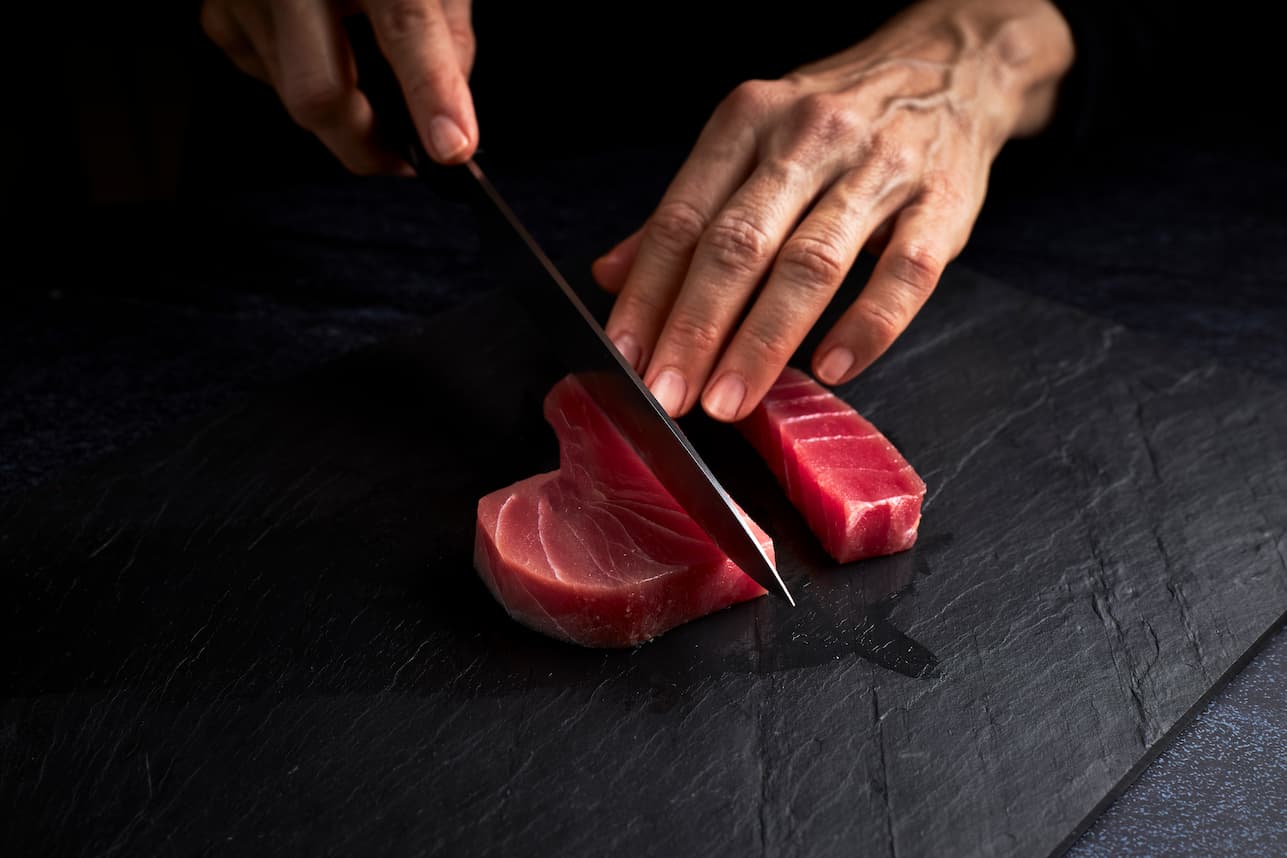
- Using a very sharp knife, cut the tuna into thin slices approximately 1 cm thick.
- Make clean, decisive cuts to obtain uniform pieces.
Prepare the accompaniments:
- Finely grate the daikon radish.
- Cut the cucumber into very thin slices.
- In a small bowl, mix the soy sauce with the sesame oil.
Presentation:
- Arrange the tuna slices on a plate in an attractive manner.
- Place a small pile of grated radish on one side of the plate.
- Add the cucumber slices as decoration.
- Serve with the soy sauce and sesame oil mixture in a separate bowl.
- Add a small amount of wasabi to the dish.
- Serve with pickled ginger on the side.
If you'd like to use this recipe with another fish, for example, to make salmon sashimi, simply follow this easy recipe (it works for any fish) and change the accompaniments to your liking. For salmon sashimi, we recommend carrots instead of cucumber, but feel free to get creative and use whatever accompaniment you prefer.