 Skip to content
Difference between tuna and bonito
Tuna and bonito, blue fish very similar at first glance both in appearance and characteristics.
So, how do you tell them apart? What do they have in common? We'll tell you everything.
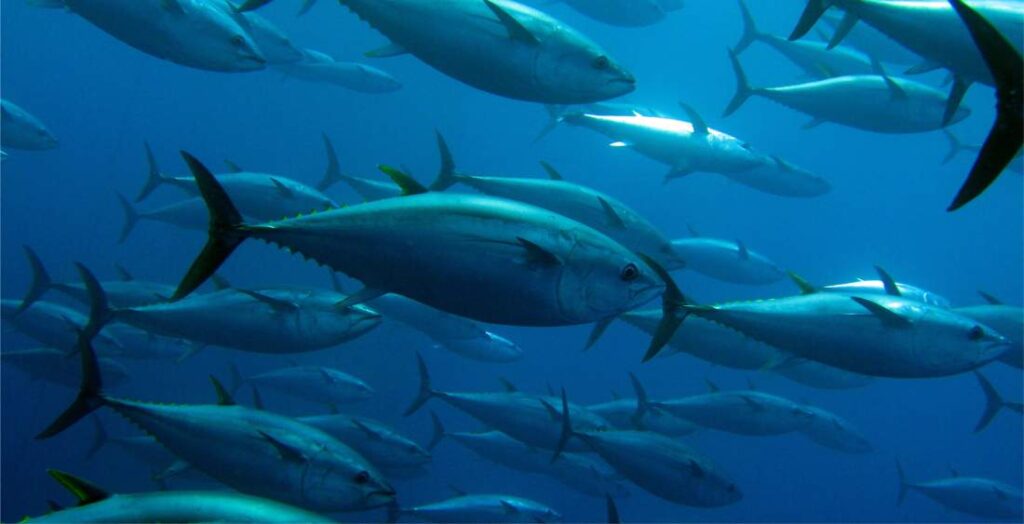
In short: Tuna and bonito are different species with distinct characteristics. Tuna is larger and has pink flesh, making it more commonly used in canned goods and sushi. Bonito, smaller and with lighter-colored flesh, is typically used in dishes like marmitako and in higher-quality canned products. They also differ in their migratory habits and fishing methods, which influence their availability and price.
Since the difference between tuna and bonito is a common question, let's look at it in more detail:
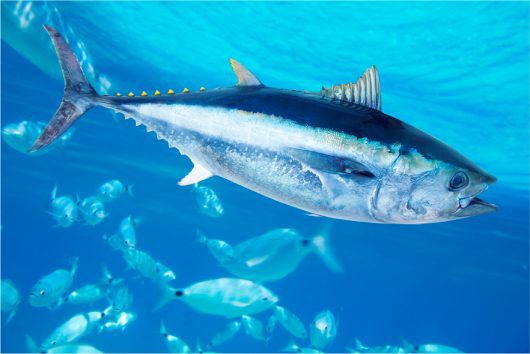
Bluefin tuna (Thunnus Thynnus)
The bluefin tuna or common tuna ( Thunnus thynnus ) is an oily fish belonging to the tuna family. It is the largest of the tuna species. An adult specimen weighs around 200 kg and has a diameter of 2 meters.
However, they can weigh up to 600 kg and measure almost 4 meters. Bluefin tuna can be found throughout the Atlantic Ocean and the Mediterranean Sea.
Tuna can live for over 25 years . Female tuna can lay up to 45 million eggs to ensure the survival of the species, as many are eaten by predators.
Tuna are among the fastest predators in existence, reaching speeds of up to 70 km/h . They feed on small fish and crustaceans, which they hunt using their speed.
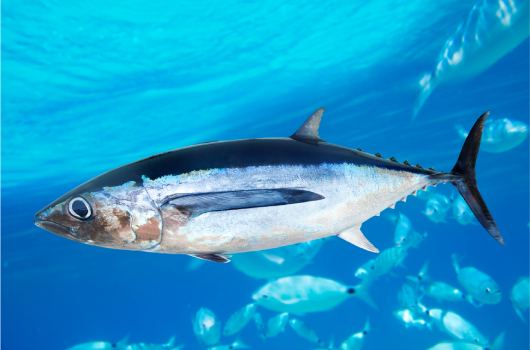
Northern tuna
The albacore tuna ( Thunnus alalunga ), also known as white tuna , is one of the most widespread tuna species, inhabiting the Atlantic Ocean and the Mediterranean Sea. Its meat is highly prized by fishermen and commands a very high price.
In terms of its size, it is medium to large , weighs between 4 and 30 kg , and can reach a length of around half a meter. It feeds on small fish and crustaceans.
The term "bonito del Norte" commonly refers to the type of albacore tuna caught in the Bay of Biscay and the Cantabrian Sea, usually in summer using traditional fishing methods.
The main differences between tuna and bonito
Differences in Size
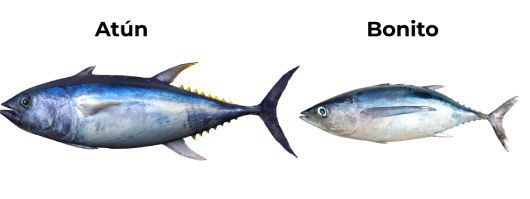
The main difference between tuna and bonito is their size . Tuna are much larger than bonito (30 to 100 kg), sometimes weighing three times as much as bonito, which typically weighs around 30 kg. Specimens of tuna weighing almost 600 kg have been caught.
As for length, bonito measures around 50 to 80 cm, while bluefin tuna can reach 2 to 4 meters for larger specimens.
Features
Another physical difference is that the bonito has pectoral fins that can reach up to 30 cm in length , hence its scientific name, *alalunga* (long wing). Some specimens have even been observed with pectoral fins extending beyond their anal fin. It also has a dark metallic blue color on its back, while its belly and flanks are silvery.
In contrast, the bluefin tuna has the longest dorsal and anal fins of all tuna species. Its pectoral fins are small relative to its body size. However, it possesses an incredibly powerful tail fin , allowing it to reach speeds of 65 to 70 km per hour.
Meat color
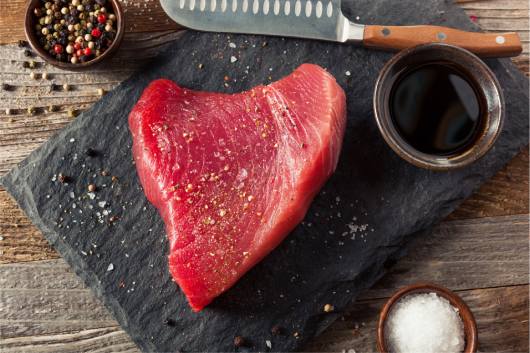
Another difference between tuna and bonito is the color of their flesh . Bluefin tuna , as its name suggests, has a dark, reddish color, while bonito flesh is very light, even white . That's why bonito is sometimes called white tuna.
Immigration
Albacore tuna, also known as white tuna, are born in the Sargasso Sea , in the Atlantic Ocean. Upon reaching adulthood, they gather in schools to migrate.
Yes, indeed, they undertake two migrations: the first reaches Madeira, the Azores, and the Canary Islands, where they spend the winter. The second migration sees them travel to the Cantabrian Sea and the Bay of Biscay, where they ascend to shallower waters in search of food and remain throughout the summer. In the fall, they return to their homelands.
Bluefin tuna also undertake two types of migrations: one for food and one for spawning. As a general rule, they spend the winter in the North Atlantic and travel to the Mediterranean Sea in the summer to reproduce.
Traditional Fishing: From Live Bait to Almadrabas
The fishing of albacore tuna takes place during the summer months, usually in the waters of the Bay of Biscay. The traditional fishing method used is live bait fishing: with the boat stationary, rods are cast into the sea using live anchovies as bait. This is a selective fishing method.
Almadraba is the technique for catching bluefin tuna used in southern Spain, off the coast of Cadiz, although they can also be found in areas such as Ceuta, the Region of Murcia, and the Valencian Community.
It's a labyrinth of nets that tuna enter until they are trapped. That's when the "levantá" (lifting) begins: one of the nets is slowly raised, and the most experienced fishermen jump into the water with harpoons, where they select the largest fish.
This is the great advantage of almadraba fishing: it is a sustainable method of fishing in which the smallest tuna are released to reach adulthood.
Differences between Bonito and Tuna in terms of nutritional value
- As for the fat content of each species, both have almost the same amount of fat. Per 100 grams, bluefin tuna has 4.9 grams while bonito has 6 grams.
- Tuna and bonito have less than 1 gram of carbohydrates per 100 grams.
- In terms of protein, tuna and bonito have very similar levels. Bluefin tuna has 23.3 grams of protein, while bonito has 24.7 grams per 100 grams.
- Among the vitamins they each provide, tuna and bonito provide the same vitamins. Among them, we highlight vitamins A, B, and E.
- The minerals found in tuna and bonito are calcium, iron, magnesium, potassium, iodine and zinc.