 Skip to content
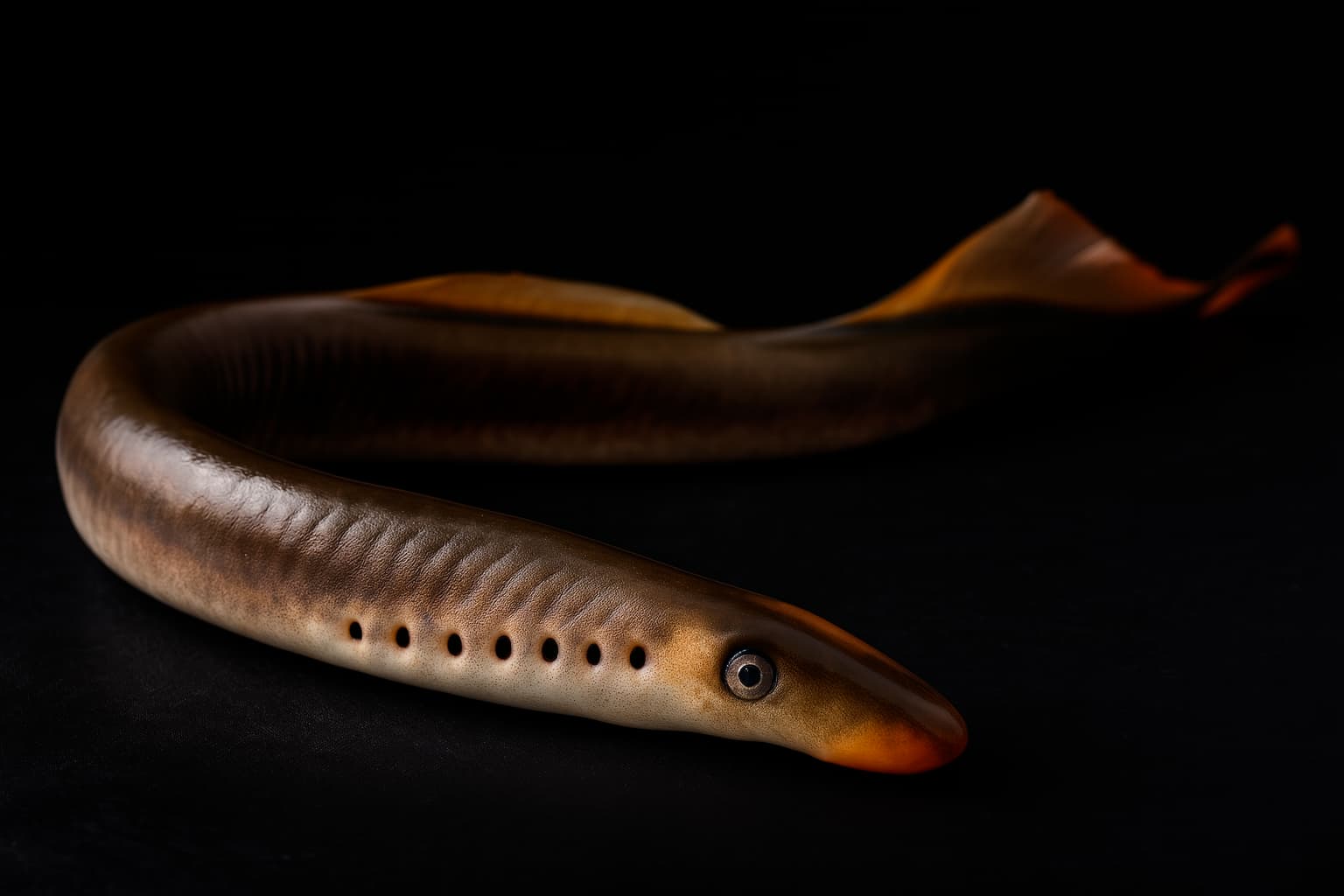
What is a lamprey?
The sea lamprey ( Petromyzon marinus ) is an agnathan fish, meaning it lacks jaws, belonging to the order Petromyzontiformes . Its origins date back more than 500 million years, and it has changed very little since then. It is an anadromous species: it is born in rivers, migrates to the sea where it lives for 20 to 30 months, and returns to the river to reproduce and die after spawning. During its life cycle, it has a blind larval stage called an ammocoete.
Lamprey characteristics
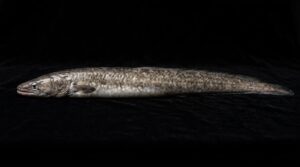
- Body: Elongated, cylindrical, without scales, and up to 120 cm long.
- Palate: Circular, with sharp teeth on a preoral plate and a rough tongue. It acts as a suction cup to attach itself to its prey.
- Skeleton: It lacks true bones; it has a cartilaginous notochord.
- Breathing: Seven pairs of lateral gill openings and an odd nostril.
- Coloration: Grey, greenish grey or brown, with a lighter belly.
- Fins: Two dorsal fins; no paired fins.
- Larva: Phase known as ammocoete, blind and filter-feeding, which lives buried in sandy bottoms for between 4 and 5 years.
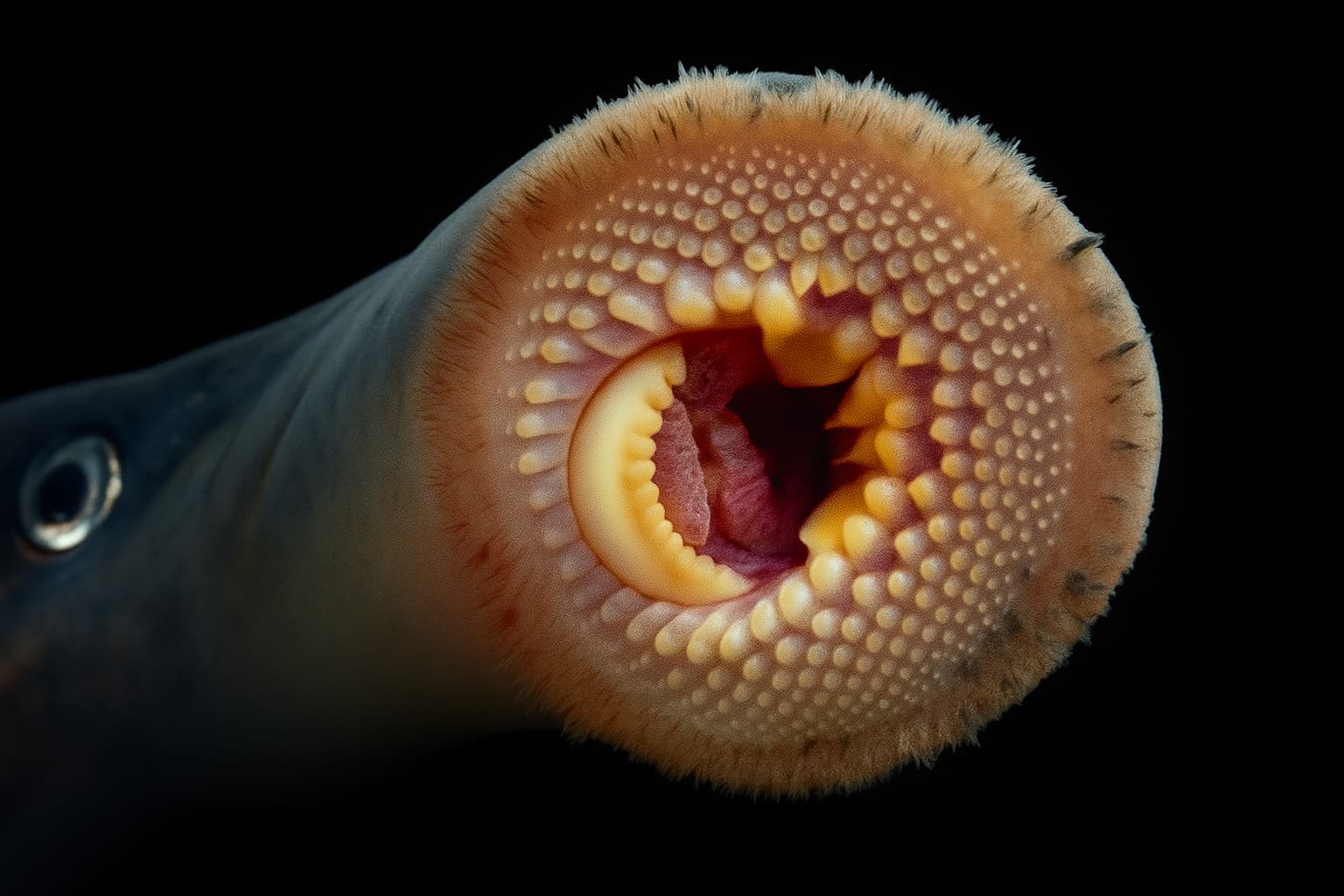
Behavior and Feeding
In its larval stage, it feeds on algae and diatoms. Once in the sea, as an adult, it parasitizes fish, feeding on their blood and body fluids. It can attach itself to large fish for days or weeks. The lamprey can cause impacts on ecosystems when there are population imbalances, as occurs in some areas of North America.
Types of lamprey
- Sea lamprey (Petromyzon marinus): The most consumed and well-known species on the peninsula.
- Brook lamprey (Lampetra planeri): Non-migratory, very small, lives in small waterways.
- River lamprey (Lampetra fluviatilis): Anadroma, smaller than the navy.
- Caspian lamprey (Caspiomyzon wagneri): It requires special treatment before consumption due to toxicity.
Nutritional values
nourisher | By 100g |
Energy | 218 Kcal |
Total fat | 18 gr |
Saturated | 4,6 gr |
Monounsaturated | 7,0 gr |
Polyunsaturated | 4,6 gr |
Proteins | 14 gr |
Carbohydrates | 0 gr |
Vitamin A | 1000 g |
Vitamin B1 | 0,15 mg |
Vitamin B2 | 0,40 mg |
Vitamin D | 4,90 g |
Phosphorus | 170 mg |
Iron | 1 mg |
Magnesium | 19 mg |
Potassium | 220 mg |
Habitat and Fishing Season
Habitat
It lives in the North Atlantic and the western Mediterranean. In Spain, it is distributed in Galicia, the Cantabrian basins, and some southern and eastern rivers such as the Guadalquivir and Ebro. The larvae inhabit river bottoms, while adults can reach depths of up to 300 meters in the sea.
Fishing Season
Fishing takes place from January to May, especially between February and March. In Galicia, traditional techniques such as "butróns" (fish pits) placed in "pesqueiras" (fish pits) on the Miño River are used, ancient stone structures used since Roman times.

Frequently Asked Questions About Lamprey
Is lamprey edible?
Yes, although it must be cooked properly to avoid risks. Its blood is toxic if left untreated.
Where is it mainly consumed?
In Galicia, particularly in Arbo, where traditional recipes such as lamprey a la Bordelaise are prepared.
What traditional recipes exist?
Bordeaux-style, stuffed, with noodles and snow peas, in a pie, fried, or grilled. Some techniques include salting and smoking.
Is in danger of extinction?
It is classified as "Vulnerable" in Spain due to overfishing, pollution, and river obstructions. Its fishing must be controlled.