 Skip to content
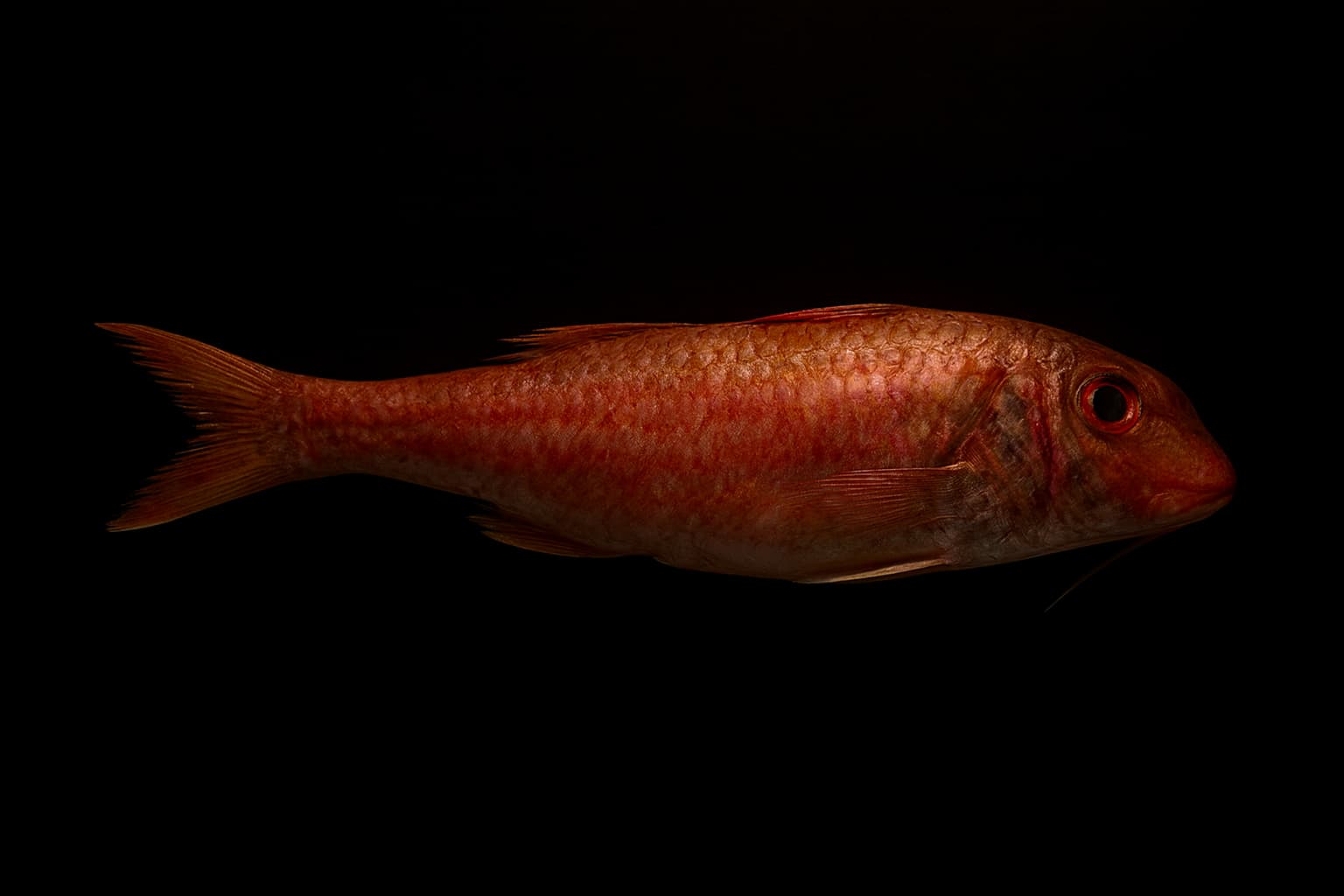
What is a red mullet?
The red mullet is a marine fish belonging to the Mullidae family , within the Percoidei order . Two species are primarily sold commercially:
- Red mullet (Mullus surmuletus)
- Mud red mullet (Mullus barbatus)
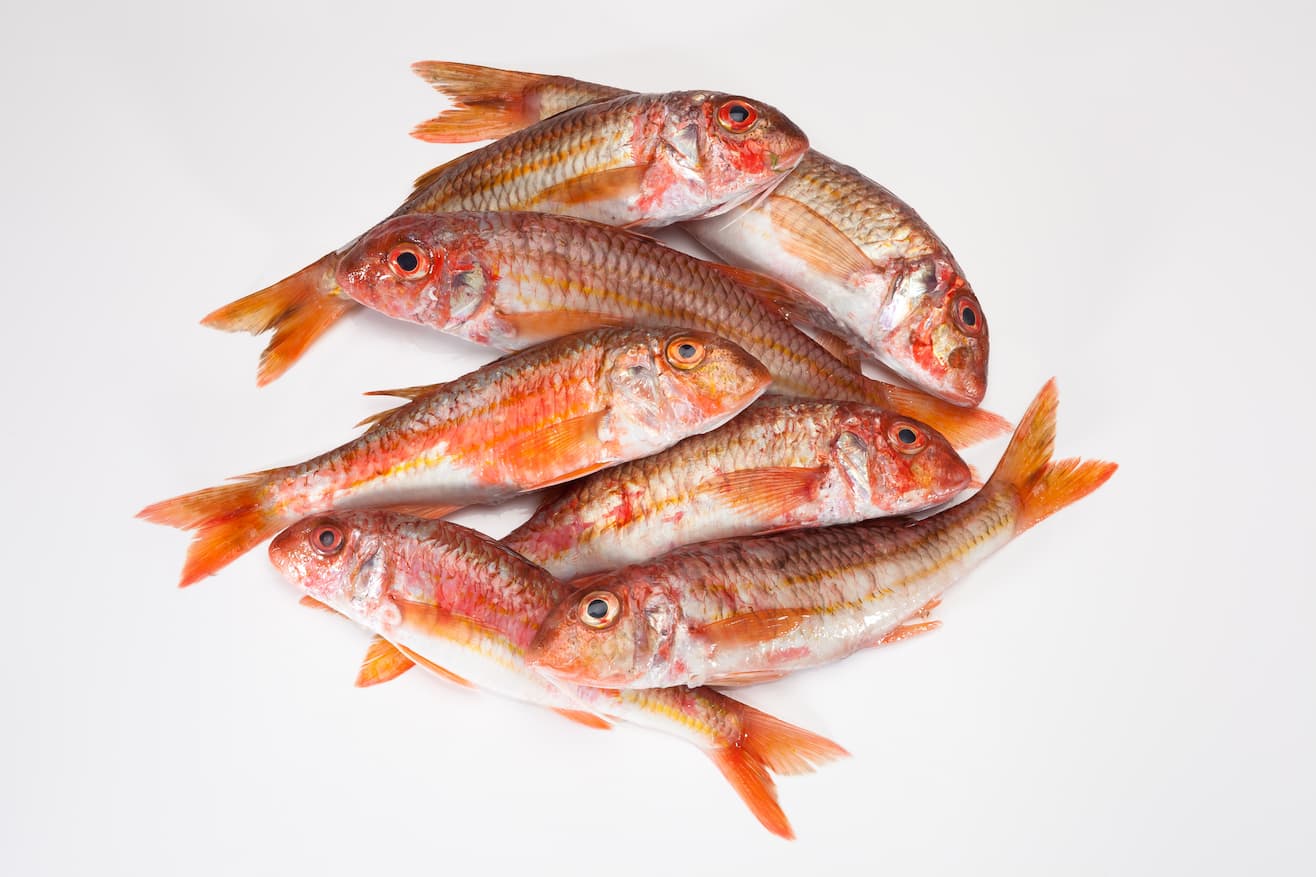
Both are characterized by their vibrant reddish, pinkish, or orange colors, which fade as they lose their freshness. They possess two barbels under their lower jaw, which they use to locate food on the seabed. Although they share a name and many similarities, there are notable morphological and gastronomic differences between them.
Characteristics of the red mullet
- Her first book of poems, Cuerpo,: Elongated, laterally compressed, covered with large scales.
- HeadShort, with prominent eyes.
- Barbillons: Two long tactile appendages for detecting prey.
- fins: Two dorsal spines (the first with 8 spines), one anal spine with 2 spines.
- Coloration: Red with yellow bands on rock; more uniform on mud.
Key differences between species :
- El rock mullet It has a pointed snout and a dark longitudinal band with three yellow bands.
- El mud mullet It's flatter, without those characteristic bands.
- The first one can reach 40-50 cm and 1,5 kg, while the second rarely exceeds 30 cm.
Behavior and Feeding
Both species are benthic, living near the bottom and feeding on small invertebrates, worms, mollusks, and crustaceans. They are diurnal fish that usually live in small schools, although they can also be found alone.
Types of red mullet
1. Red mullet (Mullus surmuletus)
- Trade name in the EUSurmullet
- FAO: MUR
- Fishing: Most valued for its flavor and firm texture.
- Habitat: Rocky bottoms up to 100 m deep.
- CaptureGillnets, fishing line and sport fishing.
2. Mud Red Mullet (Mullus barbatus)
- Trade name in the EURed mullet
- FAO: MUT
- Fishing: More frequent in Mediterranean markets.
- Habitat: Muddy and sandy bottoms between 2 and 30 m.
- Capture: Trawling nets.
Nutritional values
Red mullet is a semi-fatty fish with an excellent nutritional profile. It stands out for its high-biological-value protein content , omega-3 fatty acids , and a wide variety of minerals and vitamins.
Composition per 100 g of edible portion
nourisher | Quantity |
Energy (Kcal) | 90 |
Proteins (g) | 14,1 |
Total fats (g) | 3,7 |
Saturated fats (g) | 1,07 |
Monounsaturated fats (g) | 0,84 |
Polyunsaturated fats (g) | 0,62 |
Omega-3 (g) | 0,438 |
Cholesterol (mg) | 49 |
Water (g) | 82,2 |
Potassium (mg) | 340 |
Phosphorus (mg) | 220 |
Iodine (µg) | 190 |
Selenium (µg) | 29 |
Calcium (mg) | 30 |
Vitamin B12 (µg) | 2 |
Vitamin B6 (mg) | 0,42 |
Vitamin D (µg) | 0,8 |
Vitamin E (mg) | 0,51 |
Source: https://www.fen.org.es/MercadoAlimentosFEN/pdfs/salmonete.pdf
Habitat and Fishing Season
Habitat
Both species are common in the Mediterranean Sea and the Northeast Atlantic , but they vary slightly:
- El rock mullet lives in rocky bottoms, at greater depths (up to 100 m).
- El mud mullet lives in soft funds (muddy, silty or sandy), closer to the coast (2-30 m).
Fishing Season
Fishing takes place year-round, although autumn is the best time due to its greater abundance and quality. Thanks to flash freezing, it can be found out of season while maintaining its properties intact.
Frequently asked questions about red mullet
What is the difference between rock mullet and mud mullet?
Rockfish has a more intense flavor and a firmer texture, while mudfish is softer. Additionally, rockfish has bands along its body and can grow larger.
What are the health benefits of red mullet?
It provides protein, omega-3, iodine, phosphorus, potassium, vitamin B12 and D. It is ideal for maintaining a balanced diet.
Can it be consumed year-round?
Yes, although its best season is autumn, it can be found frozen year-round with excellent quality.