 Skip to content
In this guide I'll tell you exactly what kamaboko is, how it's made, what types exist, how it differs from surimi , and how you can use it in your kitchen.
In 30 seconds: what it is, what it tastes like, how to eat it
- What is it: Japanese fish cake made from surimi (a type of fish paste) White fish), steamed, baked or boiled until a firm and elastic texture is achieved.
- What does it taste like? Mild, slightly sweet and marine flavor, with a rubbery but pleasant texture.
- How to eat it: Sliced as a ramen topping, in oden-type soups, stir-fries, appetizers with soy sauce.
- Where to buy it: Asian stores (refrigerated or frozen section), supermarkets with an international section.
- Key difference with surimi: Surimi is the base (fish paste); kamaboko is the cooked final product. Surimi is like flour; kamaboko is like bread.
What is kamaboko?
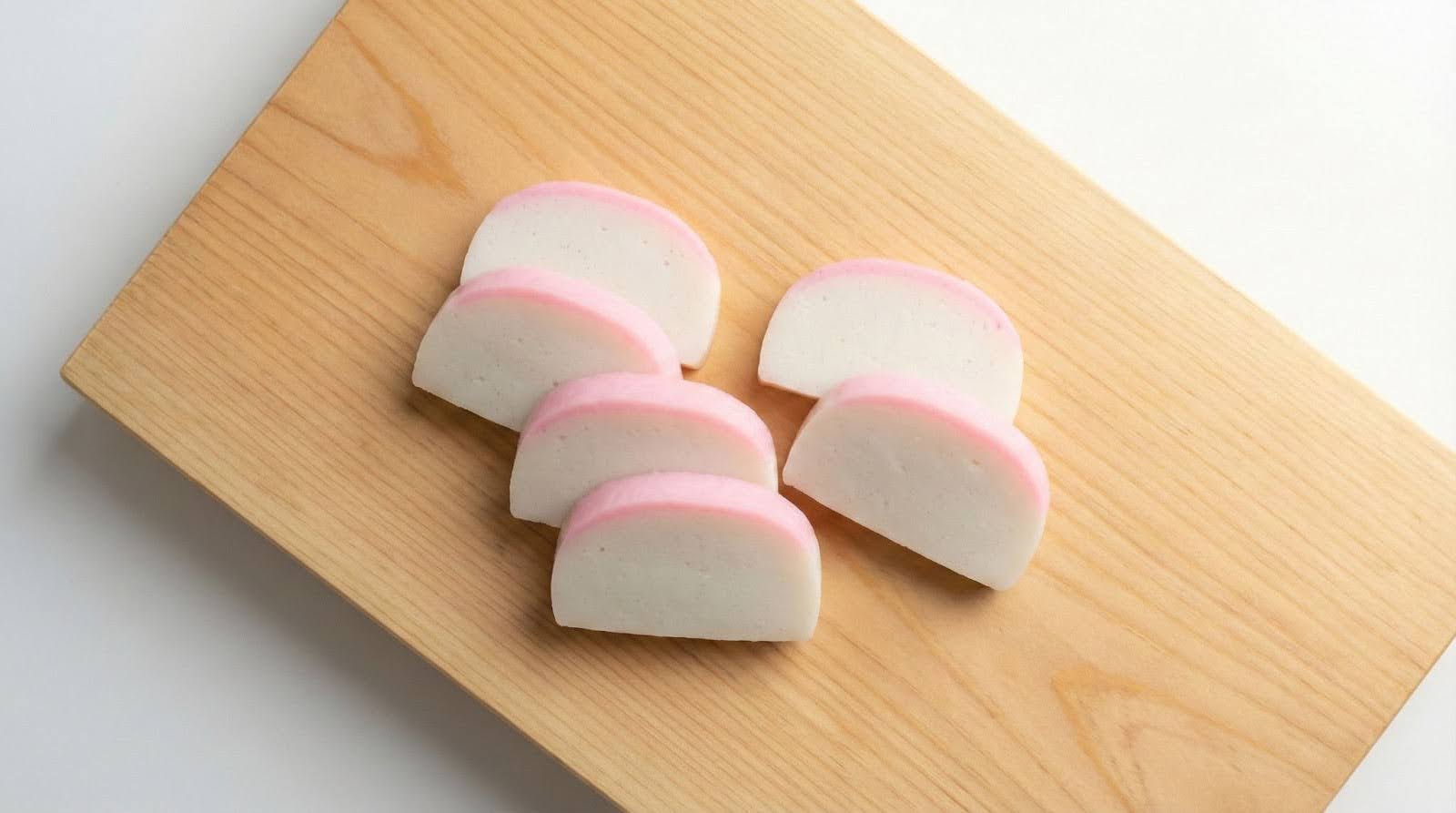
Kamaboko is a traditional Japanese product made from surimi (processed white fish paste), which is mixed with salt, egg whites, and other ingredients, molded, and cooked—usually steamed — until it reaches a firm, elastic texture. The result is a fish cake that is eaten in slices, either on its own or as an ingredient in soups, noodles, and stews.
Unlike surimi, which is the raw material, kamaboko is the finished product, ready to eat. Its flavor is delicate, slightly sweet, and briny.
What does “kamaboko” mean (origin of the name)
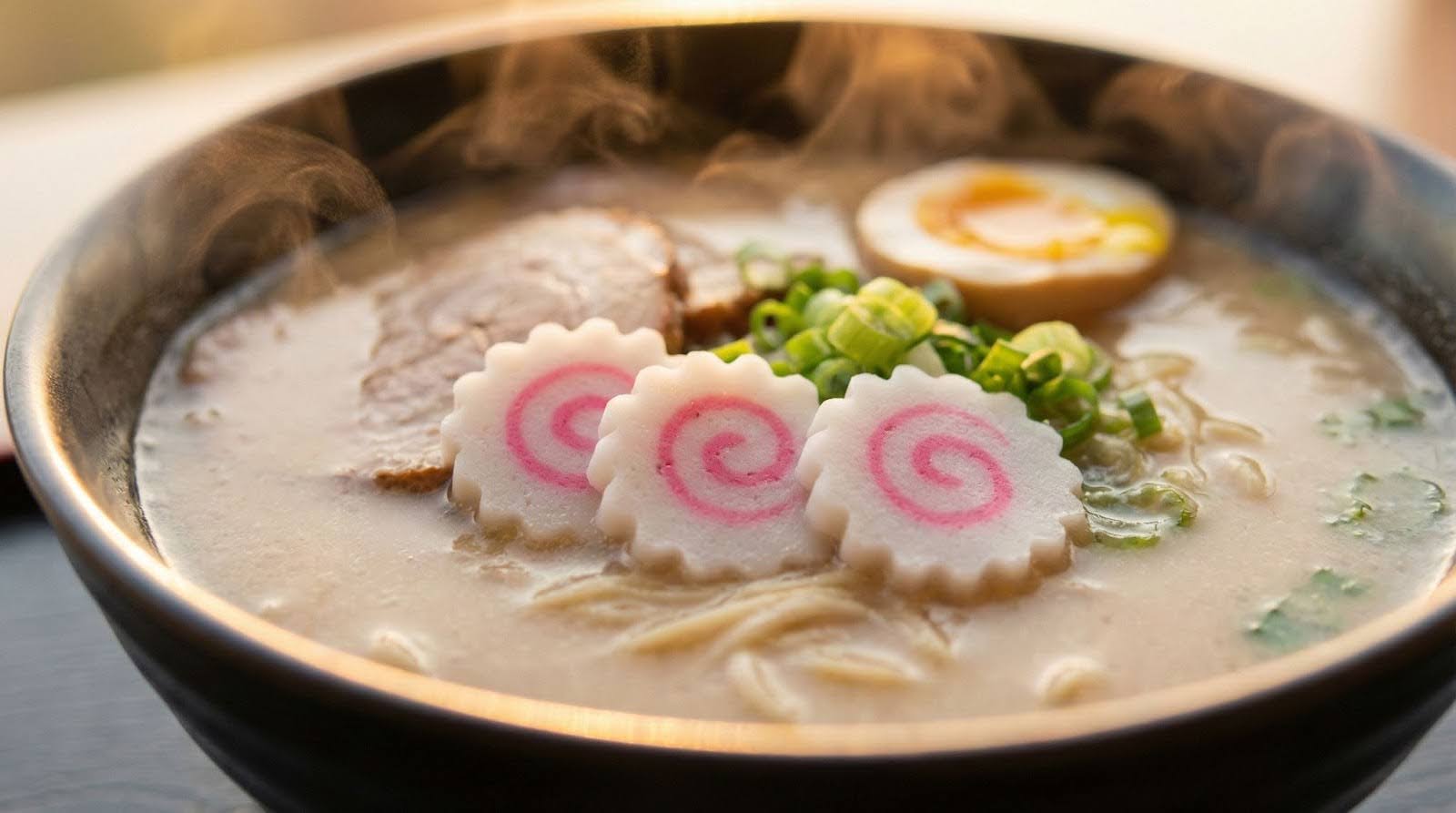
In English, kamaboko (蒲鉾) is usually translated as “fish cake ,” although the original etymology is more poetic. The term comes from蒲 (gama) , meaning “cattail” (an aquatic plant), and鉾 (hoko) , meaning “spear” or “corn cob.”
According to tradition, the original kamaboko was shaped around a bamboo stick, taking on a cylindrical form reminiscent of the spike of the cattail plant . Hence the name: “the spike of the cattail.” Today it comes in many forms, but the name has remained.
How to make kamaboko
Usual ingredients
Traditional kamaboko is made with just a few ingredients:
- White fish (surimi): Cod Fish, pout from Alaska or hakeWhite fish is chosen for its neutral flavor and high concentration of proteins that form the gel.
- will: Essential for extracting proteins and activating gelation.
- egg white: It provides cohesion and stabilizes the texture.
- Sugar and mirin: They add a subtle sweet touch and improve preservation.
- Starch: In industrial versions, it adds firmness and reduces costs.
Kamaboko can be steamed , baked , grilled , or boiled , depending on the region.
Step-by-step recipe
- Prepare the surimi: The fish is cleaned, ground into a fine paste, and washed to remove fats and odors.
- Season and mix: Salt, sugar, mirin, and egg white are added. The salt draws out the proteins that will form the gel.
- Mold: The pasta is placed on a wooden board or in cylindrical molds.
- Cook: It is steamed (30-40 minutes). The heat causes the proteins to form an elastic network.
- Cool and cut: Let it cool and then slice it.
Types of kamaboko you'll see in shops and restaurants
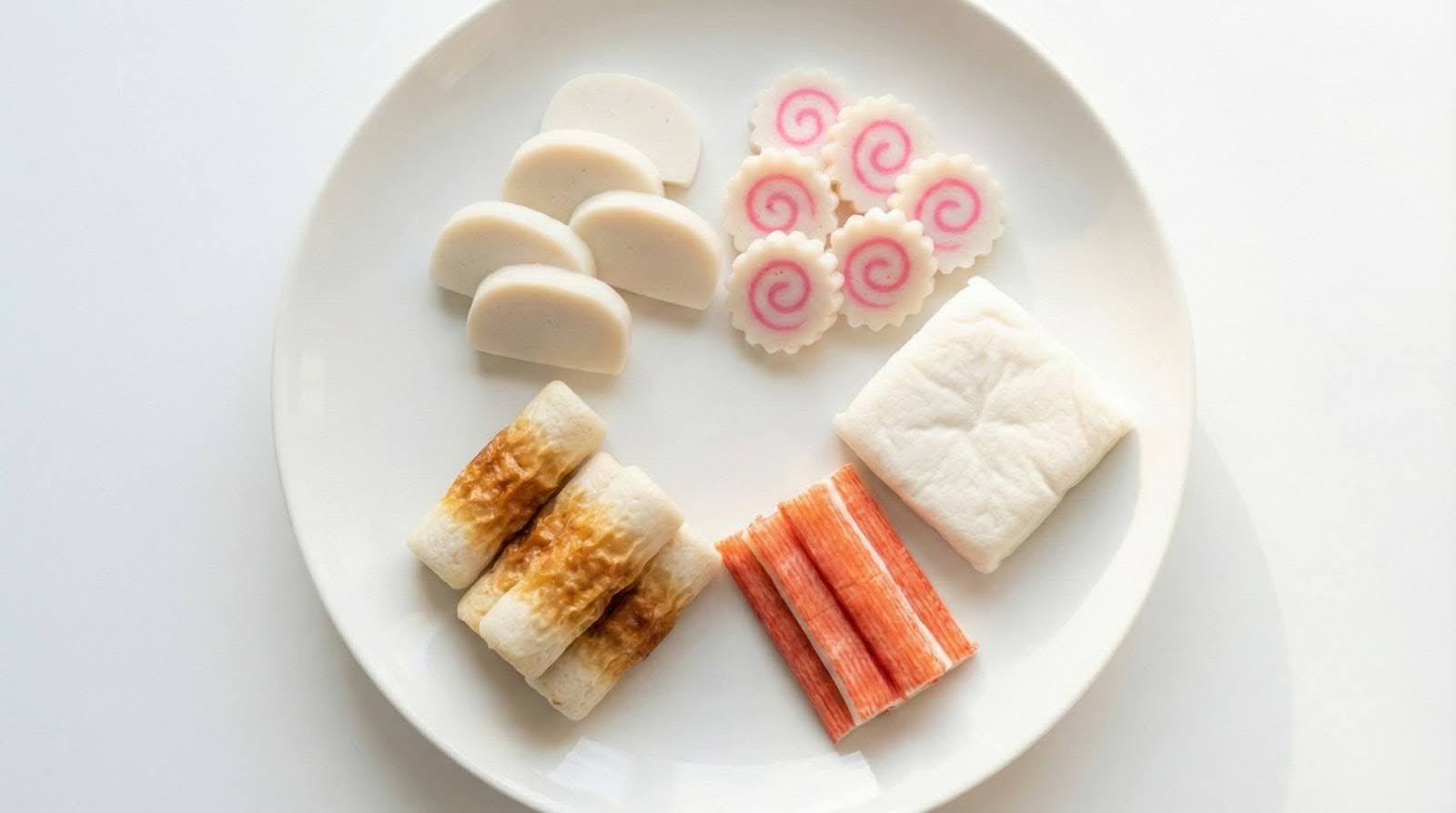
The term kamaboko encompasses a whole family of fish paste products. Here are the most common ones:
Type | Shape and characteristics | Typical uses |
Classic Kamaboko | Semi-cylindrical bar on a wooden board | Slices in ramen, oden, udon |
Narutomaki (naruto) | White cylinder with pink spiral | Ramen toppings, soups |
Chikuwa | Hollow golden tube | Appetizers, order, stir-fries |
hanpen | White fluffy square | Oden, soups, tempura fried |
Sasa kamaboko | Bamboo leaf shape (Miyagi) | Appetizer, regional gift |
Satsuma-age | Golden fried pastry | Order, bento, appetizer |
Kani-kamaboko (kanikama) | Crab stick-type bars | Salads, sushi, California roll |
Narutomaki: The famous ramen topping. Its name comes from the whirlpools of Naruto (a sea strait). The pink spiral is achieved by dyeing part of the pasta before rolling it.
Chikuwa: It has a tube shape because it's molded around bamboo and grilled. Ideal for filling with cucumber or cheese.
Hanpen: The fluffy version. It's made with Japanese yam puree, giving it an airy texture. It floats in the oden broth.
Kanikama: The famous "crab sticks." Although many people believe they contain crab, they are made of surimi with flavorings.
Difference between surimi and kamaboko:
- Surimi: Is the base or raw materialConcentrated white fish protein paste. It is not eaten directly; it is an intermediate product.
- Kamaboko: Is Final product, done from of surimi. It is mixed with salt, egg whites, molded and cooked until it gels.
Analogy: Surimi is like flour; kamaboko is like bread.
How does gelation work?
When you add salt to surimi and heat it, the fish proteins ( myosin and actin ) form a network that traps water. This gives kamaboko its elastic texture.
How to eat Kamaboko
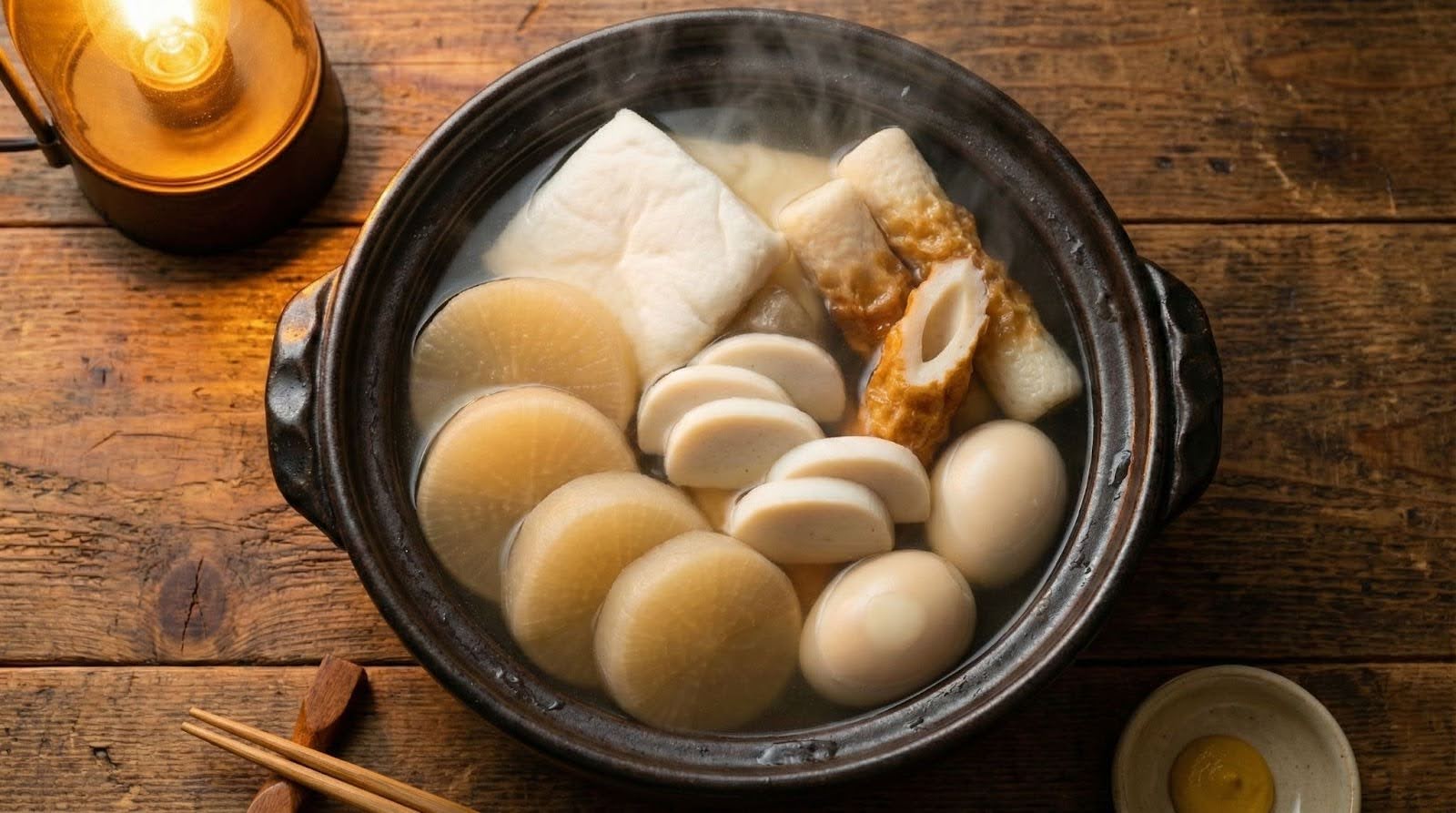
Kamaboko has a mild, slightly sweet, and briny flavor . Here are 6 ways to enjoy it:
- Sliced with soy sauce and wasabi: Quick snack; the firm texture holds up well when wet.
- As a topping for ramen or udon: It adds color and a soft texture.
- In order: It absorbs the flavor of the dashi broth and becomes tastier.
- Stir-fry with vegetables: Cut into strips and stir-fry with bell pepper and teriyaki sauce.
- In chirashi-zushi: Thin slices add color without competing with the sashimi.
- Fried in tempura (hanpen): Crispy on the outside, soft on the inside.
Where to buy kamaboko and how to choose it
Where to find it:
- Asian stores (refrigerated or frozen section)
- Supermarkets with an international section
- Specialized online stores
What to look for on the label:
- Percentage of fish: Minimum 40-50% for good quality.
- Starches: It's normal for it to contain some starch, but avoid endless lists of additives.
- Colorants: They can be natural (beetroot) or artificial (E-120).
- allergens: It usually contains egg white; kanikama may have traces of crustaceans.
History and culture: why it's a "celebratory" food in Japan
Origins and first references
The oldest written reference to kamaboko dates back to 1115 , in a text about a noble banquet. Originally, it was shaped around bamboo sticks and roasted over a fire.
During the Edo period (1603-1868), kamaboko was already popular in cities and was associated with festivities.
Regional kamaboko and artistic kamaboko
Miyagi: Famous for its bamboo leaf-shaped kamaboko ( sasa ), cooked on the grill.
Toyama: Known for its decorated kamaboko (wooden cranes) that are given as gifts at weddings and on New Year's Day. Kamabokoshi masters compete in contests, creating artistic pieces in the shapes of cranes, turtles, and landscapes.
“Kamaboko Day”
November 15th is Kamaboko Day in Japan. The date has a double symbolism:
- 11/15 is associated with the year 1115 (first documented mention).
- Coincides with Shichi-go-san, a festival where children aged 3, 5 and 7 are blessed.
Other Japanese fish dishes to eat with Kamaboko
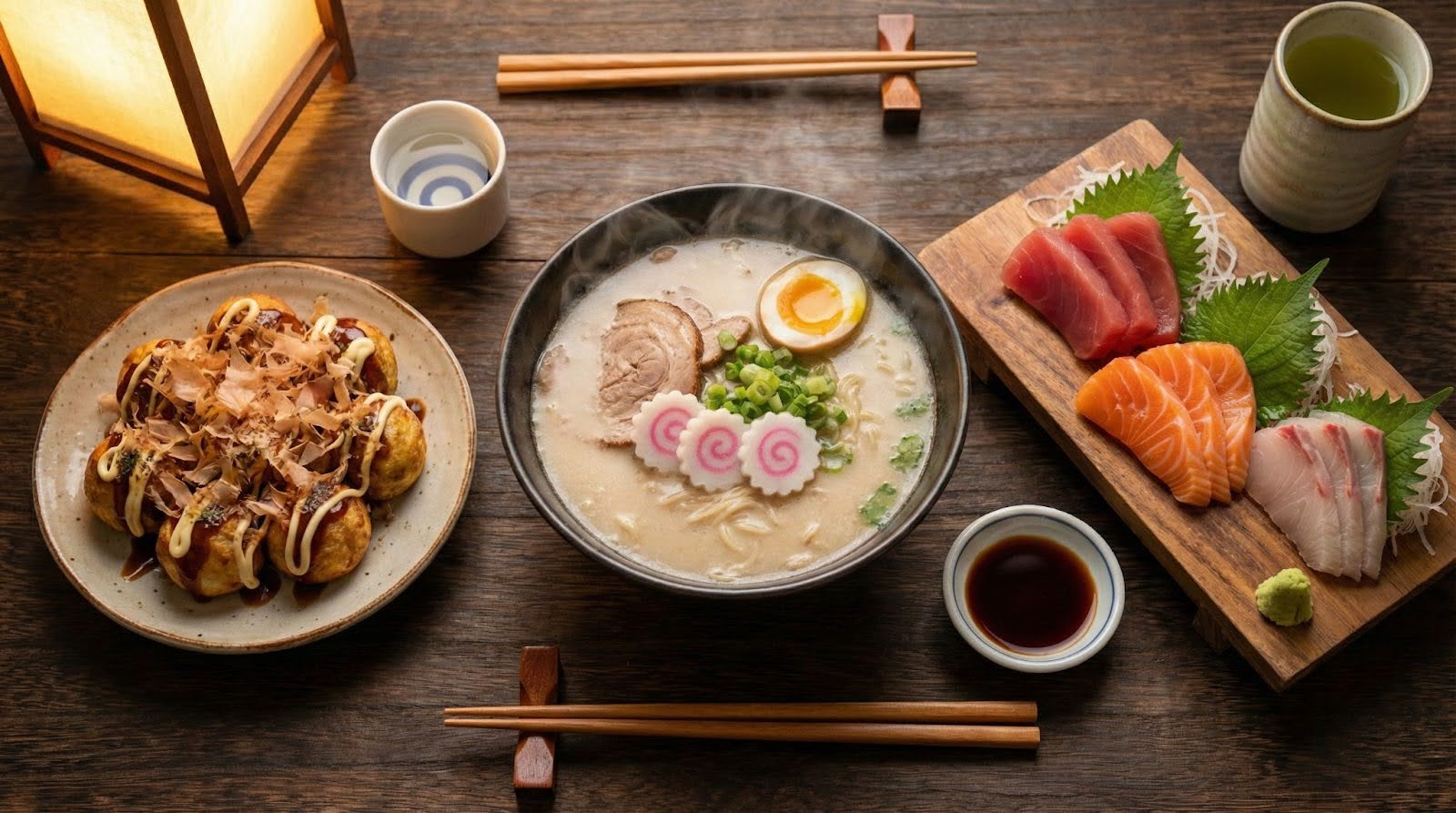
If you like kamaboko, you might also enjoy other Japanese dishes like sashimi or delicious octopus takoyaki . Our recommendation for a complete Japanese night: Ramen with kamaboko as a starter and sashimi as a main course, with takoyaki to nibble on. You're guaranteed to be a hit.
Frequently asked questions (FAQ)
What is kamaboko in ramen?
It's usually narutomaki , the white slice with a pink spiral. It adds color, a smooth texture, and a delicate seafood flavor.
Is kamaboko the same as surimi?
No. Surimi is the fish paste (raw material); kamaboko is the cooked final product.
Are Naruto and Kamaboko the same thing?
The narutomaki is a type of kamaboko. All narutomaki are kamaboko, but not all kamaboko are narutomaki.
Does kanikama contain crab?
No. “Crab sticks” are made of surimi with flavorings. They do not contain real crab meat (or a minimal amount).
Is kamaboko eaten raw or cooked?
The kamaboko you buy is already cooked and ready to eat. You can eat it cold or reheat it in soups.
How is it preserved once opened?
Store it in the refrigerator in an airtight container. Consume within 3-4 days.
Is kamaboko healthy?
It's a source of protein and low in fat, but it can be high in sodium. Choose options with a high percentage of fish and no artificial colors.