 Skip to content


Physical characteristics
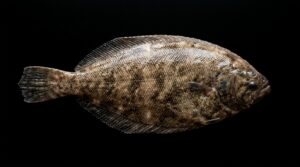
It is a flat fish with an oval, asymmetrical body. Its main characteristics include:
- Size: It can reach up to 1 meter in length and weigh up to 25 kg, although the common size is 30-50 cm.
- Body: Laterally flattened, with both eyes on the left side.
- Skin: Covered with small bony tubercles, without typical scales.
- Color: Variable, generally brown or greyish with darker spots, adapting to the seabed.
- Fins: Large dorsal and anal fins that surround almost the entire body.
Habitat and distribution
Turbot is a marine fish that lives in:
- Northeast Atlantic Ocean, from Norway to Morocco
- Mediterranean Sea
- Black Sea
It prefers sandy or muddy bottoms in coastal waters, from shallow areas to depths of about 100 meters.
Behavior and ecology of turbot
Food
This whitefish is an active predator. Its diet includes:
- Small fish (herring, sardines)
- Seafood
- Molluscs
- Cephalopods
Juveniles feed mainly on benthic invertebrates.
Reproduction
Turbot reproduction occurs in spring and summer. Main characteristics:
- Sexual maturity: Between 3-5 years
- Fertilization: External
- Eggs: Pelagic, floating in the water column
- Larvae: Symmetrical at birth, undergoing metamorphosis to adopt a flat shape
Nutritional values
Turbot is a lean fish with high nutritional value:
nourisher | Per 100 g of edible portion |
Energy (Kcal) | 82 |
Proteins (g) | 16.1 |
Total lipids (g) | 1.9 |
Omega-3 (g) | 0.3 |
Calcium (mg) | 25 |
Iron (mg) | 0.3 |
Magnesium (mg) | 28 |
Potassium (mg) | 320 |
Phosphorus (mg) | 210 |
Vitamin B12 (µg) | 1.3 |
Vitamin D (µg) | 3.6 |
Source: Ministry of Agriculture, Fisheries and Food
Economic and culinary importance
This prized fish is highly valued for its firm, white flesh and delicate flavor, characteristics that make it a favorite ingredient for many chefs. If you want to prepare this fish at home, we invite you to visit our Turbot Recipes section , where you will find numerous easy and affordable recipes.
Its presence is common in haute cuisine, where chefs prepare it in various ways, whether grilled, baked or in elaborate sauces, taking advantage of its adaptability to different culinary techniques.
Beyond its relevance in traditional fishing, turbot has gained a significant position in aquaculture, especially in Europe, where its cultivation contributes significantly to the economy of the fishing sector and meets the demand for this prized fish in the market.

To learn more about this fish
Recipes with Turbot
If you want to cook turbot, try these recipes: Baked Turbot.