 Skip to content
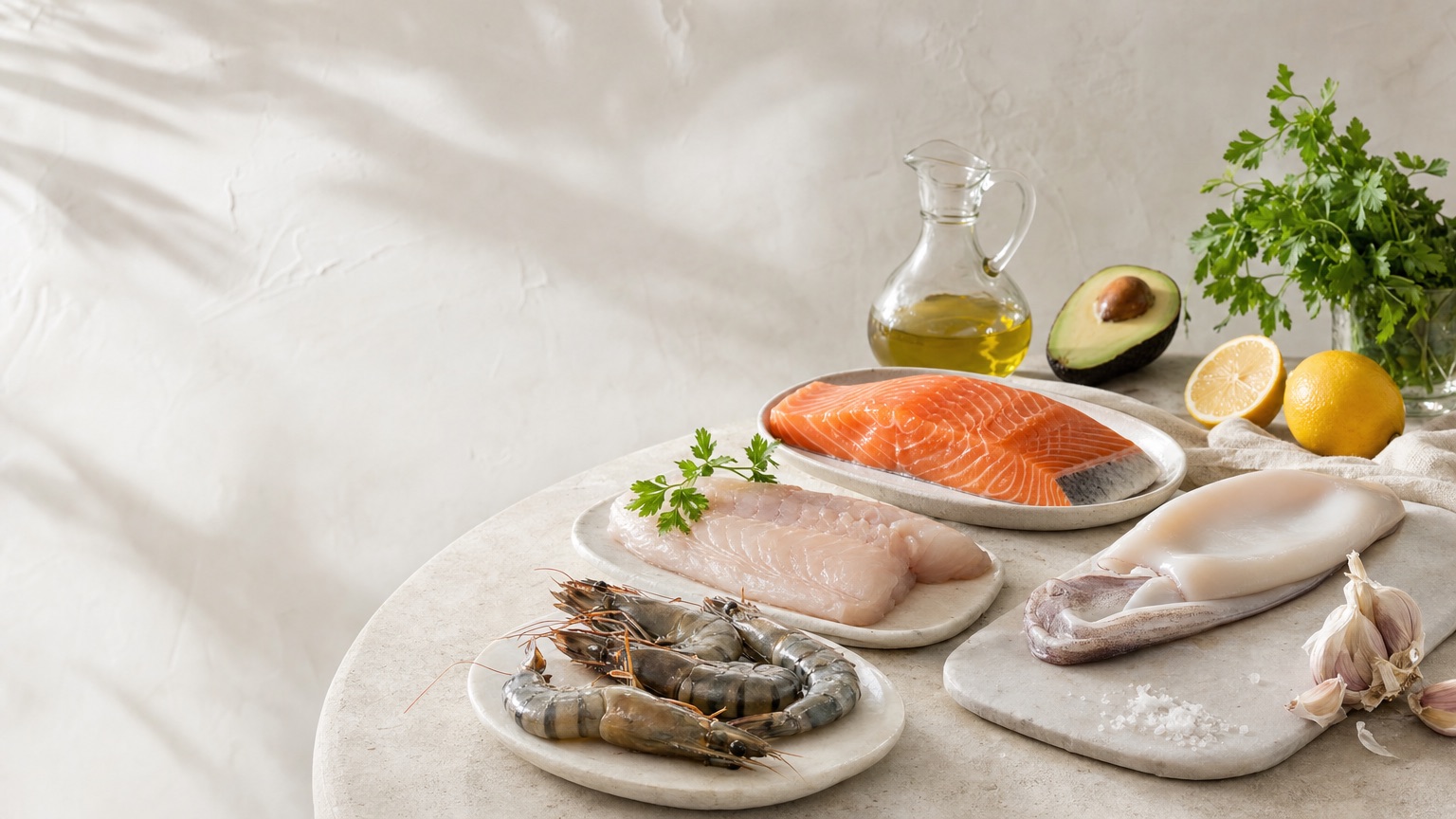
- Choose natural products.
- Check the carbohydrates and sugars on the label.
- Beware of breaded foods and substitutes.
- Cook on a griddle, in the oven, steamed or in an air fryer.
The role of fish in ketogenic nutrition
Ketosis involves using fat as your primary energy source while limiting carbohydrates. Fresh fish is a practical base for your meals: oily fish provides more fat and includes the most common omega-3 fatty acids , helping to balance the macronutrients in your dish.
White fish provides protein with less fat, so it pairs well with other healthy fats like extra virgin olive oil or avocado. Eating unprocessed fish reduces the risk of adding carbohydrates from breading or sauces, although it's always a good idea to check the labels on packaged products.
That's why reading labels is key in ketogenic nutrition. Regulation (EU) 1169/2011 requires that the nutritional information include the amounts of fats, carbohydrates, sugars, proteins, and salt, which makes it much easier to control what you eat each day.
Recommended fish and seafood species in the ketogenic diet
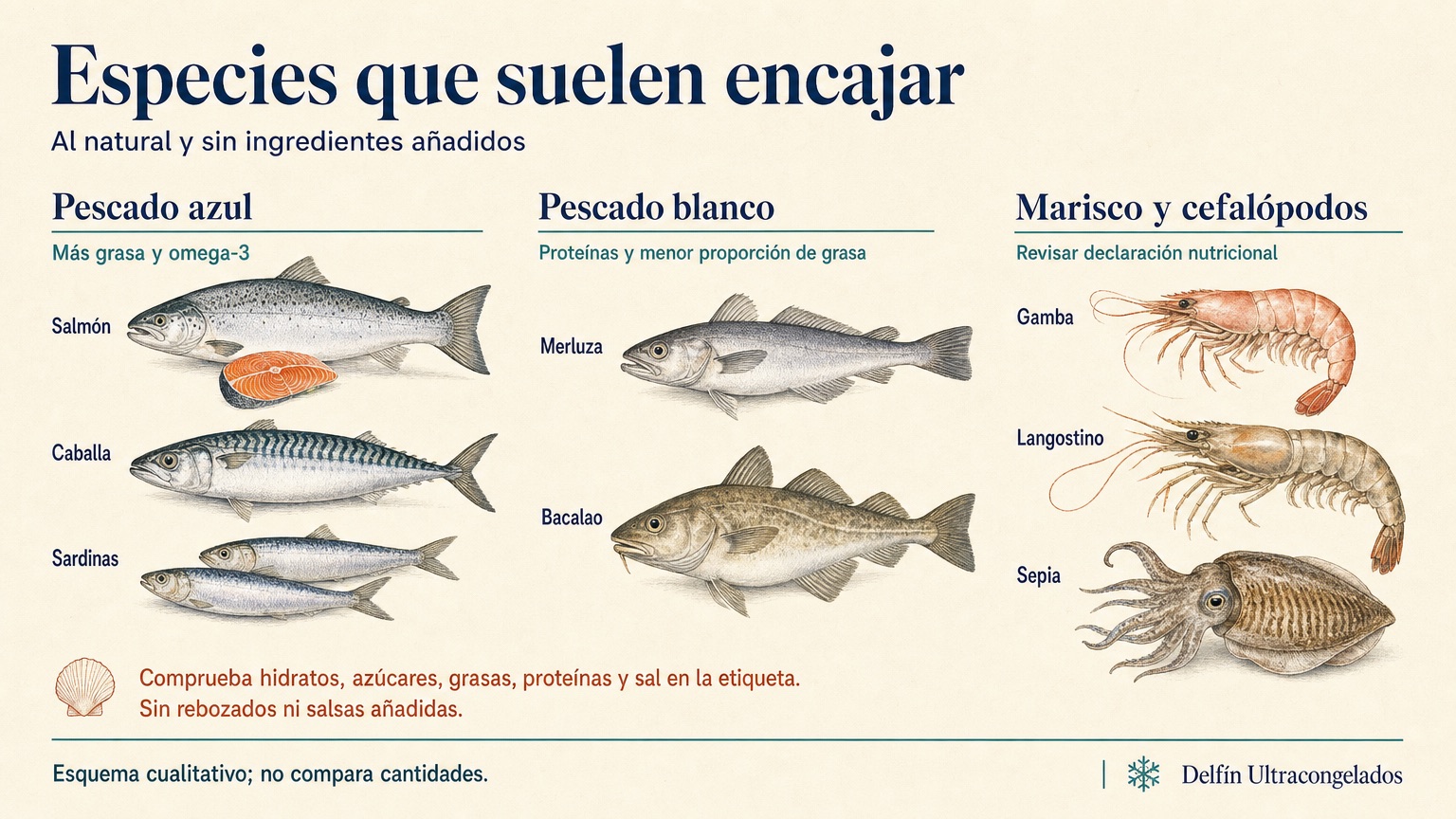
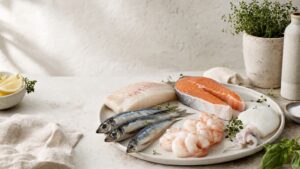
Common choices that fit the bill include salmon , mackerel , and sardines . To balance macronutrient intake, it's helpful to group species according to their nutritional profile.
Fish that usually fit
Oily fish provides more fat, while white fish, such as hake or cod , stands out for its protein and lower fat content.
Shellfish and cephalopods to be checked by label
Seafood is a versatile option in the ketogenic diet. Shrimp , prawns , and cuttlefish are low in carbohydrates when eaten raw, but it's advisable to check the nutritional information of each product.
Among our products, you'll find several of these species in their natural state and ready to cook: raw skinless hake fillets , raw peeled Mediterranean white shrimp , raw white prawns , and raw cleaned cuttlefish . Each label includes the nutritional information and the fishing area; here's how to read FAO fishing zones.
To make your choice at the supermarket easier, here's a comparison of common species:
| Species | Product type | What to check on the label | Risk of added carbohydrates | Keto culinary use |
|---|---|---|---|---|
| Salmon | Blue Fish | If it's smoked, check the sugar content. | Low if it's natural | Oven or griddle |
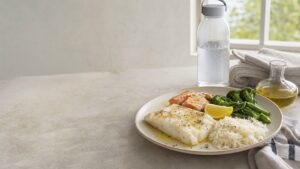
| Hake | White fish | It should be natural, without breading. | Low if it's natural | Iron or steam |
| Gamba | Shellfish | It shouldn't have any added sauces. | Low if it's natural | STIR-FRIES |
| Cuttlefish | Cephalopod | If it's in its own ink, check the sauce. | Low if it's natural | Low-carb stews |
| Mackerel | Blue Fish | For canned goods, check the covering liquid. | Low if it's natural | Salads or grilled |
Seafood with added carbohydrates: what to check
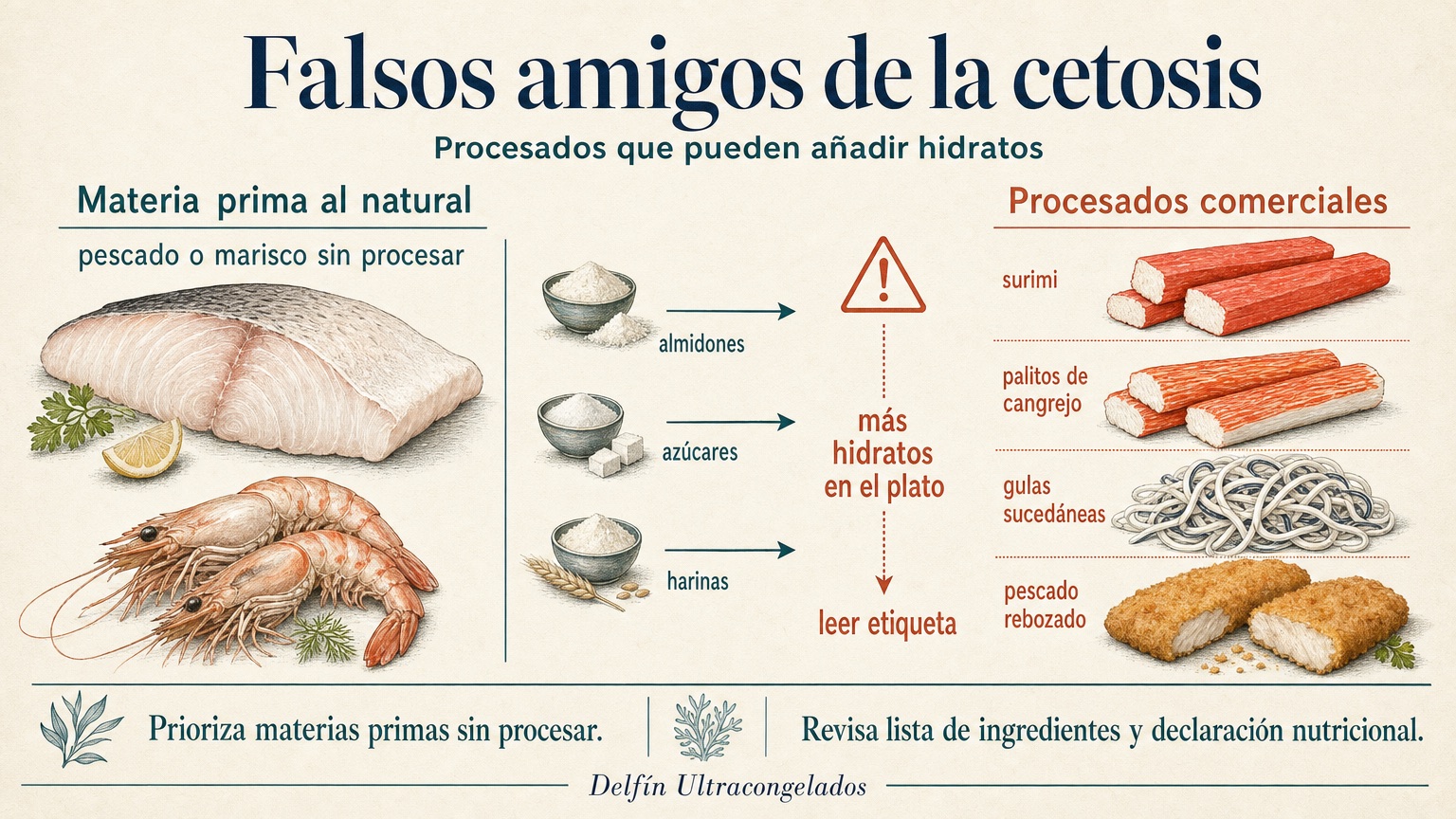
It's worth carefully checking surimi , crab sticks, baby eels, and breaded fish. To achieve their texture, they contain starches, flours, and sometimes sugars, so they contribute more carbohydrates than plain fish. They're not bad products, but they need to be factored into a keto diet.
Always check the ingredient list and nutrition facts label, which, according to European regulations, must list carbohydrates and sugars. These added carbohydrates can significantly increase the total weight of a dish without you realizing it, so for everyday meals, it's best to use unprocessed ingredients.
Ideas for cooking low-carb fish
The best cooking methods are grilling, baking, steaming, and air frying (here's how to cook fish and seafood in an air fryer ). To achieve a crispy exterior without refined flours, almond flour, crushed pork cracklings, or grated Parmesan cheese have fewer carbohydrates than breadcrumbs.
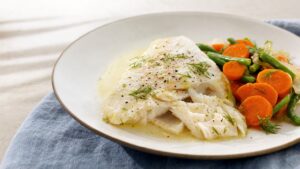
Grilled cuttlefish with extra virgin olive oil, garlic, and parsley makes a quick and easy dinner. If you're looking for hake recipes , baking it with homemade mayonnaise and nuts will increase the dish's fat content.
As a quick rule: choose natural products, check labels, and avoid breaded ones.
Note: This content is for informational purposes only. If you are following a ketogenic diet for health reasons or are planning to change your eating habits, consult a healthcare professional.
Frequently asked questions about fish and the keto diet
Can I eat seafood every day on the keto diet?
Eating seafood every day on the keto diet depends on your overall diet, the type of seafood, the portion size, and your tolerance. In its natural state, it's low in carbohydrates, but you should check the label of each product and it's best to alternate it with white and oily fish; we explain this in our article on how much fish to eat per week.
Is smoked salmon allowed on ketosis?
Smoked salmon may be allowed in ketosis if the label confirms it: check ingredients, carbohydrates, sugars and salt in the nutritional declaration, because some contain sugar in the curing process.
How many carbohydrates does hake or cod have?
Hake and cod in their natural state have virtually no carbohydrates. They provide protein and can be combined with healthy fats in the recipe to fit your plan.