 Skip to content
What exactly is mercury? Simply put, methylmercury is the organic form of this metal that ends up in the sea and, ultimately, in fish. But don't panic! You don't have to give up your favorite recipes. In this article, we'll give you all the official information and recommendations so you can buy and enjoy this delicacy with complete peace of mind. Let's get started!
How mercury ends up on our plate
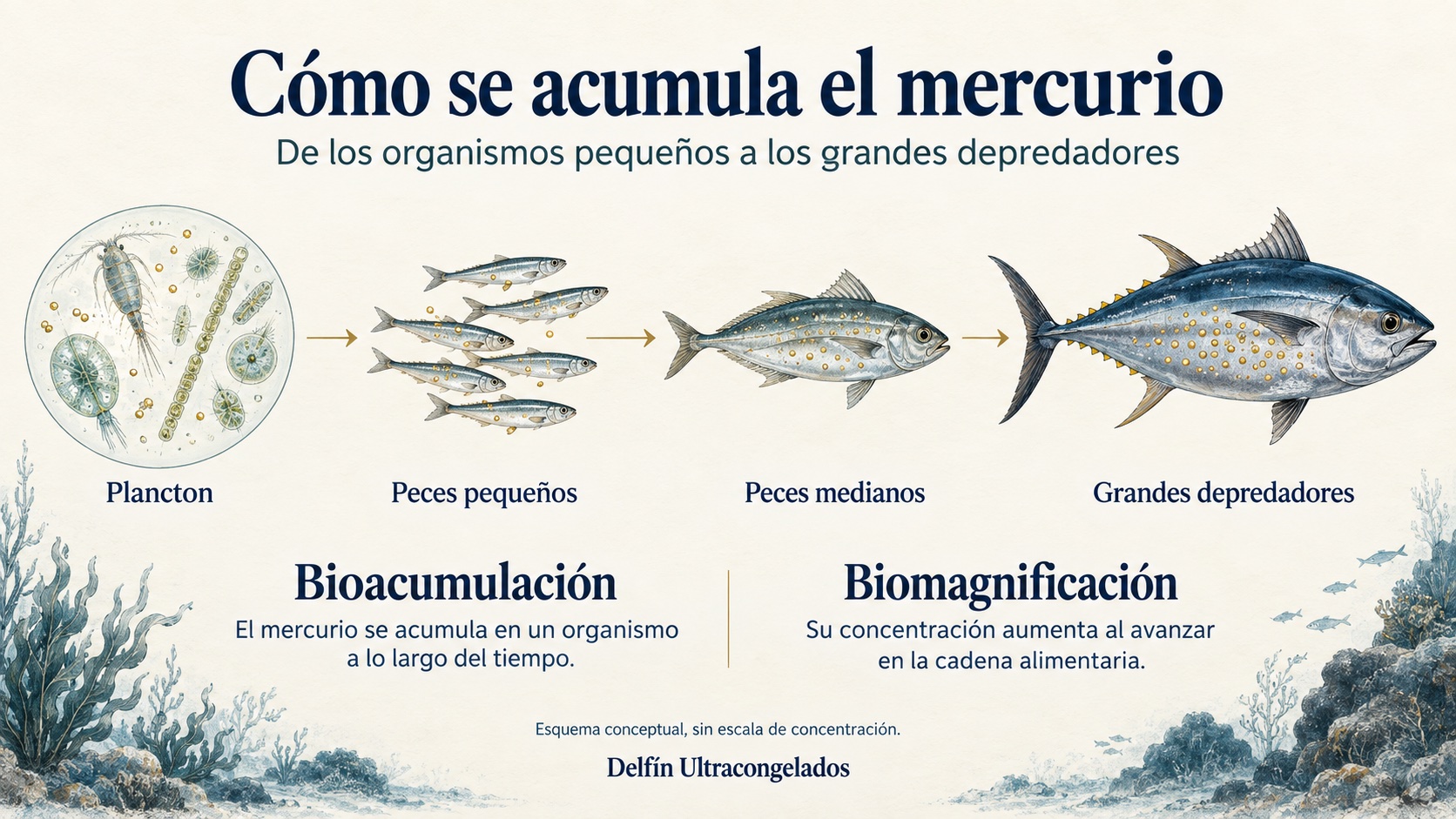
Imagine the ocean as a giant video game where the big fish eats the little fish and, in doing so, absorbs its components. Science calls this process bioaccumulation and biomagnification through the marine food chain.
It works like this: mercury in the water is absorbed by microorganisms and plankton. Very small fish eat this plankton. Then, medium-sized fish eat thousands of these tiny fish, and finally, large predators eat the medium-sized ones.
Since this metal accumulates progressively in the bodies of marine animals, the larger, longer-lived, and more voracious a fish is, the more methylmercury it naturally concentrates in its flesh.
Fish with the highest mercury content: the species we should be monitoring
When we talk about fish with higher mercury levels , international regulations establish specific limits for certain predatory species. For example, a higher mercury limit (1,0 mg/kg compared to the general 0,5 mg/kg) is accepted for large fish due to its cumulative nature, as established by FAO/WHO standards (Codex Alimentarius).
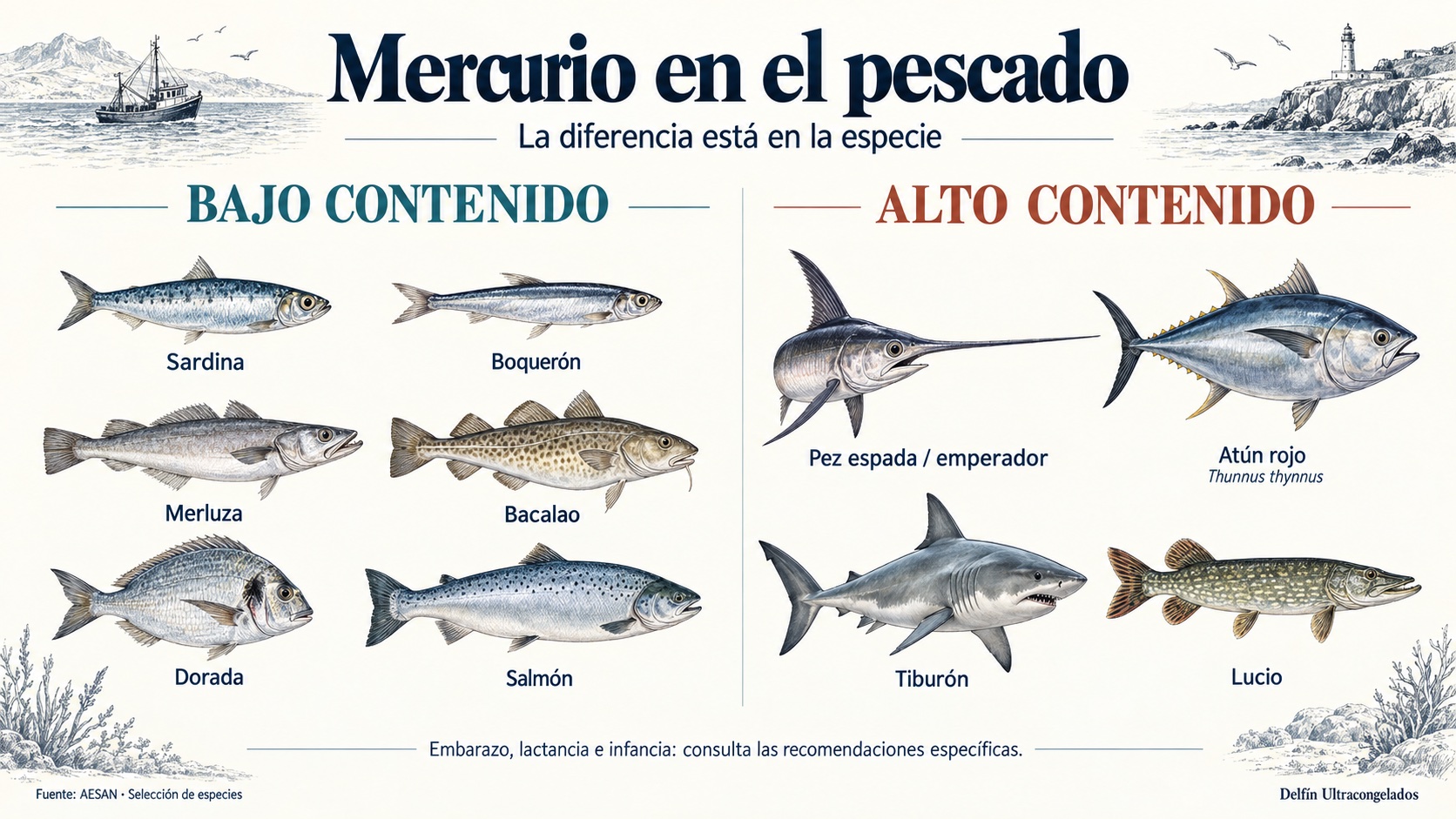
In our country, the authorities have clearly identified the species that top the list of high-containing allergens, according to the Spanish Agency for Food Safety and Nutrition (AESAN) . The four main species you should watch out for are:
- Swordfish (or emperor): A classic on many Spanish grills, but being a great predator, it tops the list of accumulation.
- Bluefin tuna (thunnus thynnus): The king of sushi and haute cuisine. It can reach almost 3 meters in length. Its large size and longevity mean it accumulates more metals than other tuna species, and it is also subject to differentiated protection measures depending on the Ministry of Agriculture, Fisheries and Food (MAPA).
- Shark: This includes species consumed in Spain such as the dogfish (very typical in marinade), the blue shark and the shortfin mako shark.
- Pike: a large predator, in this case characteristic of freshwater.
Fish with less mercury: your best allies for the weekly menu
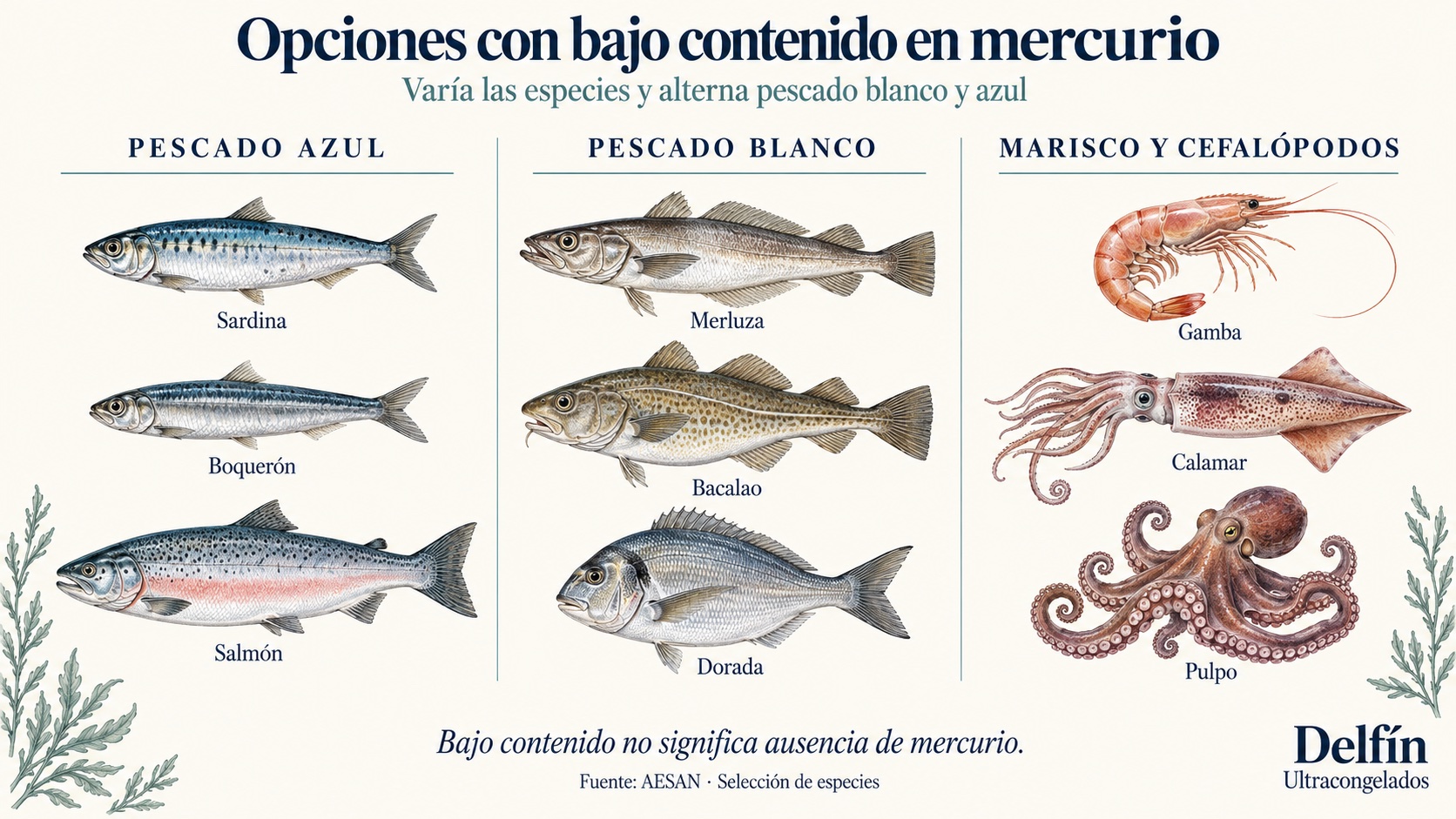
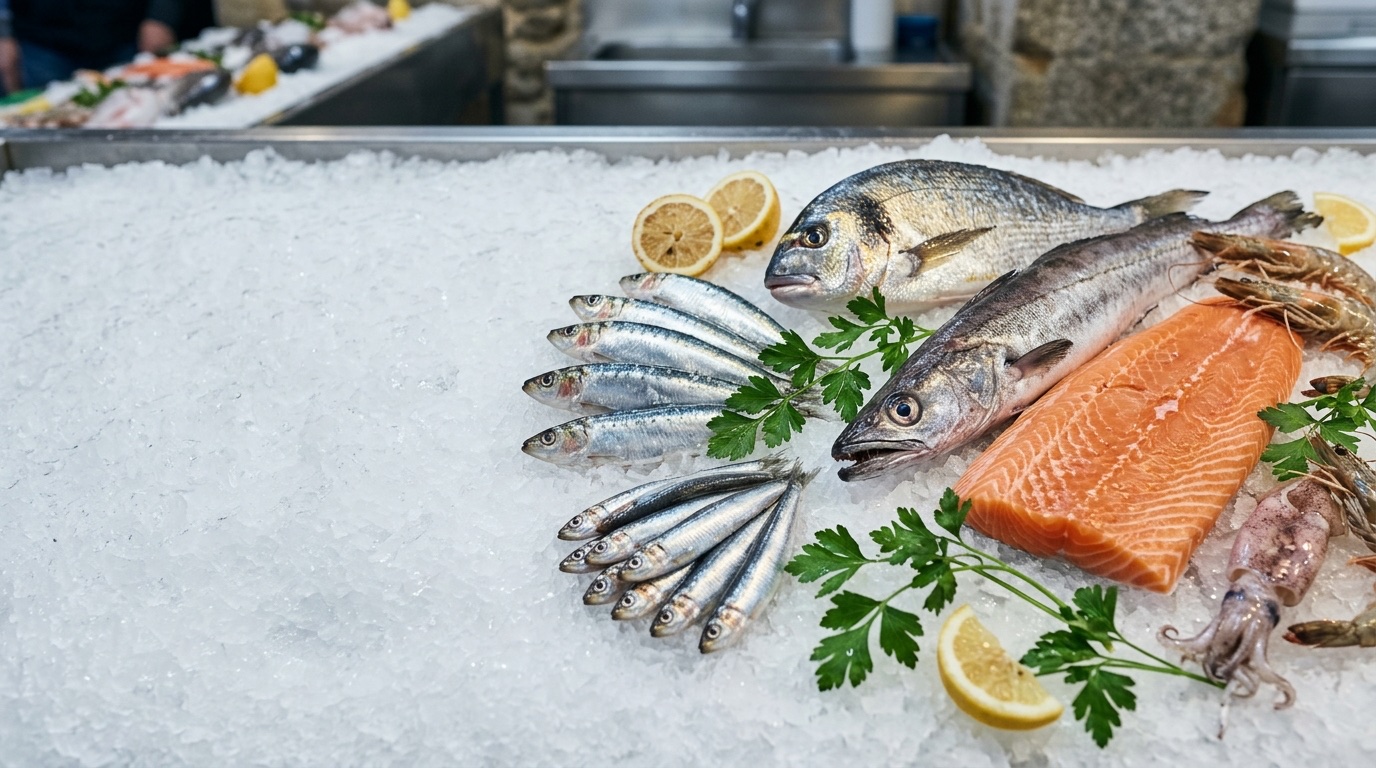
Here's the good news! The vast majority of the fish species we see in the supermarket belong to the group with the lowest mercury levels . These are small or medium-sized species with shorter life cycles.
Your best options for regular consumption (3 to 4 times per week), based on the guidelines of the Spanish Agency for Food Safety and Nutrition (AESAN) , include:
- Blue Fish little: sardines y anchovies, authentic treasures of the Mediterranean diet loaded with beneficial fatty acids.
- White fish traditional: hakesole, cod or sea bream.
- Cephalopods and shellfish: squid, octopus or prawns.
A very important point is that the format (fresh, canned, or frozen) does not, by itself, change the mercury content of a fish; what truly determines this is the species. That said, frozen fish is a fantastic alternative because it maintains its nutritional quality very well when processed and stored correctly, it's extremely convenient for everyday use, and freezing helps control the risk of anisakis when the appropriate conditions are met (we explain this in our guide on anisakis in frozen fish ).
The dilemma of "mercury-free fish": does it really exist?
You've probably wondered at some point if you can buy fish that's 100% mercury-free. Let's be precise: in nature, finding a wild fish with absolutely zero mercury is practically impossible, since this element is naturally present in the marine environment.
However, the species on the green list have such low levels that they are safe and regularly consumed within the current recommendations of the Spanish Agency for Food Safety and Nutrition (AESAN) . You can confidently include them in your menu as part of a balanced diet for the whole family.
Summary table: Mercury traffic light according to AESAN
To make your choice on your next purchase super easy, we've summarized the categories in this visual traffic light system based on the official classification of the Spanish Agency for Food Safety and Nutrition (AESAN) :
Mercury content | Species | Consumption |
● High | Swordfish/emperor, bluefin tuna ( Thunnus thynnus ), shark (dogfish, blue shark, mako) and pike | Monitor / avoid |
● Medium | Light tuna ( Thunnus albacares ), northern albacore ( Thunnus alalunga ) and sea bream | Moderation |
● Low | Anchovy and sardine, hake and cod, sole and John Dory, salmon, sea bream, sea bass and squid | habitual consumption |
Consumption note: This classification should always be consulted with the current official guide, as specific intake recommendations change according to age, pregnancy or breastfeeding status, and frequency of consumption.
Consumer recommendations in Spain: who should be especially careful
Although fish is very healthy, the Spanish Agency for Food Safety and Nutrition (AESAN) has established very clear and strict guidelines to protect the most vulnerable population from species with high mercury content:
- Pregnant women, women planning a pregnancy, or women who are breastfeeding: They should completely avoid consuming species with high levels of certain nutrients (swordfish, bluefin tuna, shark, and pike). If you have any questions about seafood, consult our guide on [the topic]. seafood and pregnancy.
- Kids from 0 to 10 years old: They should also avoid consuming these four species because their nervous system is still developing.
- Kids from 10 to 14 years old: They must limit their consumption of high-content species to a maximum of 120 grams per month.
- General population (healthy adults and young people over 14 years of age): It is recommended to eat fish 3 to 4 times a week, varying between white and oily fish, and high-fat species can be consumed in moderation.
Quick checklist at the fishmonger or supermarket:
- Vary the types of fish you eat throughout your week.
- Prioritize small or medium-sized fish.
- Check the exact species if you buy large cuts to confirm if it is swordfish, bluefin tuna, or shark.
- Alternate between oily fish and white fish.
- Always consult the AESAN guide if you are pregnant or cooking for children under 14 years old.
Why fish remains a jewel for your health
Talking about heavy metals shouldn't make us lose perspective: the incredible benefits of fish are maintained and enhanced when the right species are chosen, consumption is varied, and official recommendations are respected, as supported by the European Food Safety Authority (EFSA).
Fish makes a significant contribution to a balanced diet as it is an exceptional source of high-quality protein and omega-3 fatty acids (especially EPA and DHA; here are the fish with the highest omega-3 content). It also provides essential minerals such as selenium and important vitamins like vitamin D and B vitamins, according to EFSA nutritional profiles.
By choosing wisely, fish remains an irreplaceable pillar of the Mediterranean diet. So go ahead, explore the frozen section, add variety to your meals, and continue to responsibly enjoy all the goodness the sea provides!
Frequently asked questions about mercury in fish
Is it safe to eat canned tuna every week?
Canned tuna is not necessarily the same as fresh bluefin tuna, as the industry often uses different species (such as skipjack or yellowfin tuna). However, it is always advisable to follow official consumption recommendations. For the general population, it is a safe option in moderation, but pregnant women and young children should exercise extreme caution and always consult the guidelines of the Spanish Agency for Food Safety and Nutrition (AESAN).
Does the salmon we buy in Spain contain mercury?
Salmon (both wild and farmed) is generally considered a low-fat option according to standard consumption guidelines, and is also very rich in omega-3 fatty acids. For maximum safety, you can always consult the list of species recommended by the Spanish Agency for Food Safety and Nutrition (AESAN).
Does the freezing process reduce mercury in fish?
No. Deep freezing is an excellent technique because it helps manage biological risks like anisakis and optimally preserves nutritional properties, but it doesn't eliminate the heavy metals present in the fish muscle. To avoid mercury, the key is always choosing the right species.