 Skip to content


Families almost always ask themselves the same questions: What fish can children eat? How much is a serving? Are there any species that should be avoided? Here are the recommended amounts and the most suitable species for each stage of development, using official sources as a reference.
Summary of official guidelines:
- Indicative frequency: between 3 and 4 weekly servings, alternating species.
- Recommended serving: 50 to 85 grams of clean, boneless fish.
- Species: prioritize those with low mercury content.
- Practicality: The clean, portioned formats make preparation much easier.
Note: If you have allergies, medical conditions, or any doubts about introducing fish to your child for the first time, always consult a pediatrician or a registered dietitian nutritionist.
The role of fish in child nutrition
Regular consumption of fish diversifies children's diets and provides nutrients relevant to development: vitamin D, iodine, selenium and high biological value proteins, in addition to omega-3 fatty acids, present mainly in oily fish.
Among the omega-3 fatty acids, docosahexaenoic acid (DHA) stands out. According to European regulations on health claims, DHA contributes to the maintenance of normal vision, and this effect is achieved with a daily intake of 250 mg of DHA. You can find a list of fish containing omega-3 in our guide.
The general guideline for the whole family is the same: variety. If you want to see portion sizes for adults, pregnant women, or seniors, you can find them in our guide on how much fish to eat per week.
Which fish can children eat: recommended species
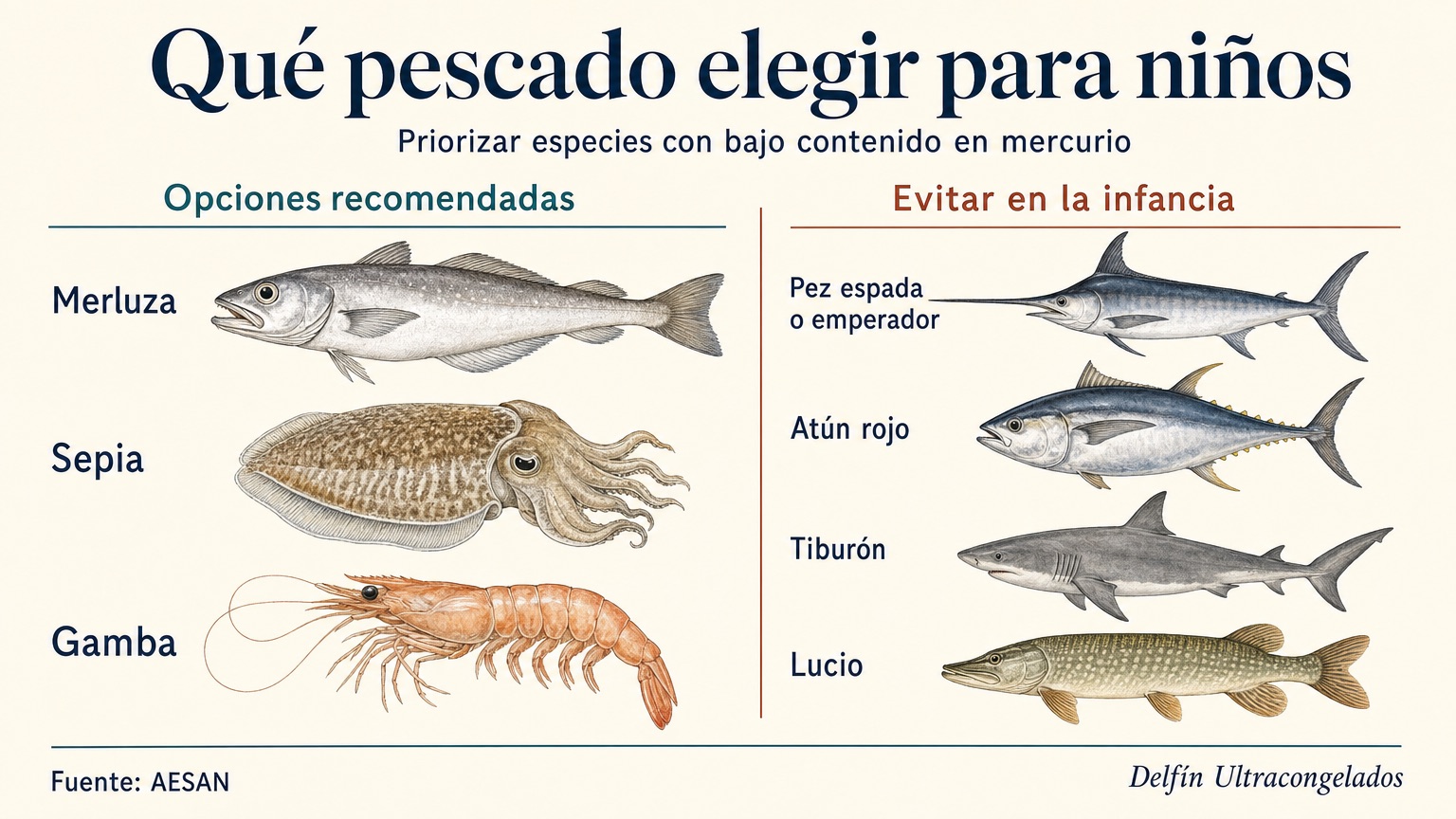
The official recommendation focuses on prioritizing species with low mercury content. The Spanish Agency for Food Safety and Nutrition (AESAN) includes hake , cuttlefish , and shrimp in this group , among many others. These are options with very convenient textures for preparing boneless dishes suitable for children's menus. You can find the complete list of fish with less mercury.
Conversely, the Spanish Agency for Food Safety and Nutrition (AESAN) indicates that children up to 10 years old should avoid fish with high mercury levels : swordfish, bluefin tuna, shark (including dogfish, porbeagle, spiny dogfish, small-spotted catshark, and blue shark), and pike. Between the ages of 10 and 14, the guideline is to limit their consumption to a maximum of 120 grams per month.
| Group according to AESAN | Species | Pattern in childhood |
|---|---|---|
| Low mercury content | Hake, cuttlefish, prawns, cod, sole, sardines, anchovies, salmon, among others. | Recommended consumption, alternating species. |
| High mercury content | Swordfish or emperor, bluefin tuna, shark (dogfish, mako, spiny dogfish, catfish and blue shark) and pike. | Avoid until age 10; from 10 to 14 years, maximum 120g per month. |
In our catalog, you'll find three of these recommended species ready to cook: raw, skinless hake fillets , raw peeled Mediterranean white shrimp , and raw cleaned cuttlefish . The fishing area is indicated on each product's label; here's how to read FAO fishing zones.
Choosing clean formats makes preparing convenient dishes easier and saves a lot of time in the kitchen. If you're worried about bones, we have a guide to boneless fish.
Fish portions for children: an age-based guide
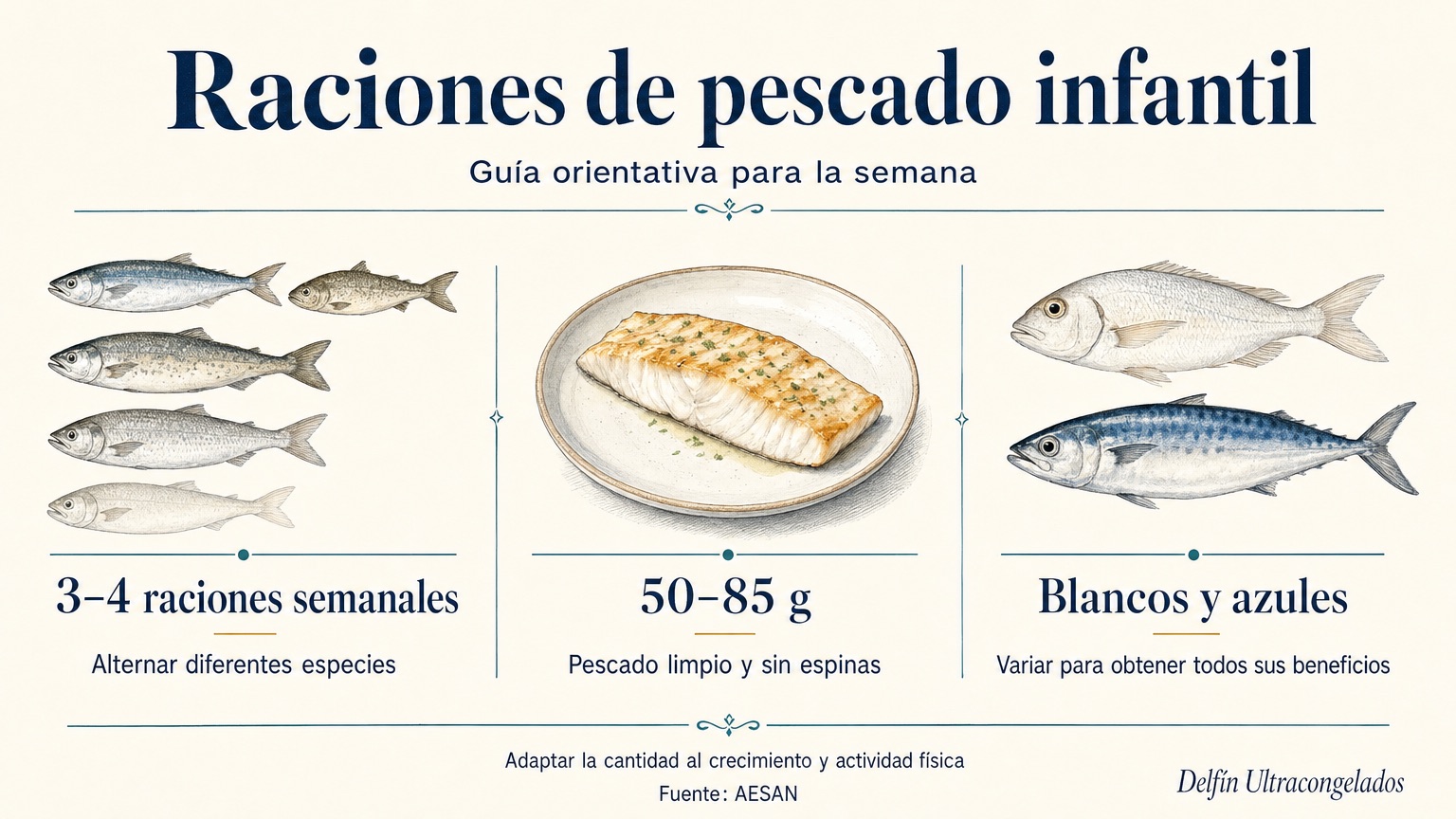
In its recommendations on fish and mercury consumption, AESAN indicates between 3 and 4 weekly servings for the child population, always varying between white and oily fish to obtain all its benefits.
When calculating portions, the amount must be adjusted to the child's growth and physical activity. The AESAN documents on consumption portions establish this guideline:
| Reference available | What does AESAN say? | How to apply it by age |
|---|---|---|
| White and oily fish (cleaned and boneless) | 50 to 85 grams per serving | Adjust the amount to the child's growth, increasing it gradually towards adolescence. |
That amount refers to the edible portion. The important thing is to maintain consistency each week and offer a variety of dishes. To plan your family's week, you can use our weekly fish menu ; and if you want to know when to introduce shellfish, we explain it in our seafood for children section.
Cooking tips for introducing fish into children's menus
To make it more palatable for children, always present it boneless, with juicy textures, and in visually appealing formats. Initial rejection is usually due to fear of bones or overly strong smells, and both can be overcome with a little culinary imagination.
Try these three practical ideas:
- Homemade oven-baked breaded dishes: Cut the cleaned fillets into strips, coat them in egg and breadcrumbs, and bake until crispy. If you prefer the ready-made option, you can find it in the catalog. hake sticks.
- Crumbled into a paste: Mix small pieces of mild fish with tomato sauce and macaroni, or prepare some hake and prawn cannelloni.
- Seafood burgers: Blend the fish with the sautéed onion and shape it; you have the recipe for Fish burgers step.
Choosing frozen fish in clean or portioned formats means having ingredients ready to cook at any time. Here are the differences between frozen and pre-frozen fish and how to properly defrost fish and seafood in the refrigerator.
Frequently asked questions about fish for children
Is white fish or oily fish better for children?
Neither white fish nor oily fish is better for children: both are necessary and complementary. White fish, such as hake, has a delicate flavor that makes it easier for children to accept initially, while oily fish is notable for its higher omega-3 fatty acid content. The recommendation is to alternate between them to plan varied meals.
Is frozen fish a good option for children?
Yes, frozen fish is a good option for children. Flash freezing preserves the product under controlled conditions until it's prepared, and if you choose cleaned or portioned varieties, it's very convenient for weekday meals.
What should I do if my child refuses the taste of fish?
If your child dislikes the taste of fish, start with mild-flavored varieties accompanied by side dishes they enjoy, such as mashed potatoes. Gradually introduce it into recipes that are generally popular, like seafood croquettes , empanadas, or lasagna.
How much fish should a child eat per week?
According to the Spanish Agency for Food Safety and Nutrition (AESAN), a child should eat between three and four servings of fish per week, alternating between white and oily fish. Each serving is approximately 50 to 85 grams of cleaned, boneless fish, and the amount should be adjusted as the child grows.